
Fire Cleanup and Land Restoration After a Wildfire
Coming home to burned land is hard. You don’t have to sort it out alone. We’re wildland firefighters, and we help landowners in Eastern Washington and North Idaho clear hazard trees, clean up burned ground and bring their property back, one safe step at a time.
- Wildland firefighters, 10+ years on the line
- Pre-approved contractor, Medical Lake Gray Road Fire recovery program
- Washington DNR-approved contractor
- Registered in SAM.gov with an active federal VIPR contract
- Licensed and insured in Washington
You Don’t Have to Figure This Out Alone
After a wildfire, the questions pile up fast. Which trees will fall? What will the first rains do to the hillside? Who pays for any of it? Our crew has spent more than ten years on fire lines, and we spend the rest of the year helping people put their land back together.
We’ll walk the property with you, tell you plainly what needs to happen now and what can wait, and put it in writing so your insurer or a funding program can follow it. The first visit is free.
What We Do
- Hazard tree felling and removal
- Downed timber and burned vegetation cleanup
- Slash piles: burn, chip or haul
- Forestry mulching and brush control
- Land clearing and site prep for the rebuild
- Erosion control on burned slopes
- Replanting
- Defensible space around the new home
- —Burned houses, outbuildings and demolition
- —Asbestos surveys and abatement
- —Household hazardous waste (EPA handled this after the 2026 fires)
- —Power lines and trees touching them (call your utility)
We schedule our work around theirs and can point you to who to call.
What to Do in the First Days After a Fire
Safety first, then records, then decisions. Nothing on the land has to be cut this week except what’s about to fall on someone.
Stay Safe
- Wait until officials say it’s safe to go back
- Wear an N95 or P100 mask, gloves, long sleeves and eye protection
- Keep ash damp and kids and pets away from it
- Don’t drink well water until it’s tested
- Stay clear of burned trees, root holes and leaning snags
Document Everything
- Photograph every burned tree near the home, roads and fences before anything is cut
- Take wide shots and close-ups of bark char and tree bases
- Keep every receipt and a log of every call with your insurer
- Ask your insurer what it pays for trees and debris removal
Before You Cut
- Call your conservation district or DNR. Some programs only pay for work they approve first
- Fell only what threatens people or buildings right now
- Let hard-to-call trees go through a spring before deciding
- Don’t burn piles until you know the rules
Safety guidance from the Spokane Regional Health District. Insurance tips from the Washington State Office of the Insurance Commissioner.
Don’t Cut Too Soon, and Don’t Wait Too Long
Ponderosa pine, Douglas-fir and western larch have thick bark and survive more fire than they look like they should. Others die two or three years later from the damage or from beetles. Check a tree below using the same measures Oregon State University foresters use.
B&B Offers Everything Your Land Needs After the Fire
One crew from the first hazard tree to the last seedling. We bring the saws, the chipper and the equipment, and we work around the contractors handling your home.
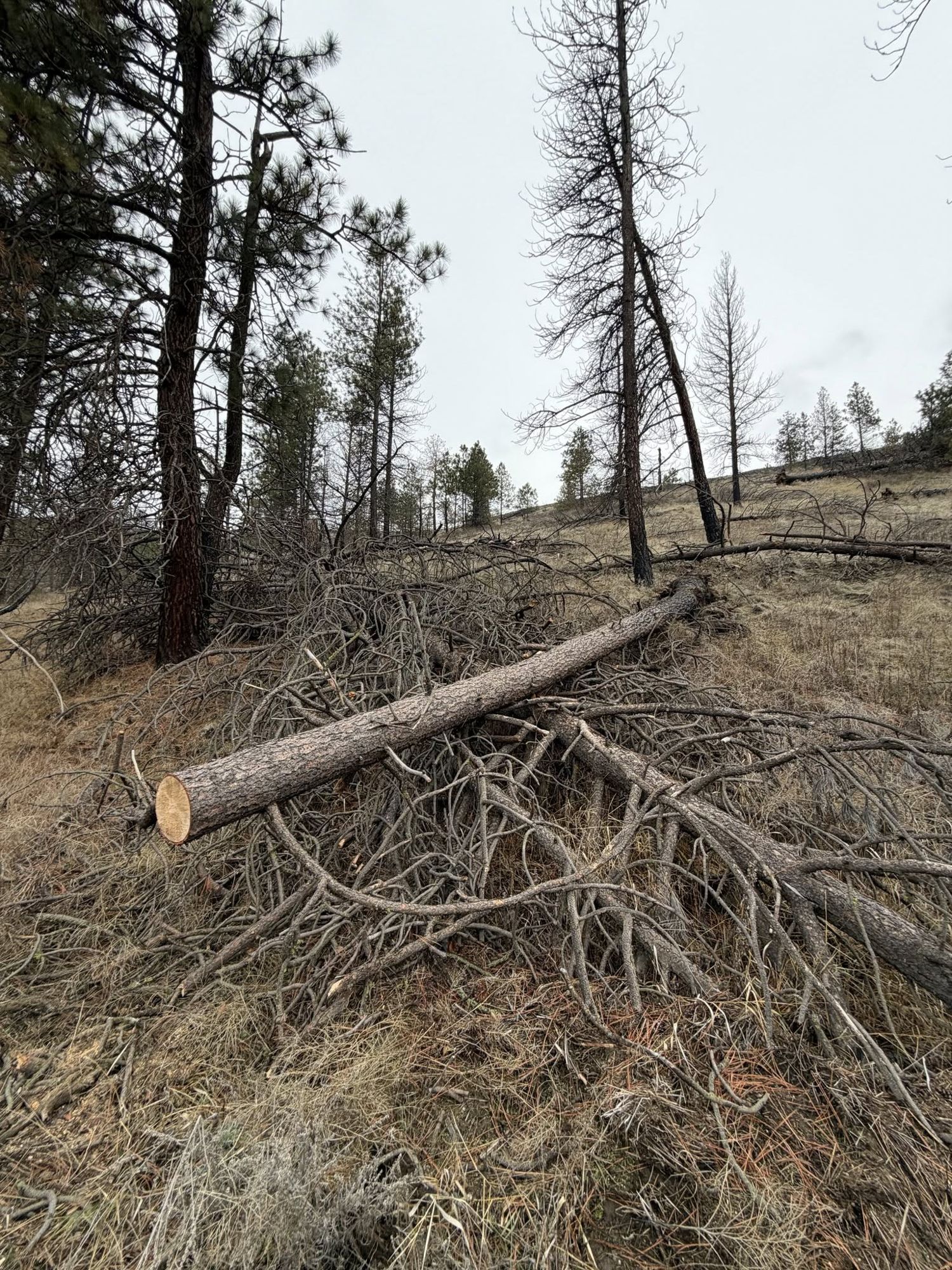
Wildfire Cleanup and Debris Removal
Downed trees, burned limbs, dead brush and charred woody debris cut up and cleared, so the ground is safe to walk and work.
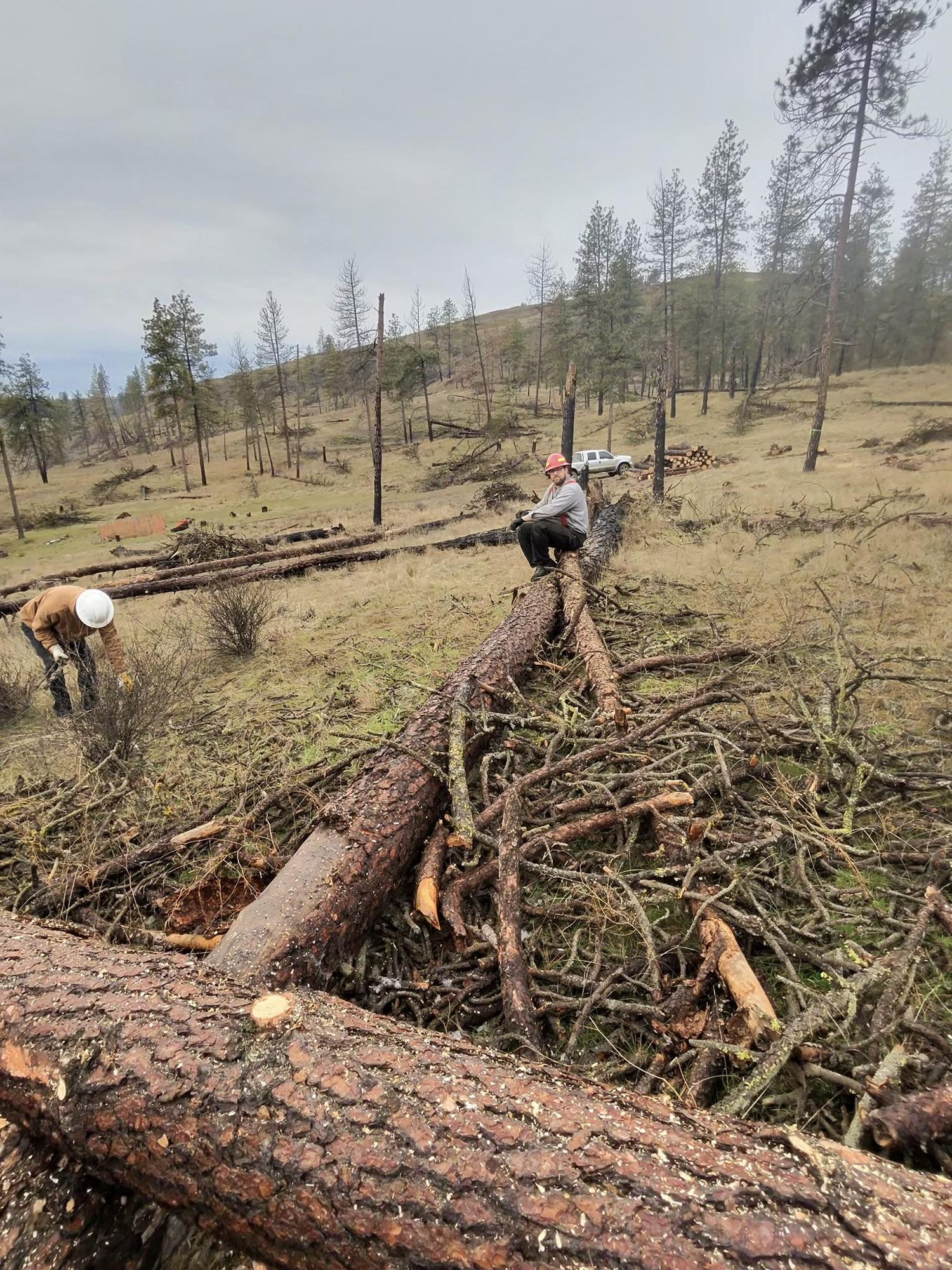
Hazard Tree Removal and Forestry Services
Dead and fire-weakened trees felled by sawyers who cut burned timber on fire lines, plus help deciding which trees to keep.
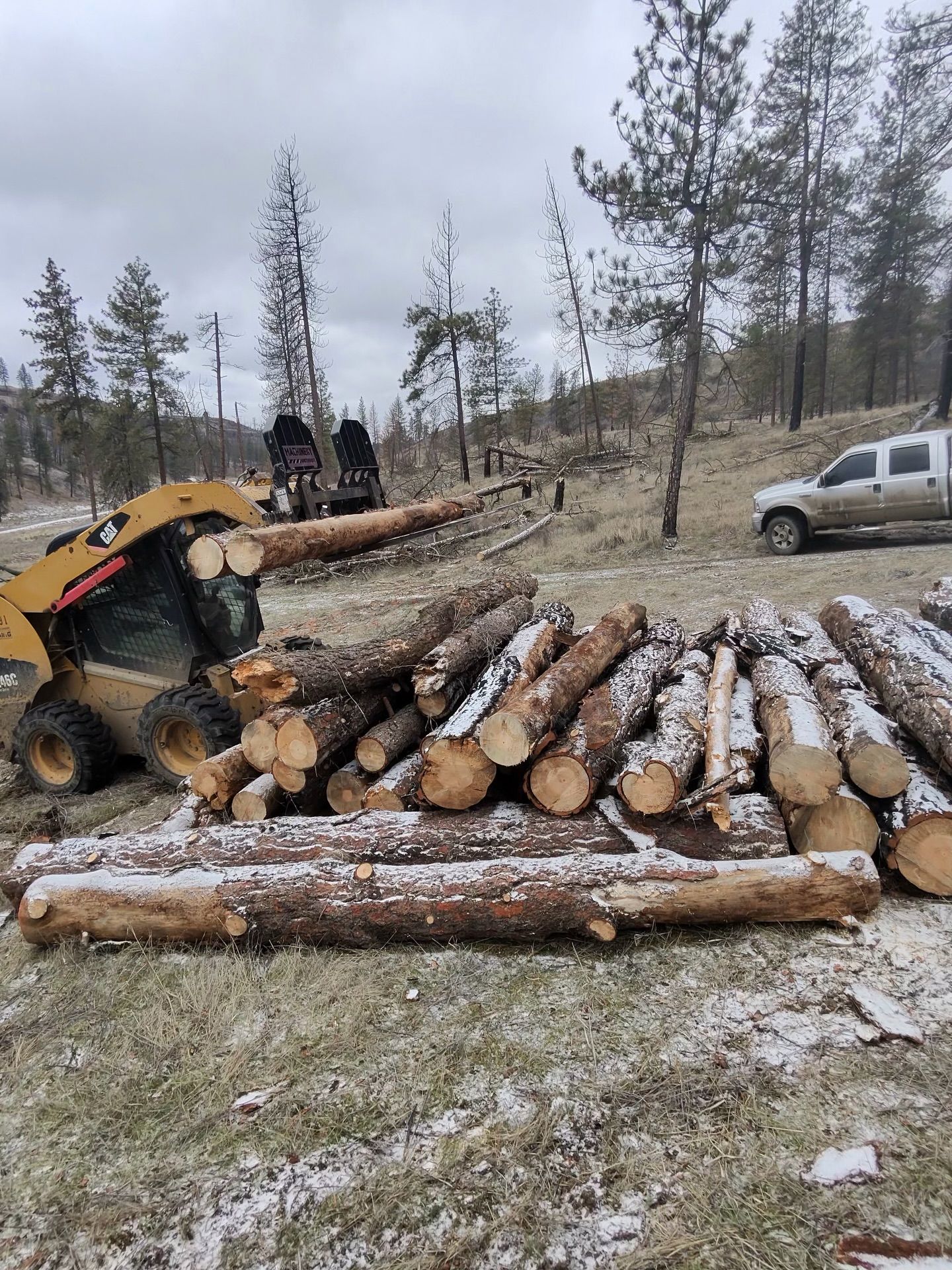
Land Clearing and Property Restoration
Clearing for the building site, driveways and fence lines, decking usable logs and cleaning up after equipment.
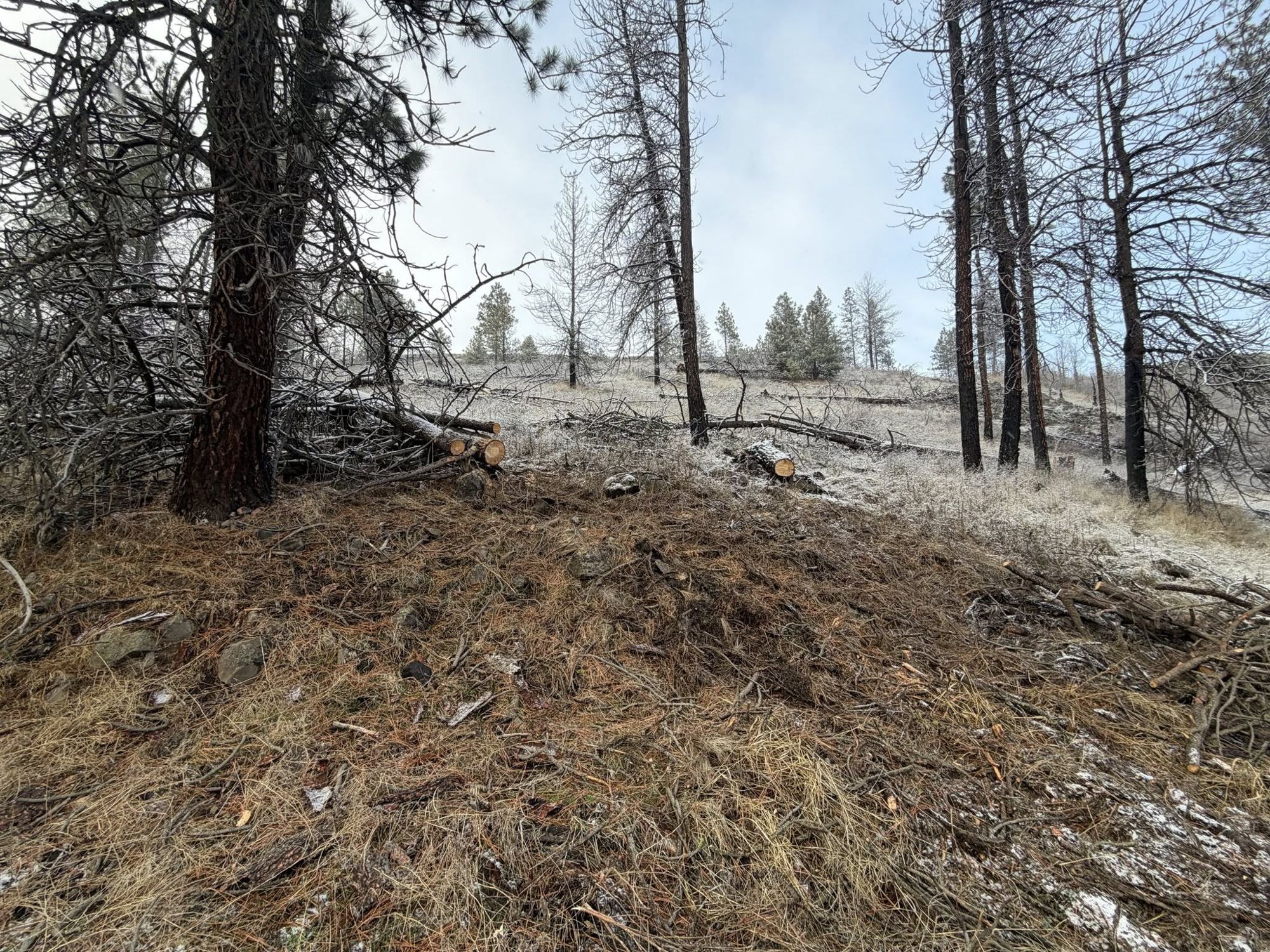
Defensible Space and Wildfire Mitigation
Set up the zones around the new home and thin what grows back, so the next fire finds less to burn.
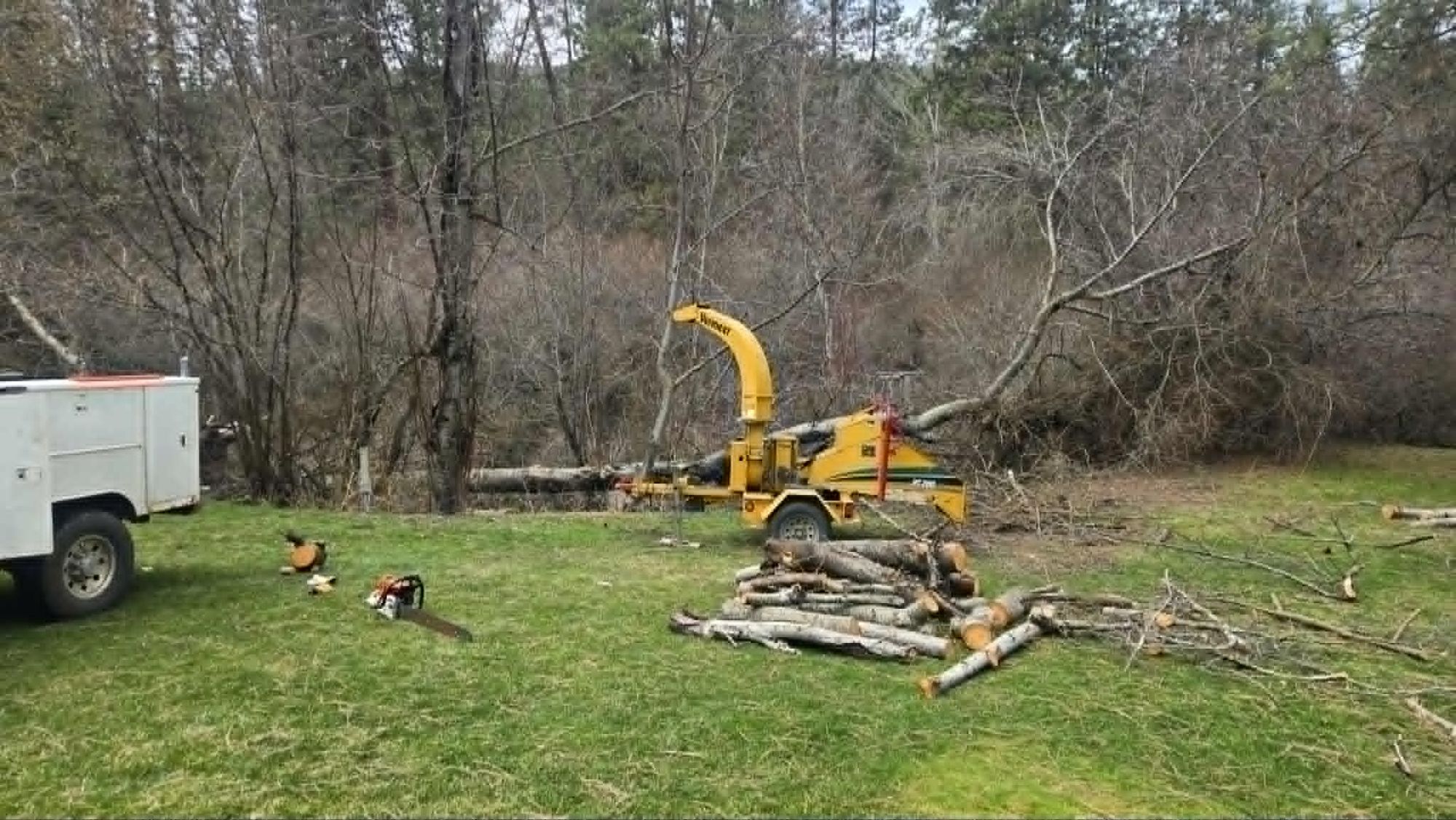
Forestry Mulching and Vegetation Management
Brush and young trees come back thick after a fire. We mulch, thin and keep it in check year after year.
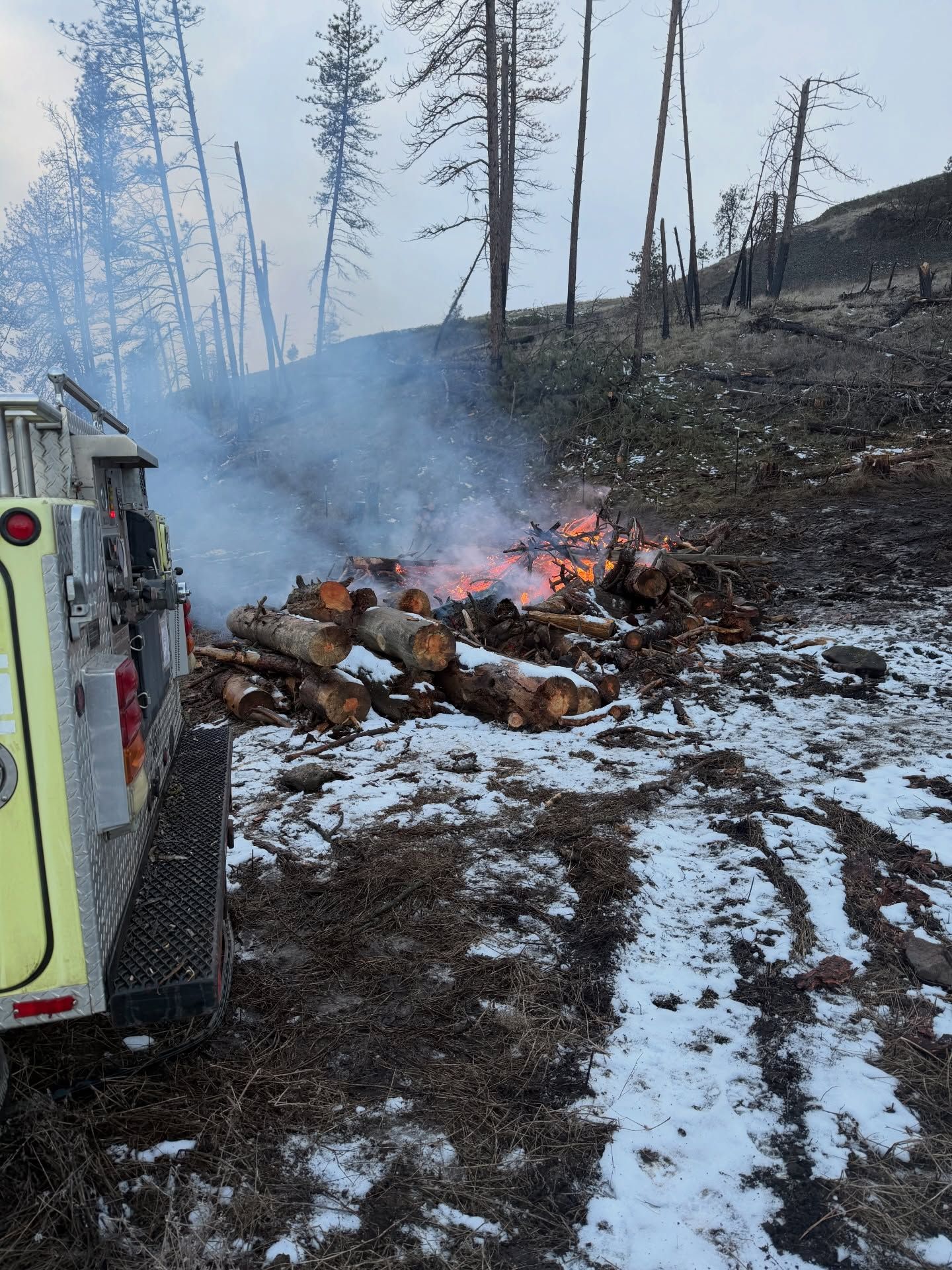
Slash Pile Management and Disposal
Old and new slash piles burned under permit in the right season, chipped on site or hauled away.
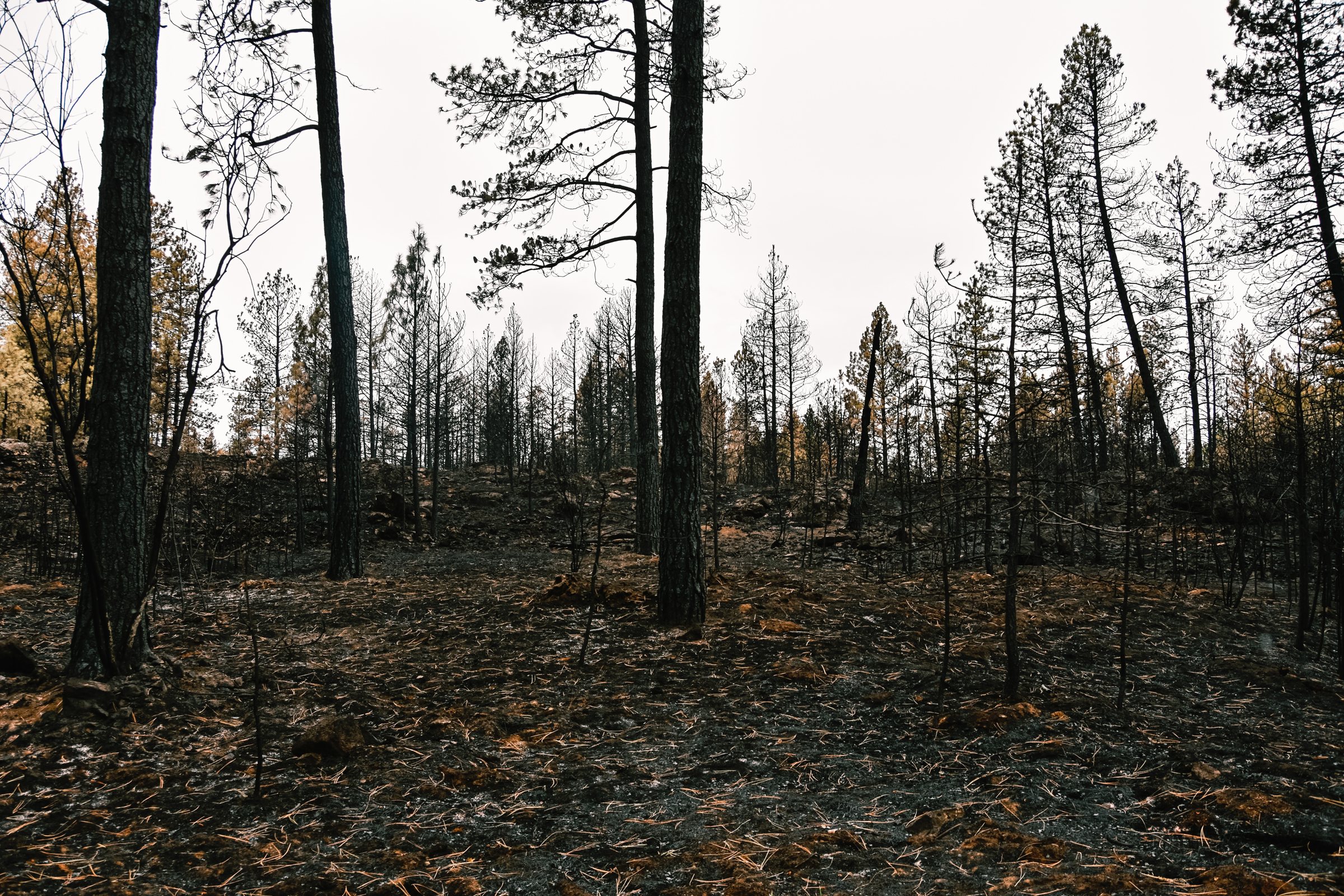
Erosion Control
Straw mulch, wattles and log barriers laid on the contour, plus seeding, to slow water and hold soil on burned slopes.
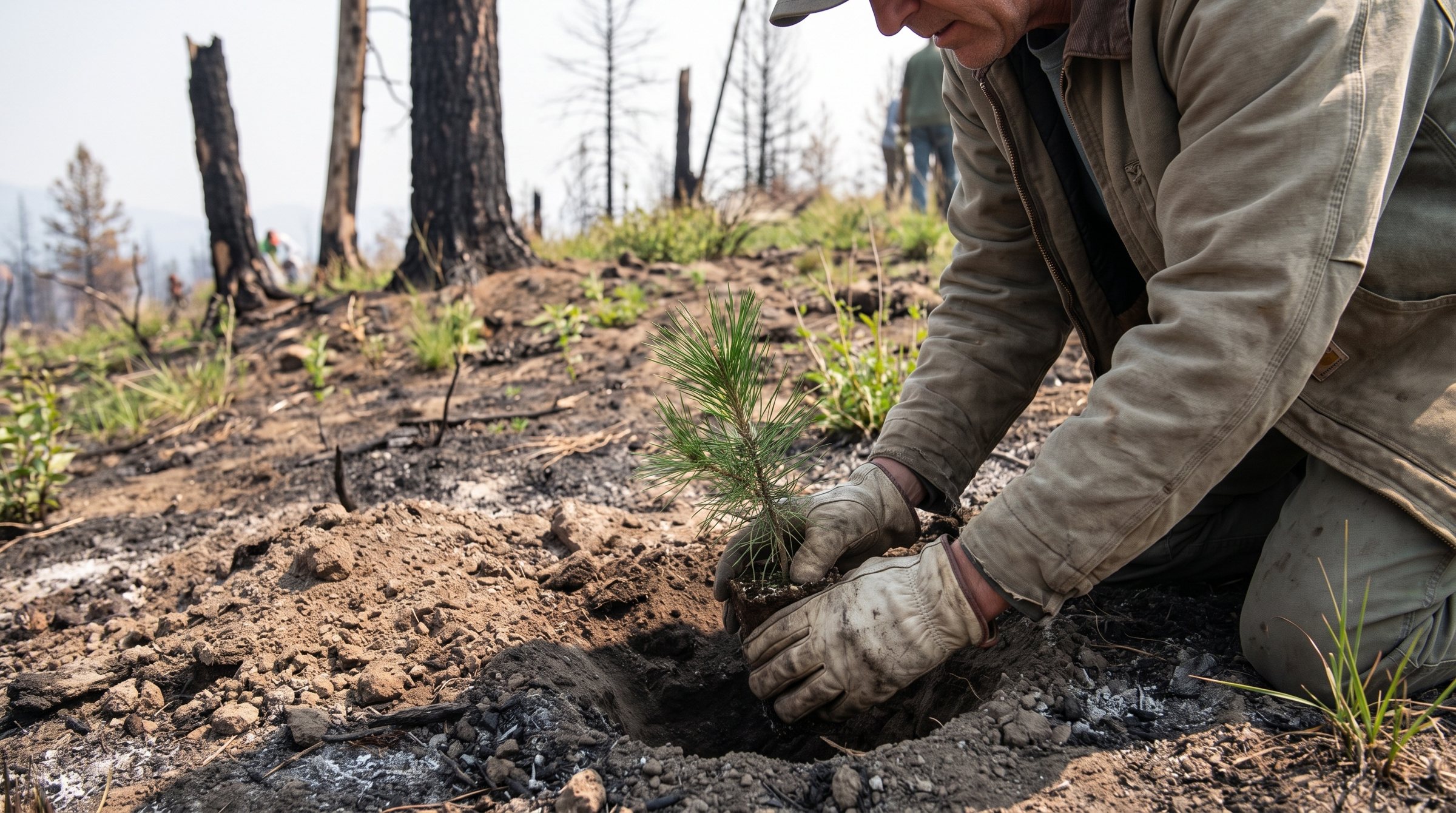
Replanting and Reforestation
Seedlings suited to your site, planted in the right season where the burn is too big to reseed itself.
The First Rains Are the Next Risk
A hot fire can leave the soil coated so water beads up and runs off instead of soaking in. On burned slopes, about half an inch of rain in under an hour can start a flash flood. That risk is highest for two years and can last up to five, according to the National Weather Service in Spokane and Washington DNR.
If you look uphill from your home, well or driveway and see burned ground, you’re in the path. Treatments work best before the first fall rains, but it’s rarely too late to slow the water down.
Try the Water Drop Test
Scrape away the ash and put a few drops of water on the bare soil. If the drops sit there as beads instead of soaking in, the soil is shedding water.
Straw Mulch
Certified weed-free straw spread over bare ground. The fastest way to cover soil before rain.
Wattles and Log Barriers
Laid across the slope with full ground contact to catch soil and slow runoff.
Native Seeding
Native grasses, or a sterile cover crop for quick cover, sown in fall or early winter.
Protecting Water
Keeping ash and soil out of wells, springs, ponds and culverts below the burn.
How Burned Land Recovers
Land comes back on its own schedule. Knowing what each season brings helps you spend money where it matters and leave alone what will heal itself.
Estimate Your Cleanup
Every burned property is different, so we quote each one after a free visit. These are our typical prices, so you can plan before we come out.
What Might My Cleanup Cost?
Estimate only, based on B&B’s typical prices. Steep ground, access, tree size and how close trees are to buildings and power lines change the price. Your written quote after the free site visit is the real number.
Get a Real Number From Our CrewTypical Fire Cleanup Prices
| Work | Typical price | What changes it |
|---|---|---|
| Tree felling (left on site) | $300 – $500 per tree | Tree size, lean, and how close it is to buildings or lines |
| Hazard tree felling and removal | $800 – $1,200 per tree | Size, access for equipment, hauling or chipping |
| General burned-land cleanup | $1,200 – $3,000 per acre | Slope, terrain and how much material is on the ground |
Prices for Eastern Washington and North Idaho as of fall 2026. Funding programs and insurance may cover part of the cost; see the funding section below.
From First Call to Recovered Land
Six steps, and who handles each one. You decide the pace; we keep it safe and keep the records straight.
Call or Send Photos
Use the form below or call (509) 215-1875. Photos help us plan the visit.
Free Site Visit
We walk the land with you, mark hazard trees, check slopes and drainage, and photograph everything.
Written Plan and Quote
A clear, itemized plan in an order that makes sense: safety first, then erosion, cleanup and replanting.
Funding and Approvals
We point you to programs that may help and wait for approvals where a program requires them.
The Work
Our crew fells, clears, chips, burns or hauls, and protects the ground as we go, with before and after photos.
Walkthrough and Follow-Up
We walk the finished work with you. Follow-up visits are available to recheck trees you kept.
Help Paying for Recovery
Some programs are open now and some wait on a federal disaster declaration. Apply to what fits, tell each program about the others, and check with them before work starts, because some only pay for work they approve first.
Programs Taking Applications
SBA Disaster Loans
Low-interest loans to repair or replace a primary home (up to $500,000) and belongings (up to $100,000) after the 2026 fires. Spokane, Lincoln, Pend Oreille, Stevens and Whitman counties, plus Benewah, Bonner and Kootenai in Idaho. Apply by Dec. 21, 2026.
sba.gov/disaster
State Individual Assistance
$750 to $2,250 per household whose primary home was destroyed or badly damaged in the 2026 fires. Apply online or call 2-1-1.
mil.wa.gov/wildfire-assistance
DNR Cost Share for Forest Land
Pays part of the cost of thinning, pruning and slash work on private forest land under 5,000 acres. Approval comes before work starts.
Our DNR cost share guide
Post-Fire Site Visits and Cost Share
Spokane Conservation District offers post-fire hazard tree and erosion assessments and cost share when funding allows. Work done before approval may not qualify.
spokanecd.org
EQIP Conservation Cost Share
Can help pay for practices like erosion control, tree planting and fuels work on private land. Applications are taken year-round.
nrcs.usda.gov
Tax Relief
Federal filing deadlines for affected Washington taxpayers moved to Feb. 1, 2027, and tree removal and replanting can count toward a casualty loss. Ask the county assessor about destroyed-property tax relief.
irs.gov
Tree Seedlings
DNR’s Webster Nursery and UI’s Pitkin Nursery sell native seedlings to landowners. Order early, because big fire years sell out.
Webster Nursery
Free Insurance Help
Questions about your claim, tree or debris limits, or a slow insurer? The consumer advocacy line is 800-562-6900.
Wildfire recovery toolkit
Case Management and Local Funds
Case managers connect 2026 fire survivors with local funds, including help with rebuild permit costs.
srltrg.org
For the 2026 Spokane Complex Fires: Waiting on a Declaration or Sign-Up
Individual Assistance
Depends on a major disaster declaration for the 2026 Spokane Complex fires, which was still pending. FEMA generally doesn’t pay for trees or landscaping.
fema.gov
Emergency Forest Restoration Program
Can pay up to 75% of debris removal, site prep and replanting on private forest land once FSA opens a sign-up for the Spokane Complex fires.
fsa.usda.gov
Emergency Conservation Program
Helps farms and ranches with fencing, debris and other damage once a sign-up opens for Spokane County.
farmers.gov
For the Gray Road and Oregon Road Fires
$44 Million Recovery Grant
Rebuilding, repairs, reimbursement and site work for homeowners who lost homes in the 2023 fires. Reimbursement ends Jan. 21, 2027.
Our grant guide
Gray Road Fire Recovery Assistance
Up to $1,000 per household for outdoor cleanup, hazard trees and chipping. Applications are closed for now and may reopen. B&B is a pre-approved contractor.
medicallake.org
If You Lost Ground in a Recent Fire
Help depends on which fire burned your land. Here’s where things stand for the two recent fire seasons in Spokane County.
Spokane Complex Fires
The Old Trails, Fairview and Autumn Lane fires destroyed more than 600 homes in Spokane County. The state asked for a federal major disaster declaration on Sept. 28, 2026. SBA disaster loans and state assistance are open now.
Gray Road and Oregon Road Fires
The fires near Medical Lake and Elk destroyed 366 homes. Spokane County’s $44 million recovery grant is now taking shape, and its reimbursement window closes Jan. 21, 2027.
Getting the Most From Your Insurance Policy
Many homeowner policies pay something for burned trees and debris removal, but the limits are usually small and separate from the house. A common setup is about 5% of the dwelling limit for trees and landscaping, capped around $500 to $750 per tree, according to the nonprofit United Policyholders. Your policy is what counts, so ask your adjuster.
In Washington, you can choose your own contractor, and insurers generally have to inspect within 30 days. We work with insurance case by case: we can provide the written scope, photos and itemized invoices an adjuster asks for, and in some cases work with the adjuster directly.
- Written scope and quote for your adjuster
- Before and after photos from the same points
- Itemized invoices that separate trees, debris and erosion work
- Work with your adjuster directly when it makes sense
Take Care of Yourself, Too
Losing your home or the land you love is a real loss, and stress, sleeplessness and grief are normal after a fire. Free, confidential help is a call or text away, any time.
Fire Cleanup and Restoration FAQs
How soon should burned trees come down?
Right away only if they could fall on a home, road, power line or a place people use. For the rest, there’s usually time to let a tree show you whether it will live. Watch for new growth next spring, and plan to remove dead trees you want to sell within the first year, before the wood loses value.
How can I tell if a burned tree will die?
Look at how much of the crown is killed and how much of the trunk base is deeply charred. Ponderosa pine is likely to die past about 70% crown kill or 90% deep char, Douglas-fir past about 65% crown kill, and thin-barked trees with much less. Try the tree checker on this page, or have us look.
Does homeowners insurance pay to remove burned trees?
Often, but the limits are small. Many policies pay a percentage of the dwelling limit for trees and landscaping, often capped at a few hundred dollars per tree, plus a debris removal allowance. Ask your adjuster what yours covers before work starts, and keep photos and itemized invoices.
Is there help paying for fire cleanup?
Sometimes. SBA disaster loans, Washington state assistance, DNR cost share, conservation district programs and NRCS can help, depending on the fire and your land. Some only pay for work they approve before it starts. See the funding section above, or ask us and we’ll point you in the right direction.
What does fire cleanup cost?
Our typical prices are $300 to $500 to fell a tree and leave it, $800 to $1,200 to fell and remove a hazard tree, and $1,200 to $3,000 an acre for general cleanup, depending on terrain and how much material is down. We give a written quote after a free site visit.
Do you clean up burned houses or structure debris?
No. Burned buildings need asbestos surveys and specialized contractors. We handle the land around them: trees, timber, brush, slash, erosion and replanting, and we schedule around the crews working on the house.
Can I sell the burned timber?
Often, if you move quickly. Pine can stain within a year, and most salvage value is gone by year three. Selling logs from private land in Washington usually requires a Forest Practices Application with DNR, and Idaho requires a notification before harvest. We’ll help you plan it.
Should I burn the slash piles?
Only within the rules. Small piles may be allowed under DNR rule burns when there’s no burn ban, and larger piles need a permit. Burning isn’t allowed inside cities and urban growth areas in Spokane County. Chipping or hauling avoids the rules entirely.
Will bark beetles spread to my healthy trees?
They can, but it isn’t a given. Douglas-fir beetles attack the spring after a fire, and pine engravers breed in fresh pine slash. Removing heavily damaged trees and timing the cutting and slash disposal keeps the risk down.
Will the trees grow back on their own?
Grasses and shrubs usually do within a year. Conifers reseed only within a tree length or two of surviving seed trees, so large severe burns need planting. Order seedlings early, because nurseries can sell out after big fire years.
What can I do about erosion before winter?
Cover bare ground with weed-free straw, lay wattles or logs across slopes, and keep culverts and ditches clear. Seeding helps over time but does little the first year. Protect wells and springs below burned slopes first.
Can you work while my home is being rebuilt?
Yes. We coordinate with your builder and the crews handling the structure, clear the building site and access, and come back for defensible space once the home is up.
Do you work with my insurance adjuster?
Case by case. We always provide the written scope, photos and itemized invoices adjusters ask for, and in some cases we work with the adjuster directly. In Washington you have the right to choose your own contractor.
Do you serve North Idaho?
Yes. We work across Eastern Washington and North Idaho. Idaho Department of Lands foresters also offer post-fire visits to forest landowners.
Is the first visit really free?
Yes. We’ll call you back within one business day, walk the property with you and give you a written plan and quote. You’re under no obligation.
What should I have ready for the site visit?
Your photos from before and after the fire, your insurance policy and claim number if you have one, any program paperwork, and a sense of which areas matter most to you. We’ll take it from there.
Free Guides Worth Reading
Written by foresters and extension specialists who study burned land in our region.
Will My Tree Live?
Survival thresholds by species for ponderosa pine, Douglas-fir, larch and more.
After the Burn
Assessing and managing your forestland after a wildfire.
Spokane Complex Fire Resources
Local forestry help and landowner resources for the 2026 fires.
Forestry After Wildfire
Bark beetles, salvage and getting a forester out to your land.
After the Fire: Hazard Tree Removal
How to recognize dangerous trees and remove them safely.
After the Fire WA
Recovery resources for families, forest owners and farms.
Let’s Walk Your Land Together
Tell us about your property and send a few photos if you can. We’ll call you back within one business day and set up a free site visit. No pressure and no obligation.
- Call back within one business day
- Free first site visit
- Written, itemized plan and quote
- Follow-up visits available to recheck trees
Rather talk now? (509) 215-1875