
Washington DNR Cost Share & Hardship Assistance: The Landowner's Guide
DNR can pay part of the cost of thinning and fuels work on private forestland, and landowners who qualify for hardship assistance may pay little or nothing. B&B Wildland Fire is a DNR-approved contractor. We do the work to the forester’s prescription and keep the paperwork straight.
What DNR Cost Share Means for Your Land
If you own forested land in Washington, DNR may pay part of the cost to thin it, prune it and clean up the slash. The program is built for private landowners: families with a few timbered acres around the house, ranchers, woodlot owners, and neighbors who share a stretch of forest.
It starts with a free visit from a DNR forester, who walks the land with you and decides what work will make the biggest difference. You get written approval, including how much DNR will cover, before any work starts. Once the work is done, DNR inspects it and pays its share.
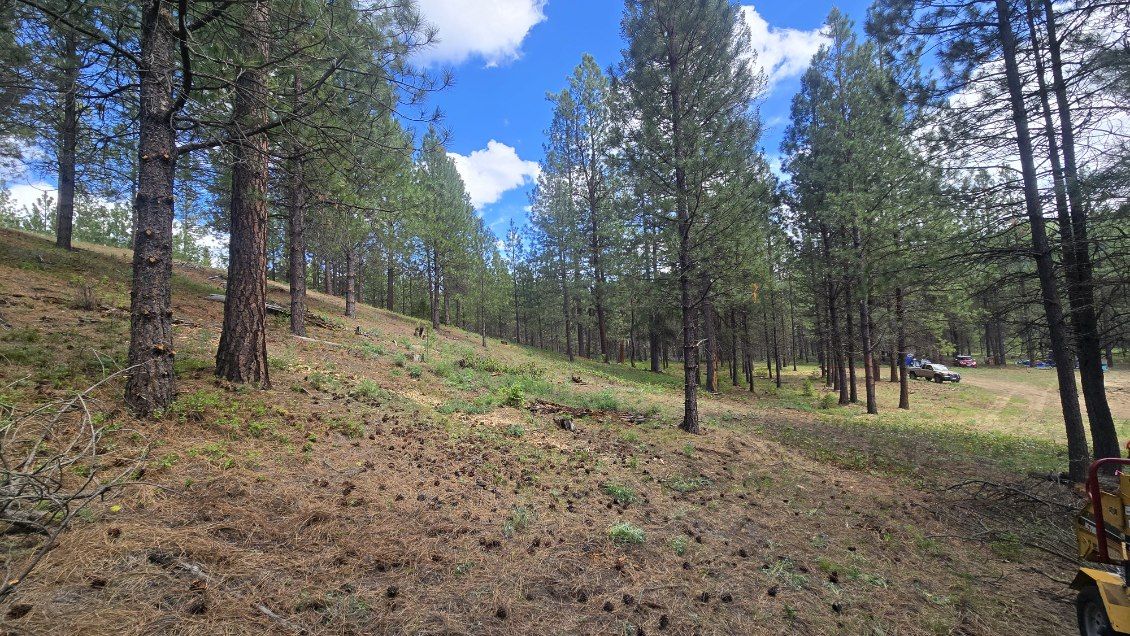
For most landowners DNR covers about half the cost, up to its per-acre limits. If you qualify for hardship assistance, DNR may cover most or all of it. The work lasts, too. A thinned stand slows a fire down, holds up better against beetles and drought, and gives firefighters room to work around your home.
- What it is
- DNR reimburses part of the cost of forest health and wildfire mitigation work on private land.
- Who qualifies
- Non-federal owners of less than 5,000 forested acres in Washington. No minimum size.
- What it covers
- Thinning, pruning, brush control, slash cleanup, prescribed burning and forest plans.
- What you pay
- Usually about half, within DNR’s per-acre limits. Hardship assistance can bring your share close to zero.
- How long
- Forester visit, approval in about 1 to 2 weeks, then the work, inspection and payment.
Financial Assistance for Wildfire Resilience and Forest Health
Most people still call it DNR cost share. DNR renamed it, and it now covers forest owners across the whole state, not just Eastern Washington. The money comes from the USDA Forest Service through DNR’s Service Forestry Program.
DNR’s foresters plan the work and approve the funding. They don’t do the thinning on standard cost share jobs. You hire a contractor or do it yourself, DNR inspects it, and DNR pays its share.
- Free site visit from a DNR forester
- Written approval before any work starts
- You choose the contractor, or do it yourself
- Payment after DNR inspects the finished work
Most Washington Forest Owners Can Apply
If you own trees in Washington and your land isn’t federal, there’s a good chance DNR can help. Here’s what the program looks for.
There's no minimum size. A free forester visit is guaranteed at 5 acres and up, and smaller lots get help by phone or email. Over 5,000 acres, DNR can grant a waiver in some cases.
Forestland in Washington
Timber, woodlots, or a home in the pines. The program now covers the whole state.
Private or Local, Not Federal
Individual and family land, plus tribal, state and local government land.
Work the Land Needs
Crowded trees, low limbs, brush or slash. The DNR forester decides what to treat.
Work Not Started Yet
Approval comes first. If you’ve started, the work you haven’t done yet can still qualify.
Landowners DNR works with
- Families and individuals
- Farms and ranches
- HOAs and neighborhoods
- Tribes
- Nonprofits and camps
- Cities, counties and districts
Not Sure? That's What the First Call Is For
If DNR cost share isn’t the right fit, hardship assistance, a conservation district program or Wildfire Ready Neighbors might be. We’ll look at your situation and point you to the help that fits.
Extra Help for Landowners Who Need It
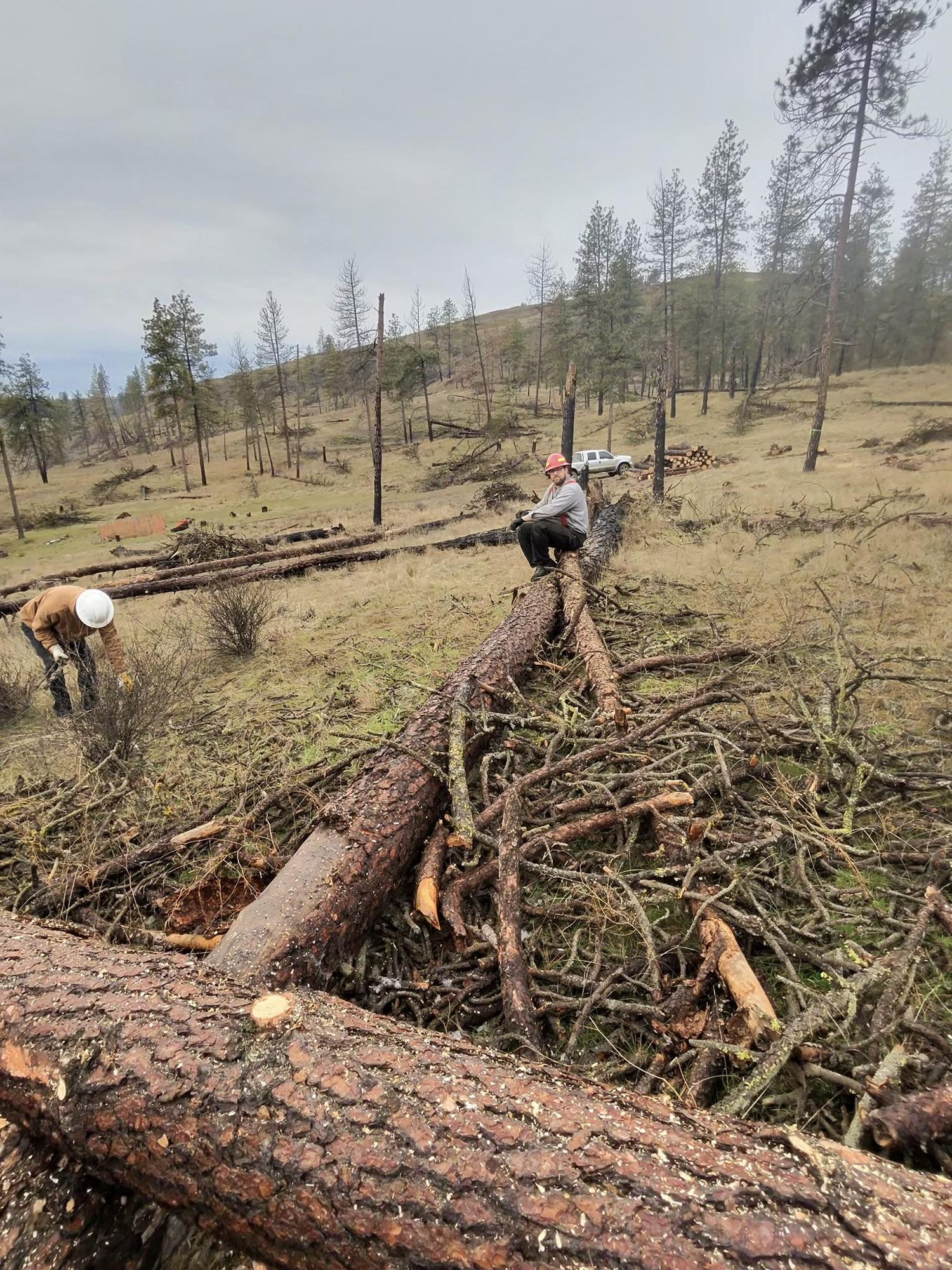
Under Washington’s HEAL Act, DNR set up an extra-assistance path for landowners facing financial or physical barriers. On these projects DNR may do the work with its own crews, or hire a contractor like B&B and pay for the work up to a limit, so the landowner pays little or nothing. B&B has worked these projects as a DNR prime contractor, including the Wadley hardship project near Northport shown below.
Limited Income
Household adjusted gross income at or below 50% of Washington’s median for the past two years.
Physical Ability
Someone in the household can’t do the work themselves, under the same income test.
Veteran
You or a household owner served in the U.S. armed forces.
Socially Disadvantaged
You belong to a group DNR lists as historically underserved on its certification form.
Meeting any one of these is enough to ask
You self-certify on DNR’s form, so nobody needs your tax return to start the conversation. DNR decides what the extra help covers and how much it pays on each project. Your service forester can tell you what applies to your land, or call us and we’ll explain how it has worked on the hardship jobs we’ve done.
The Work DNR Cost Share Can Pay For
The forester’s prescription sets which of these your land needs. Our crew does all of them except writing the plan, and we can point you to a forester for that.
Non-Commercial Thinning
Removing overcrowded, suppressed and excess small trees so the stand can resist fire and beetles.
B&B service: Fuels reduction and forest thinning
Pruning Ladder Fuels
Limbing retained trees so a ground fire can’t climb into the crowns.
B&B service: Ladder fuel removal and limbing
Brush Control
Cutting dense brush and small growth that carries fire across the ground.
B&B service: Brush and vegetation removal
Slash Disposal
Chipping, mulching, hauling, or piling and burning what the work leaves behind.
B&B service: Chipping, mulching and pile burning
Prescribed Burning
Low-intensity broadcast burning where the forester prescribes it.
B&B service: Pile burning and prescribed burn support
Forest Stewardship Plan
A written plan for 20 or more forested acres, by a qualified forester.
B&B service: Referral to a consulting forester
Not Covered
Know these before you plan the budget.
Home hardening
Roofs, vents and decks fall under conservation district programs and Wildfire Ready Neighbors.
Commercial harvest
Slash from a timber sale, and any work that pays for itself, isn’t eligible.
Work done early
Anything started before DNR’s written approval can’t be paid for.
Who Pays What, and When
DNR pays a share of your actual cost, up to a per-acre limit set when you’re approved. You cover the rest.
Approval Sets the Amount
Your approval letter names the work, the deadline and the most DNR will pay.
We Do the Work
Our crew works to the prescription and keeps photos and records of every practice.
Inspection
A DNR forester checks the finished work against the prescription.
Payment
DNR pays its share after the inspection. Depending on how your agreement is set up, it goes to you or straight to the contractor. You cover the rest.
What Might My Project Cost?
Some slope, a dense understory, average access.
Estimate only. Project cost uses B&B's typical $1,500 to $2,500 per acre. DNR's share is figured at 50% of cost, capped at the per-acre limits on DNR's most recent published application (2022) for thinning, pruning and slash. DNR no longer posts its rates online. Your approval letter sets the real amount.
Get a Real Number From Our CrewFrom First Call to Final Payment
Nine steps, and who handles each one. Most projects run from first call to payment in one season.
Request a DNR Visit
Contact your DNR region (use the county picker below) and ask for a forester visit.
A few minutes
Forester Site Visit
A DNR forester walks your land, assesses the risk and prioritizes the work.
30 minutes to 2 hours
Application and Approval
You apply; DNR sends an approval letter with the prescription, the amount and the deadline.
About 1 to 2 weeks
Walk-Through and Quote
B&B walks the property against the prescription and gives you a quote that fits the approval.
About a week
Schedule Around the Season
We plan cutting and burning around beetle timing, burn rules and your schedule.
Fall through spring
The Work
Our crew thins, prunes and treats slash, with before and after photos from the same points.
Days to weeks
Report and Inspection
Completion is reported with receipts, and a DNR forester inspects the work.
Before your deadline
Payment
DNR pays its share, to you or straight to the contractor depending on your agreement. You pay the balance.
After inspection
Keep It Up
Keep the treated area in good shape for 15 years. We offer return visits.
Ongoing
What We Handle for You
DNR pays only for work that matches the prescription and is documented well. On a cost share job, most of what we do besides the cutting is making sure both of those happen.
- Matching the work to the forester’s prescription
- A quote built around your approved amount, so you know your share up front
- Before and after photos and records for the inspection
- Slash disposal, burn timing and permits
- Meeting DNR at the inspection if you’d like
- A simple plan to keep the work up
What we can't do
We don’t approve funding or set the amount, and hiring us doesn’t change your odds. DNR decides eligibility, the amount and the timing.
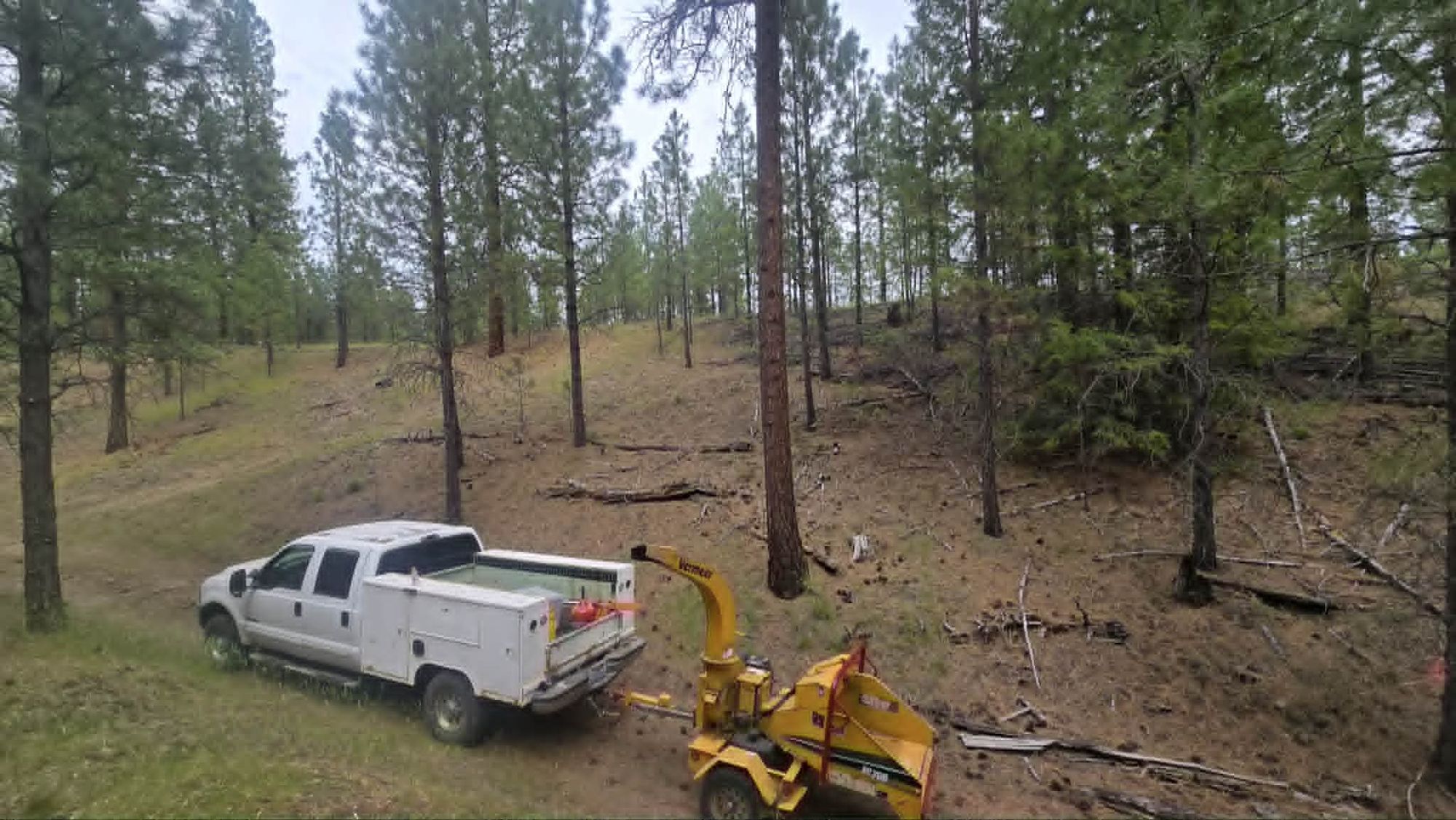
Photo-documented
Before and after, from the same points, for DNR’s inspection and your records
Could You Do the Work Yourself?
DNR lets you do the work yourself and count your own labor. For some owners that’s the right call. Here’s how the two compare.
| Topic | Doing it yourself | Hiring a contractor |
|---|---|---|
| Cost | Lower cash cost; DNR counts your labor at a set hourly rate. | Higher cost, but DNR’s share applies to the invoice. |
| Equipment | Rent or buy saws, a chipper and safety gear, and budget for it. | We bring all the equipment the job needs. |
| Time | Weekends over weeks or months. | Usually days to a few weeks. |
| Safety | Felling and burning carry real risk. | Trained sawyers and burn staff, licensed and insured. |
| Passing inspection | You match the prescription and keep time logs. | The contractor works to the prescription and documents it. |
| Other programs | DNR counts your labor. Check before assuming other programs will. | Contractor work qualifies under DNR and conservation district programs. |
Important Things You Should Know
These rules cost landowners the most money when they’re missed. Read them before you sign anything.
Approval Comes First
Nothing started before DNR’s written approval can be paid for. Get the letter, then start.
Approvals Expire
Your letter has a deadline. Work not finished and reported by then isn’t paid, and extensions aren’t guaranteed.
Overruns Are Yours
DNR’s share stops at the approved amount, even if the job costs more than planned.
15 Years of Upkeep
Keep the treated area in good shape for 15 years or you may have to repay part of it. It ends if you sell.
Permits Still Apply
Unpermitted work isn’t paid. Pre-commercial thinning needs no forest practices permit; larger burns need a DNR burn permit.
Funding Isn’t Guaranteed
DNR approves projects while money lasts, in the order requests come in. Ask early.
DNR Projects We've Completed
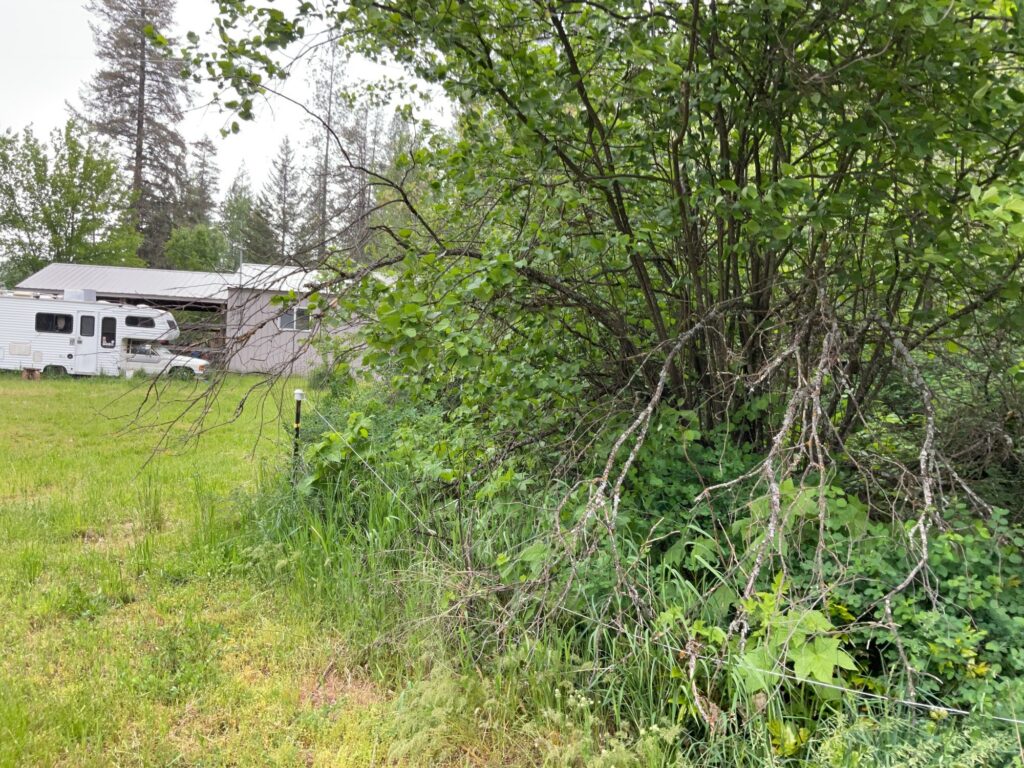
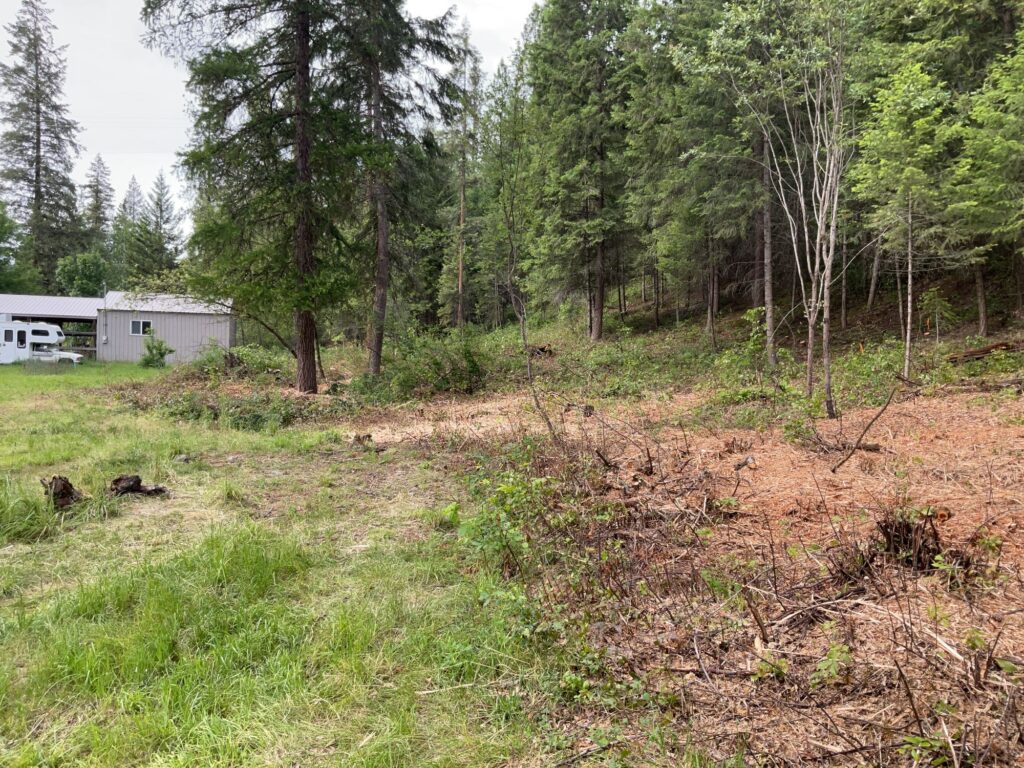
Wadley Project, Northport
Fuels reduction and defensible space for a home at the forest edge: brush and small trees cleared, stand thinned and slash treated. Photographed from the same point before and after.
“The amount of fuel to cut and chip was enormous and you guys did it in such a timely manner, I was and am still amazed! Your crew worked hard and you all should be proud!”
Braden Britt, Washington Department of Natural Resources
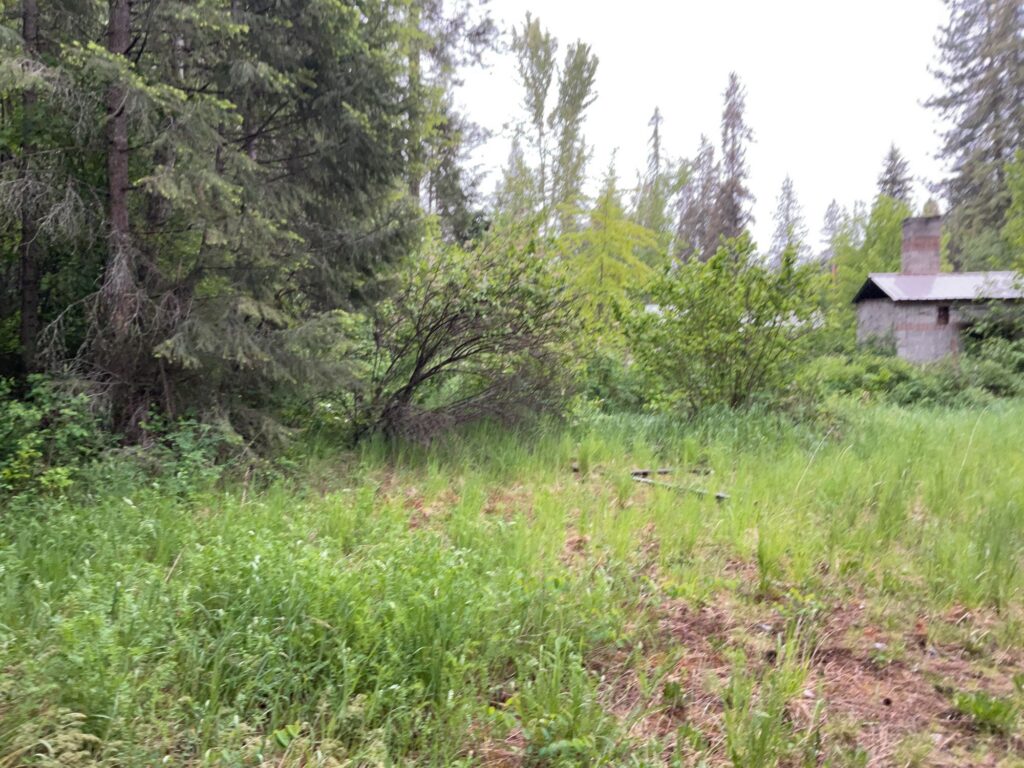
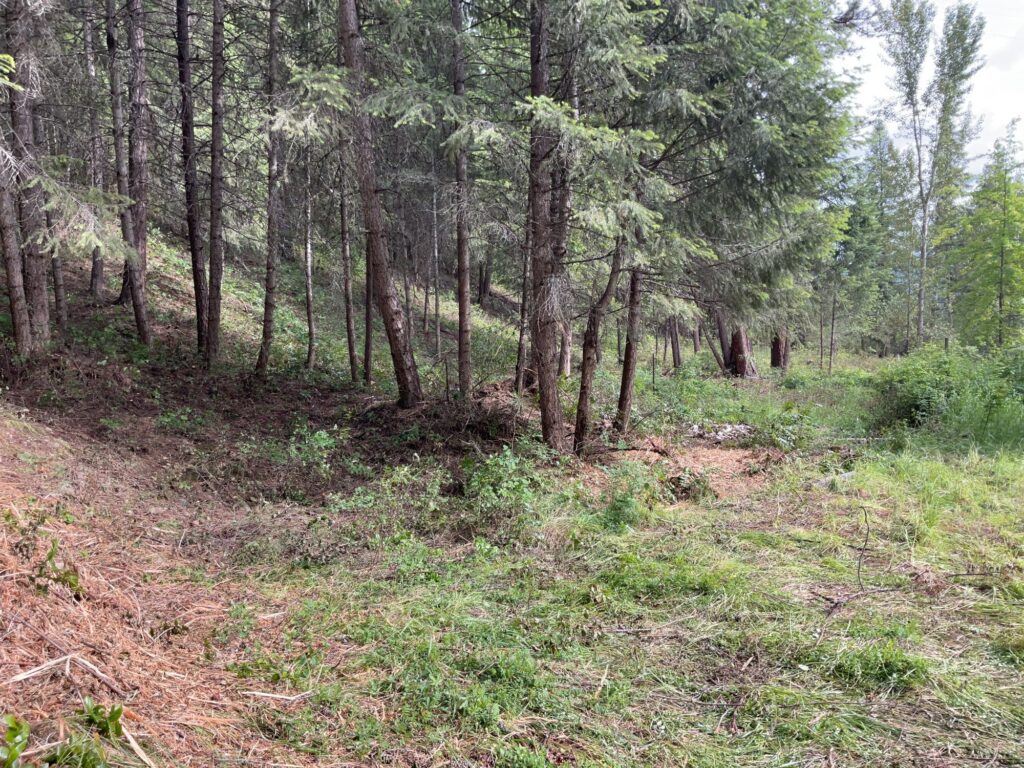
Wadley Project, Northport
Understory and overgrown shrubs cleared along the forest edge, trees spaced and limbed to break up continuous fuel.
“The amount of fuel to cut and chip was enormous and you guys did it in such a timely manner, I was and am still amazed! Your crew worked hard and you all should be proud!”
Braden Britt, Washington Department of Natural Resources
Thinned Land Gives Firefighters a Chance
In the August 2026 Spokane-area fires, a family’s home survived on ground they had thinned with DNR cost share, as reported by Northwest Public Broadcasting. Thinning keeps fire on the ground, where crews can fight it.
Acres of unhealthy forest in Eastern Washington
Acres DNR and partners aim to restore by 2037
Of the restoration need is on small private forestland
Of a landscape treated before high-severity fire drops
Source: Washington DNR, 20-Year Forest Health Strategic Plan for Eastern Washington.
When DNR Isn't the Best Fit
Some programs pay a bigger share or cover the house itself. B&B can do the work under most of them.
| Program | Best for | What it pays | Where to start |
|---|---|---|---|
| DNR Cost Share | Forest owners under 5,000 acres | Up to about 50%, within per-acre limits | Your DNR region (below) |
| DNR Hardship Assistance | Owners meeting a hardship criterion | Extra help, set by DNR for each project | Your DNR region |
| Conservation districts | County forest and home programs | Up to 75% in Spokane and Pend Oreille | Your county conservation district |
| NRCS EQIP | Farm, ranch and forest owners | Contract-based practice payments | NRCS; next WA deadline Dec 18, 2026 |
| Firewise USA micro grant | Firewise communities | Up to $4,000 per community (2024) | [email protected] |
| Wildfire Ready Neighbors | Homeowners in listed counties | Free home-hardening plan | DNR Wildfire Ready Neighbors |
You can’t use DNR cost share and NRCS EQIP for the same work on the same acres. Taxes: DNR may report payments to the IRS, so ask your tax advisor how yours is treated.
Which DNR Office Do You Call?
Eastern Washington splits between two DNR regions. Lincoln County splits at US-2. Pick your county to see who to contact for your free forester visit.
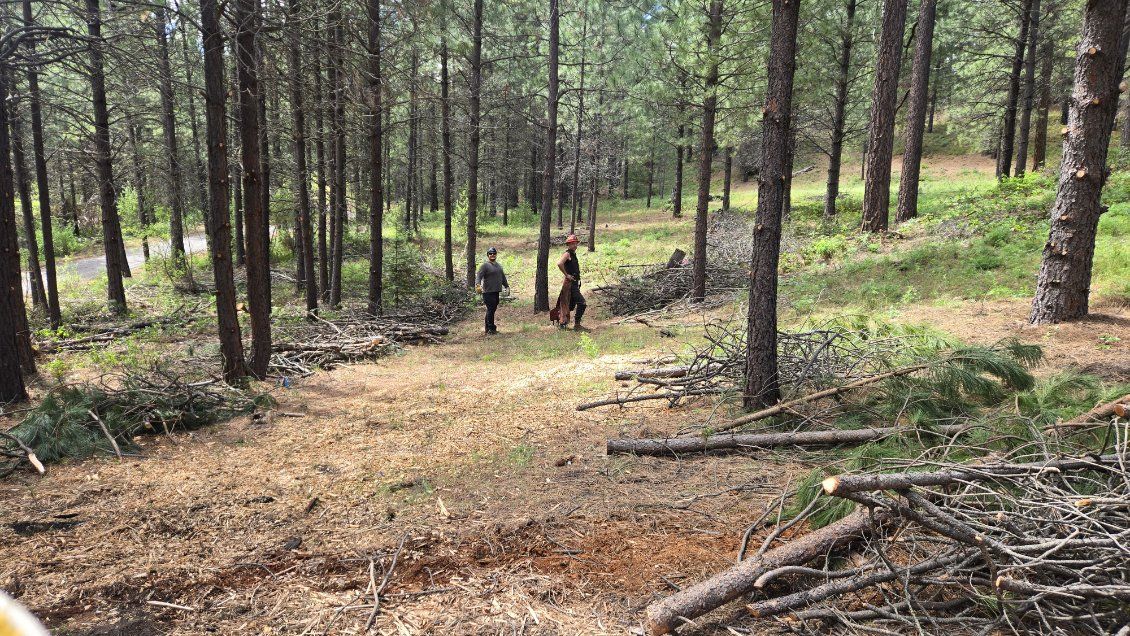
Who you'll be talking to
- Washington DNR-approved contractor
- DNR prime contractor on cost share and hardship projects
- Licensed, bonded and insured
- Crew with 10+ years in wildland firefighting experience
- Serving landowners across Eastern Washington
We'll Help You Through It, Even If You Don't Hire Us
We’re a licensed and bonded fire mitigation contractor based in Eastern Washington, and we’ve worked DNR cost share and hardship projects from the first walk-through to the final inspection. We know how the prescriptions and paperwork work, and we’d rather see your land thinned and your home safer than see you give up on the program because it looked complicated.
So call us with your questions, even if you plan to do the work yourself or the job ends up going to someone else. Questions are free, and so is our first site visit. Neither commits you to anything. If we’re not the right fit, we’ll tell you and point you to who is.
What we'll help with
- Explaining how the program works for your land
- Reaching the right DNR forester for your county
- Finding hardship, conservation district or neighbor programs
- Reading your approval letter and prescription with you
- Honest advice if you want to do the work yourself
DNR Cost Share FAQs
Is DNR cost share a grant?
No. It’s reimbursement. DNR approves a project, the work gets done, DNR inspects it, and then DNR pays its share of the actual cost up to the approved amount.
How much will DNR pay?
Usually up to half of your actual cost, limited by DNR’s per-acre maximums for each type of work. Your approval letter states the exact amount. Hardship assistance can cover more.
Is there a minimum acreage?
No minimum for thinning, pruning and slash work. Forest stewardship plans need at least 20 forested acres, and a free forester visit is guaranteed at 5 acres or more.
I have a 2-acre home lot with pines. Do I qualify?
You may. If the land is forested and you’re not federal, size isn’t a barrier. Ask DNR for a visit; if they can’t come out, they can help by phone or email.
Can I start the work and apply later?
No. DNR must approve the project in writing before any work starts. Work done early isn’t eligible.
Can I do the work myself?
Yes. DNR lets owners do the work and claim their own labor. You still need to meet the prescription and keep records of your time.
Can DNR pay B&B directly?
Sometimes. DNR has paid B&B directly on some projects. DNR’s standard application pays the landowner, so whether it can pay us on yours depends on how your agreement is set up. Ask your forester, or ask us and we’ll explain the options.
What if the work costs more than DNR approved?
You pay the difference. DNR’s share is capped at the approved amount, even if steep ground or heavy fuels push the cost up.
How long until DNR pays?
Payment comes after the inspection. Once the work is done, you report it with receipts or time records, and DNR schedules a visit to check it. DNR doesn’t publish a set timeline, so ask your forester what to expect in your region.
Can my neighbors and I apply together?
Yes. Neighbor projects can cost less per owner, and DNR has paid a larger share on some group projects.
What happens to the slash and firewood?
It’s chipped, mulched, hauled, or piled and burned, as the prescription says. Burn piles must be burned before your approval expires. Firewood from the work is yours to use.
Does this help with my homeowners insurance?
It might. Some insurers consider mitigation in high-risk areas. We give you before and after photos and a summary of the work to share with your agent.
Is hardship assistance really free?
It can be. On some hardship projects DNR pays for the work up to a limit, and the owner pays little or nothing. DNR decides what each project covers, so ask your service forester, or call us and we’ll walk you through it.
Can I apply after a wildfire?
Yes, for work still to be done. Post-fire help may also come through your conservation district or FEMA-funded local programs.
When is the best time of year?
Fall through spring. Cutting pine near the first snow avoids spreading bark beetles, and pile burning is safest on wet or snowy ground.
What do I have to keep up afterward?
DNR asks you to keep the treated area in good shape for 15 years, or you may have to repay part of the cost. The obligation ends if you sell.
Be Ready for Your Forester Visit
Forester Visit Checklist
What to have ready: parcel number, a property map, your goals and a few photos. One page, PDF.
Questions to Ask Your Forester
Thirteen questions with room for answers, so you leave the visit knowing what’s next. One page, PDF.
DNR Program Page
Financial Assistance for Wildfire Resilience and Forest Health.
Find Your Forester
DNR’s map of service foresters by area.
Burn Permits
Rules for burning slash piles, and the permit portal.
Wildfire Mitigation Services
Every service our crew offers, with what’s included.
Plan Your Cost Share Project With B&B
Tell us a little about your land. We’ll call you back within one business day, help you line up your DNR forester visit, and walk your property with you. The first site visit is free.
- A call back within one business day
- A free first site visit and a quote that fits your approval
- Help lining up your DNR forester visit
- Straight answers on hardship assistance
DNR decides eligibility, the amount and the timing. Estimates on this page aren’t a promise of funding.