
Wildfire Mitigation Services in Eastern Washington
B&B Wildland Fire reduces wildfire risk to Eastern Washington homes and land through defensible space, fuels reduction and home hardening. We’re a Washington DNR-approved mitigation contractor, and our crew brings more than a decade of wildland firefighting experience to every property.
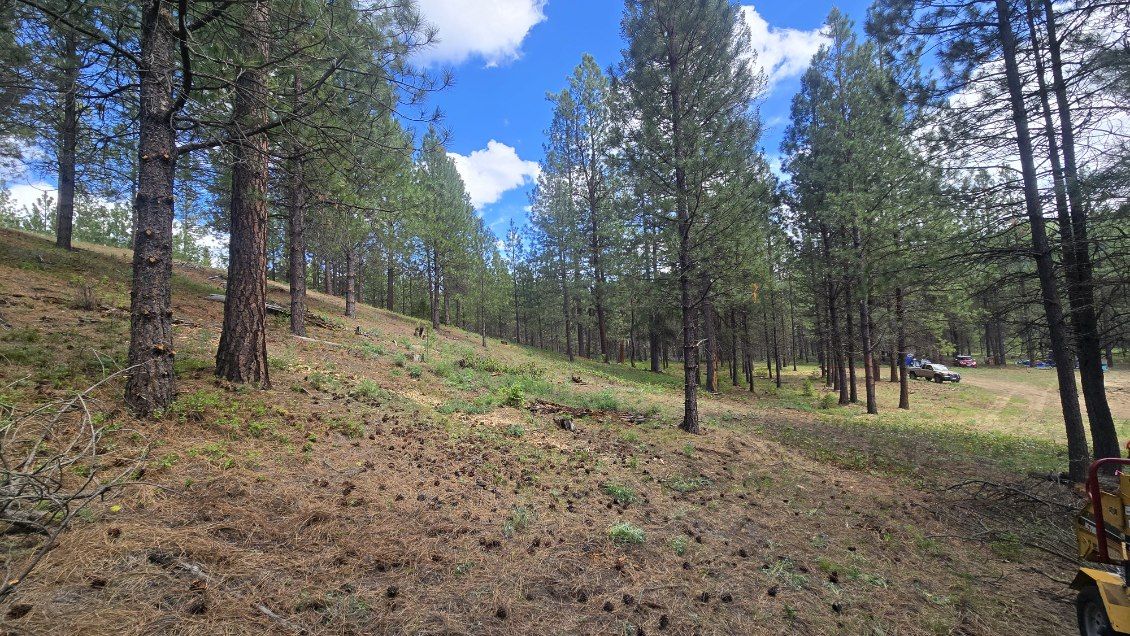
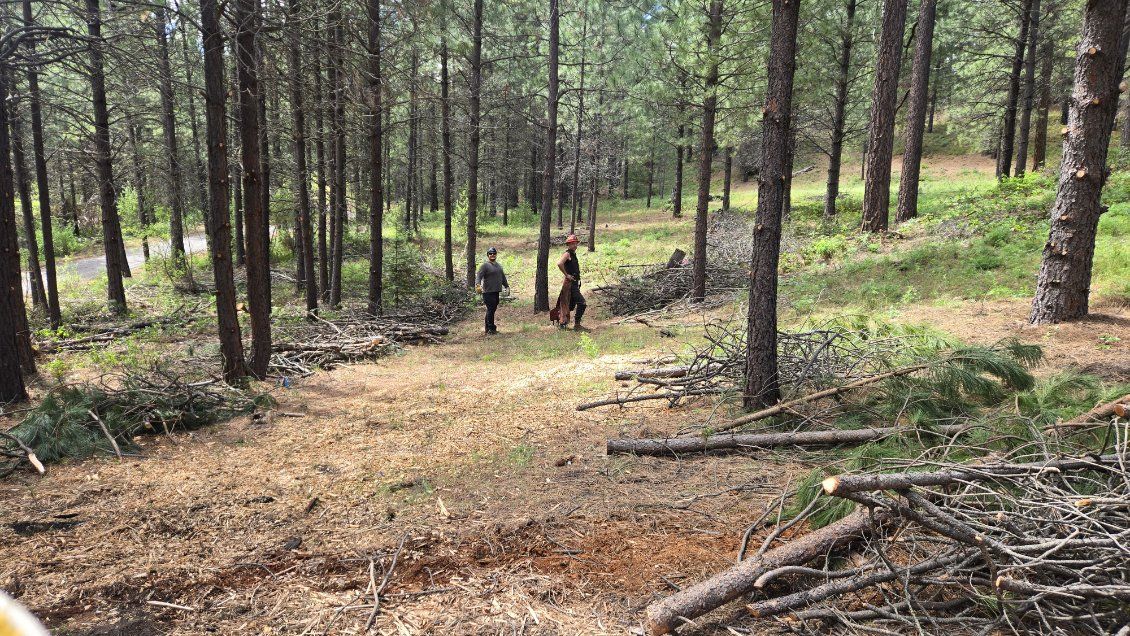
How Wildfire Mitigation Protects Your Home and Land
Wildfire mitigation is the work of lowering the chance that a wildfire damages your home, outbuildings and land. It removes and rearranges the fuel around a structure, and closes the gaps where embers get in. Done well, it slows a fire, keeps flames on the ground and gives firefighters a safer place to work.
Washington DNR notes that up to 80 percent of homes lost to wildland fire might have been saved with cleared brush and defensible space. Across the Inland Northwest, dry summers, heavy fuels and homes built into the timber make that preparation matter more every year.
- Defensible space around every structure
- Thinned, healthier stands that slow fire spread
- Fewer ember entry points on the home itself
- A plan you can maintain year after year
Recognized by the Washington Department of Natural Resources for wildfire mitigation and fuels reduction, including Cost Share and Hardship Program projects.
Washington contractor license BBWILWF743C3. You can verify it with L&I before we start.
NWCG-qualified personnel (ENGB, FFT1, FFT2) plan and carry out every project.
Mitigation Planned by Wildland Firefighters
We plan every job around how a fire would reach your home: the slope, the wind, the fuels and the structure itself. The work that cuts the most risk gets done first.
Fire-Line Experience
Our crew has fought wildfire across the Inland Northwest. We plan mitigation around how fire really behaves on your terrain.
Home and Land, Assessed Together
We assess roofs, vents, decks, gutters and siding alongside the vegetation, because embers start many home fires.
Protection That Still Looks Like Home
We thin, prune and clean up. You keep healthy trees, shade and privacy.
Owner Oversight
An owner oversees every project, from the first walk-through to the final cleanup.
Defensible Space Zones and Fire Entry Points
Most homes lost to wildfire are ignited by embers and small surface fires. So we assess your property as one system: the house, everything touching it, and the land around it out to 100 feet or more.
Immediate
0–5 ft
Non-combustible ground cover. Nothing burnable against walls, under decks or in gutters.
Intermediate
5–30 ft
Spaced, pruned trees and shrubs. Short, green grass. Breaks that stop fire creeping in.
Extended
30–100 ft+
Thinned stands, ladder fuels removed, dead and down cleared. Farther downhill on slopes.
Fire Entry Points We Check on Every Home
Wind-blown embers can land on homes more than a mile from the flames. These are the places they find their way in.
- Roof covering, valleys and debris on the roof
- Gutters full of needles and leaves
- Attic, soffit and foundation vents without ember-resistant screening
- Gaps at eaves, siding, garage doors and where materials meet
- Decks, porches and the space underneath them
- Wood fences, firewood, propane tanks and outbuildings close to the house
- Driveway access and turnaround space for fire engines
Get Your Free Wildfire Mitigation Blueprint
Your Blueprint is our free estimate. A wildland firefighter walks whatever parts of your property you want reviewed, from a full mitigation plan for the whole place to a few problem areas. You get a clear, prioritized plan with options for the work we can do, and simple fixes you can do yourself.
What Your Blueprint Includes
- On-site walk-through by a wildland firefighter
- Vegetation and fuels review for the areas you choose
- Structure check for ember entry points and gaps
- Prioritized recommendations, most urgent first
- Itemized options and pricing for the work we handle
- Guidance on DNR cost share eligibility
A Single Crew for All Wildfire Mitigation Services
From a single defensible space project to a multi-acre fuels reduction job, we bring the people and the equipment to finish it. Choose a service to see what’s involved.
Defensible Space Creation
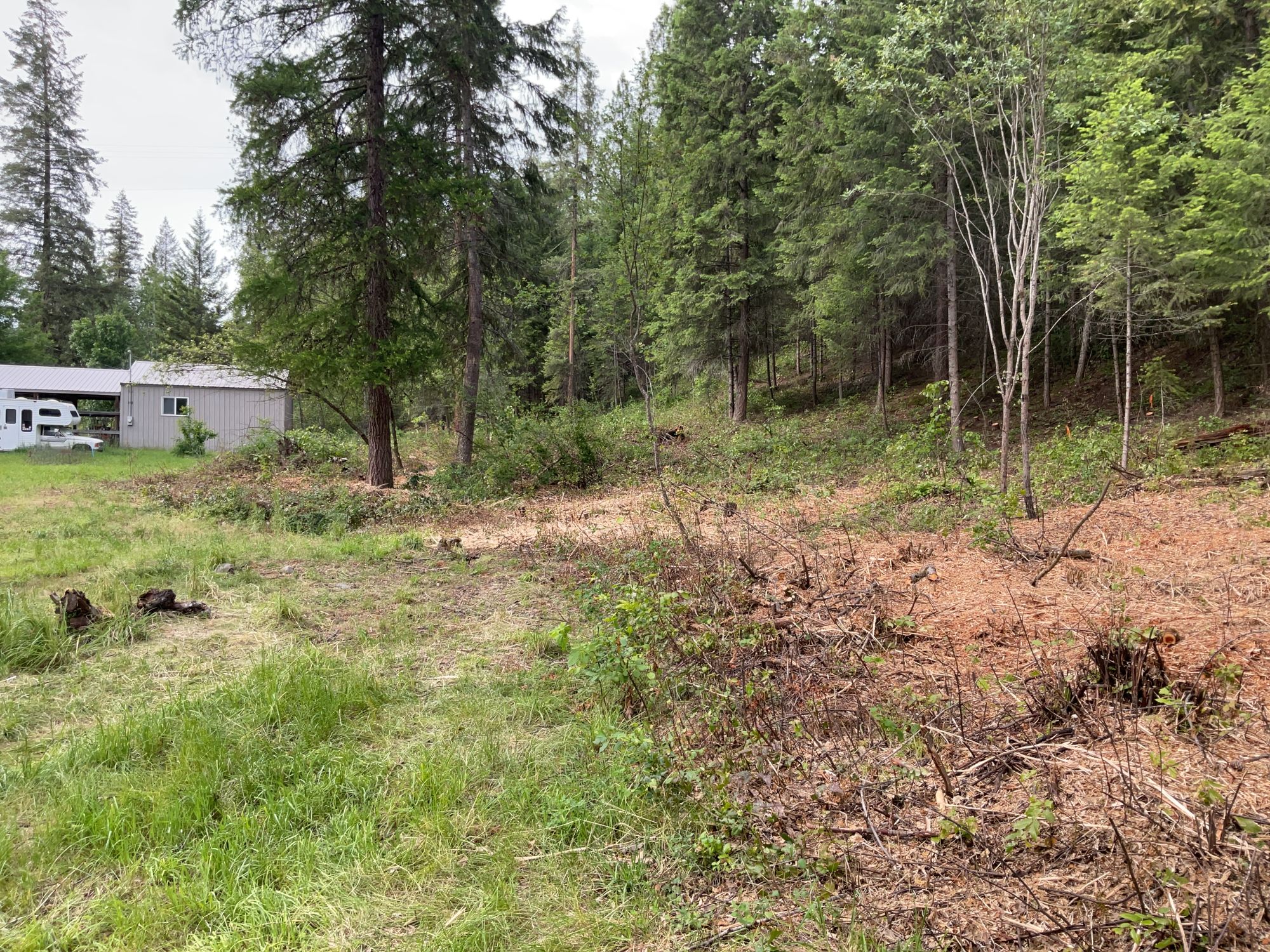
Defensible space is the managed buffer around your home that slows a wildfire and gives firefighters room to work. We build it in all three zones, from the walls out to 100 feet or more.
In the immediate zone, 0 to 5 feet, we clear everything that can carry fire to the house: needles, bark mulch, firewood, dead plants and anything stored under decks. In the intermediate zone, 5 to 30 feet, we space and limb trees and shrubs so flames cannot jump from one to the next. In the extended zone, 30 to 100 feet and farther on slopes, we thin the stand and remove ladder fuels and dead and down material.
Every defensible space project follows Firewise USA and Washington DNR guidance. We adjust it to your terrain, the trees you want to keep and how you use your property.
- Immediate-zone cleanup to 5 feet
- Tree and shrub spacing to 30 feet
- Thinning and ladder fuel removal to 100 feet+
- Slash chipped, hauled or piled for burning
Homes, cabins and outbuildings in or next to the timber anywhere in Eastern Washington.
Fuels Reduction & Forest Thinning
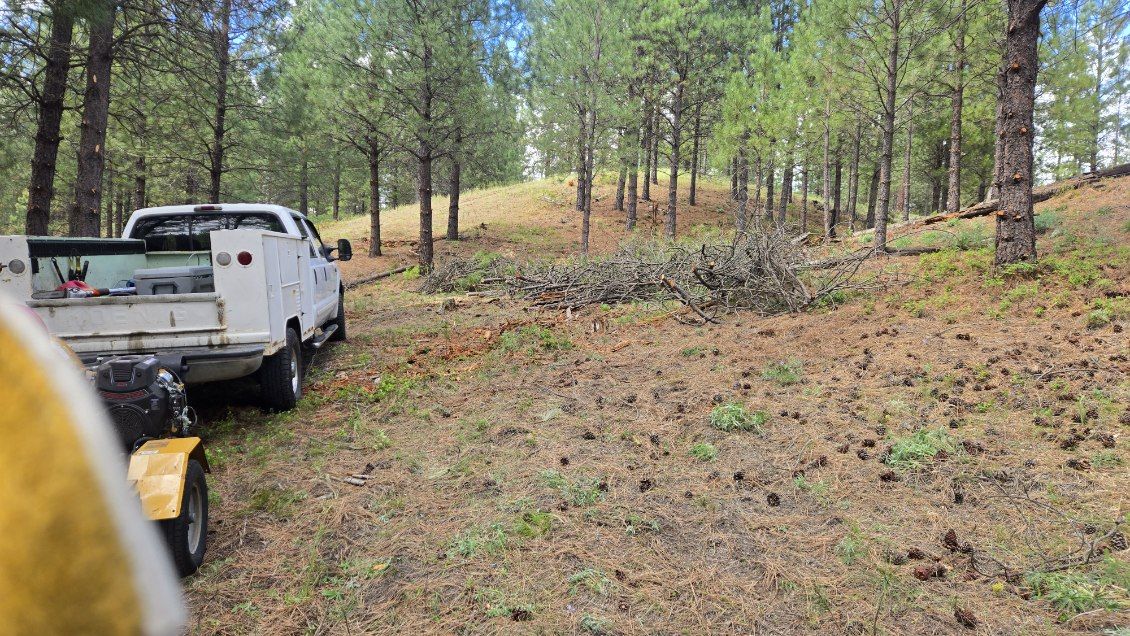
Hazardous fuels reduction thins overcrowded stands and clears heavy understory, so a wildfire stays on the ground and moves more slowly.
Many Inland Northwest forests carry far more trees and brush than they did historically. That continuous fuel lets fire spread fast and climb into the crowns. We remove suppressed, diseased and excess trees, cut brush and clear dead and down material, leaving well-spaced, healthier trees with room to grow.
Thinning also improves forest health, reducing competition for water and the spread of bark beetles. Many fuels reduction projects on forestland qualify for Washington DNR cost share.
- Thinning of small and overcrowded trees
- Brush and understory removal
- Dead and down fuel cleanup
- Slash treatment to finish the job
Forested parcels, from an acre around a home to larger stands on ranches and timber ground.
Ladder Fuel Removal & Limbing
Ladder fuels are the low branches, brush and small trees that let a ground fire climb into the canopy. Removing them is one of the most effective mitigation steps.
A surface fire is far easier to control than a crown fire. We prune lower limbs, typically to 6 to 10 feet depending on tree size, and remove the small trees and brush growing beneath larger ones. That opens a vertical gap fire cannot easily cross.
Limbing is precise work that keeps healthy trees healthy. Our crew makes clean cuts and leaves enough live crown for the tree to thrive.
- Pruning lower limbs on retained trees
- Removing understory saplings and brush
- Clearing fuel beneath canopy edges
- Cleanup of all cut material
Properties with mature trees you want to keep, especially near the house and along driveways.
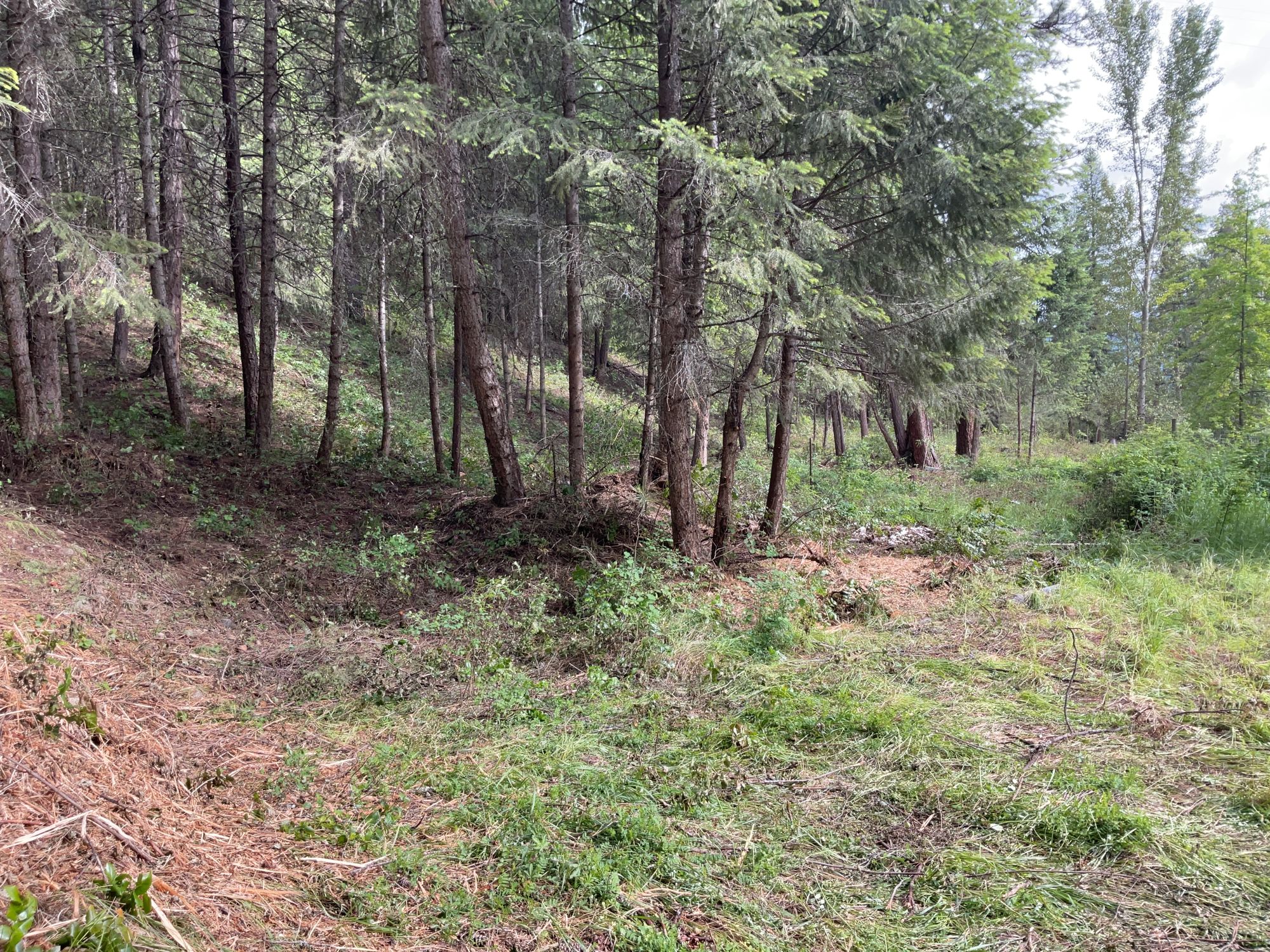
Brush & Vegetation Removal
Dense brush, tall dry grass and overgrown shrubs carry fire quickly toward structures. We remove the most flammable growth and space what stays.
Brush removal is often the fastest way to cut wildfire risk around a home. We clear invasive and highly flammable shrubs, mow or cut tall grass, and thin native vegetation so it no longer forms a continuous fuel bed. Plants you want to keep are pruned and spaced, not stripped.
We work by hand around homes, fences and landscaping, and bring equipment in where the ground allows.
- Shrub and brush cutting
- Tall grass and weed control
- Spacing and pruning of retained plants
- Debris removal
Overgrown yards, field edges, fence lines and the brushy margins between lawn and forest.
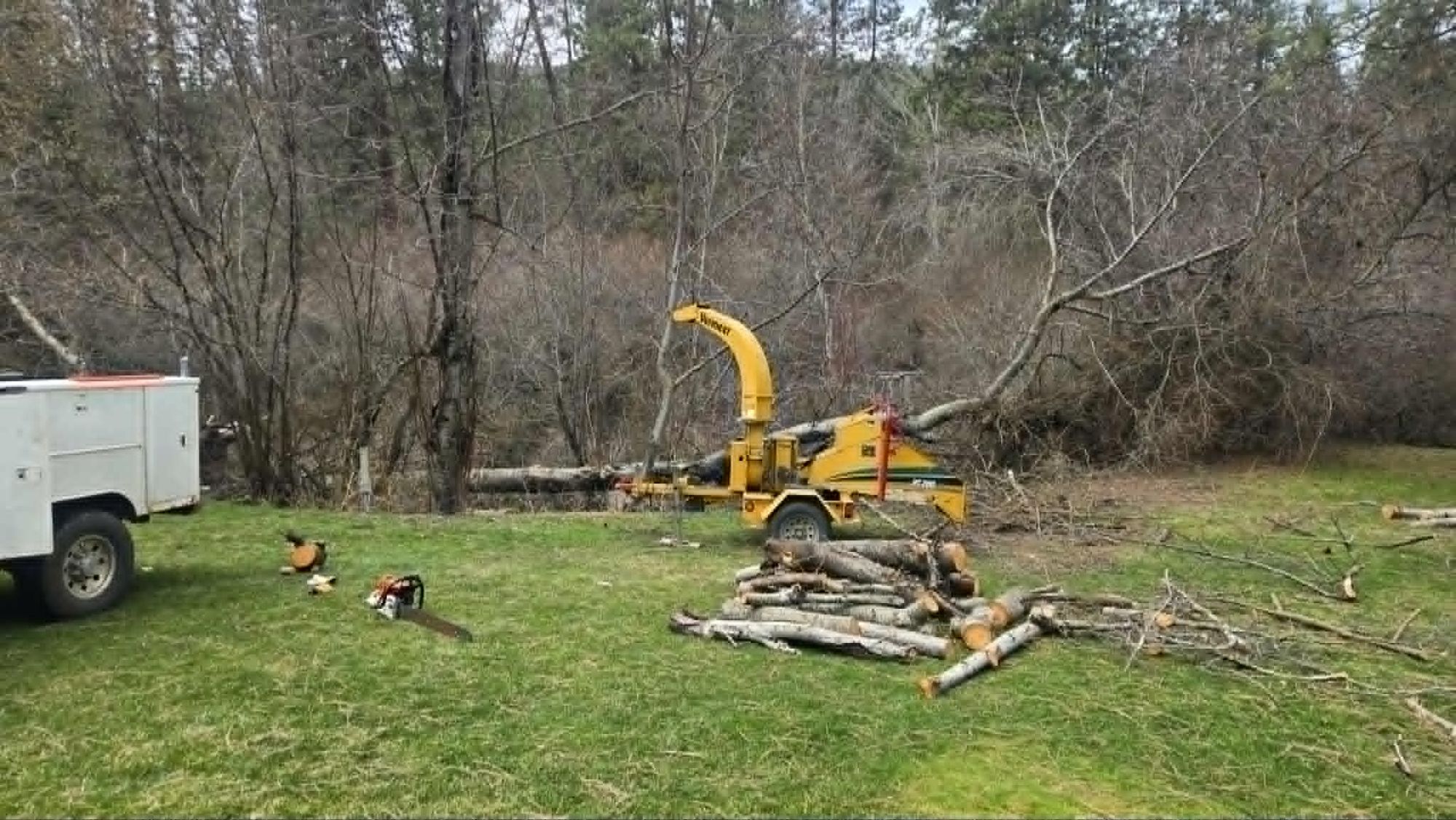
Chipping & Slash Removal
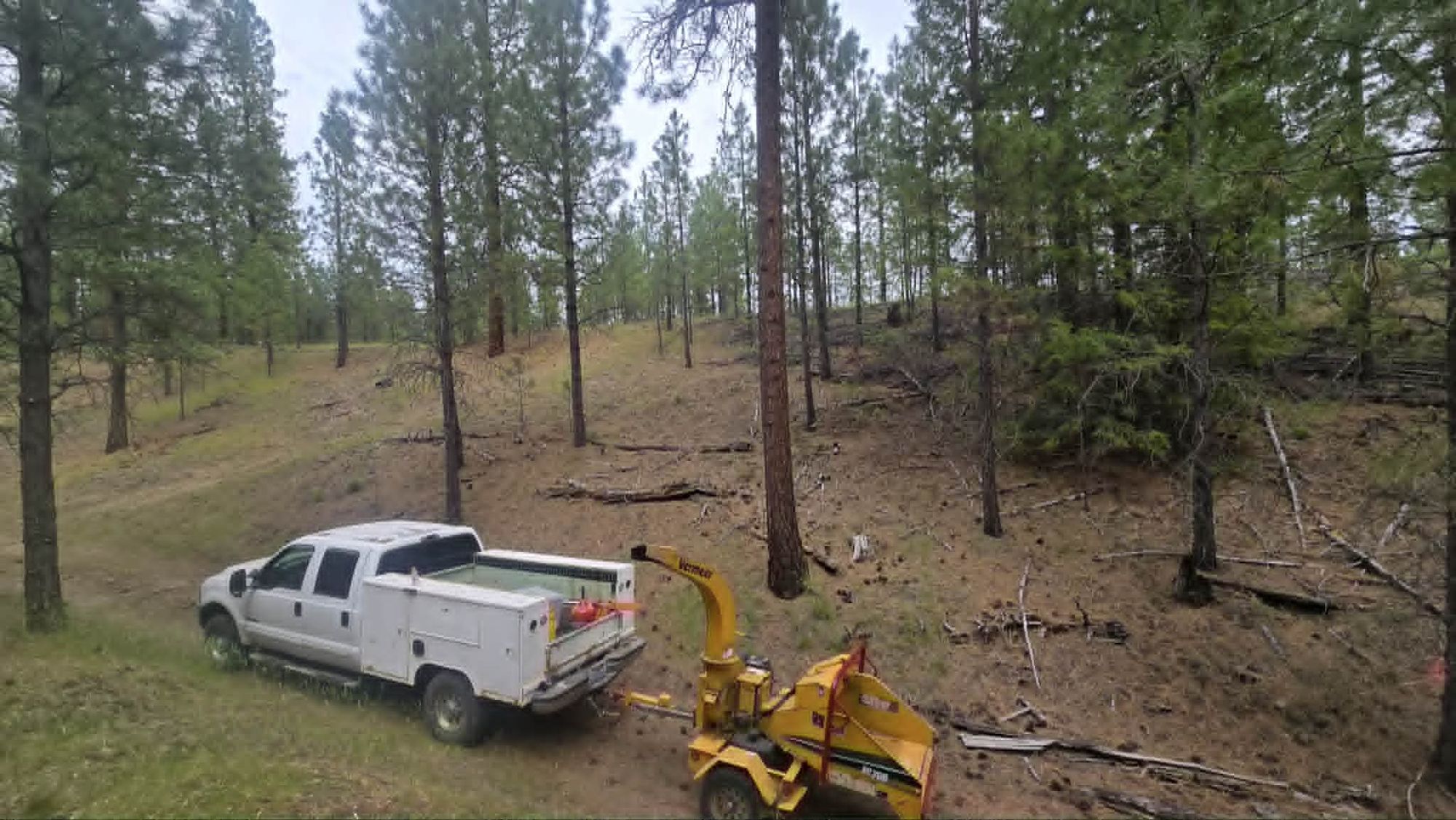
Every mitigation project leaves slash: limbs, brush and small trees. Our 7-inch chipper turns it into chips, so cut material doesn’t become new fuel.
Leaving slash piled on the ground can raise fire risk rather than lower it. We chip limbs and brush on site and either spread the chips thinly where they help hold soil, or haul them away. Larger material can be bucked into firewood lengths, decked or removed.
Chipping is quiet, clean and works close to homes and roads where burning is not an option.
- On-site chipping with our 7-inch chipper
- Chips spread thinly or hauled away
- Firewood bucking of larger rounds
- Final raking and cleanup
Projects near homes, roads and neighbors, and any time burning is restricted.
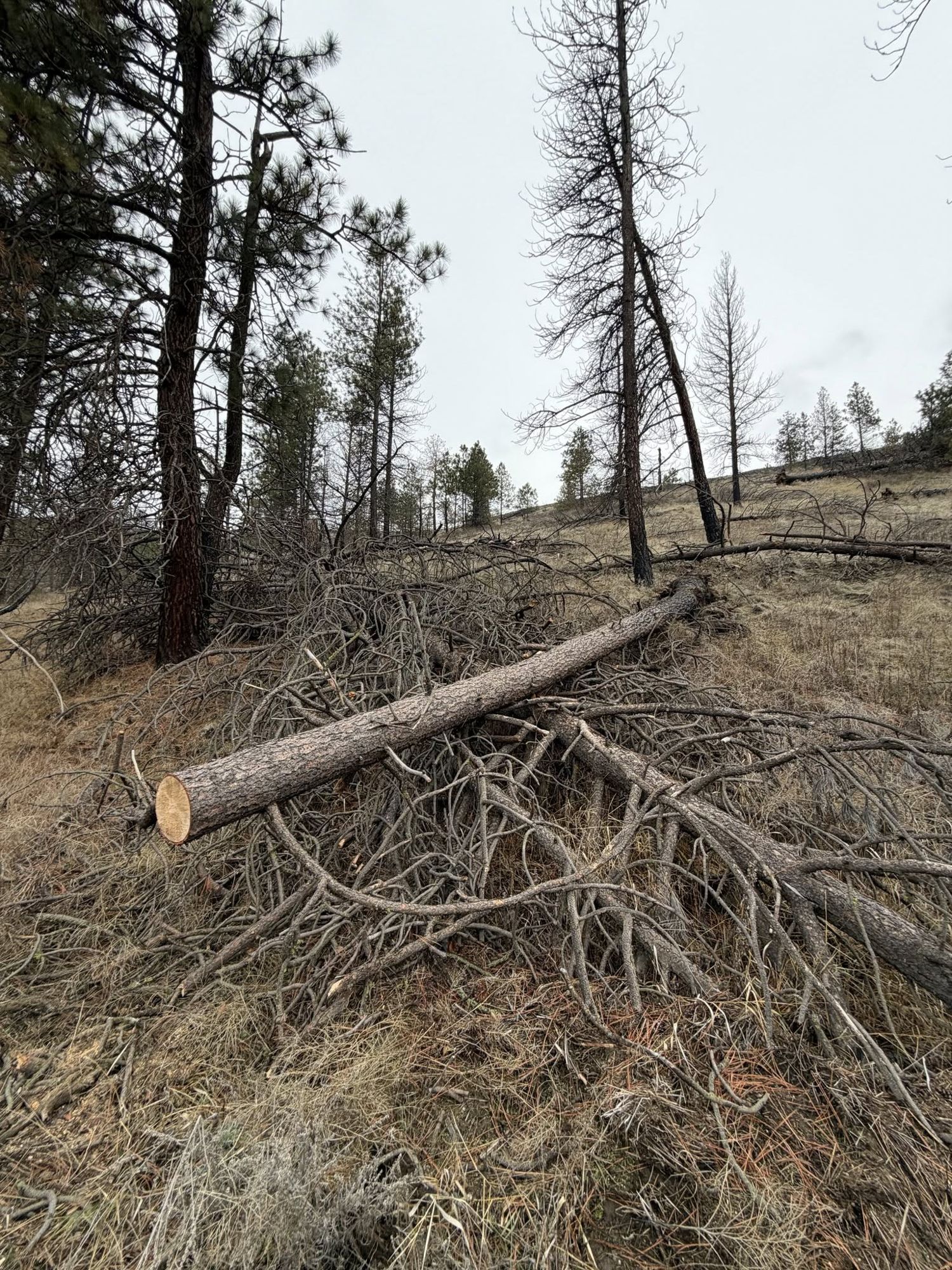
Forestry Mulching
Forestry mulching grinds brush and small trees in place, in one pass, leaving a layer of mulch on the ground.
Mulching clears large areas of brush and small trees quickly, without piles to burn or haul. The mulch layer protects soil from erosion and breaks down over time. It is well suited to access corridors, fuel breaks and larger parcels.
Mulching is not right everywhere. Thick mulch close to a home can hold fire, so near structures we chip and remove material instead. Your Blueprint marks where each method fits.
- Brush and small-tree mulching in place
- Driveway and access-road corridors
- Fuel break creation
- Planning around trees you want to keep
Larger parcels, fuel breaks, overgrown pasture edges and road corridors.
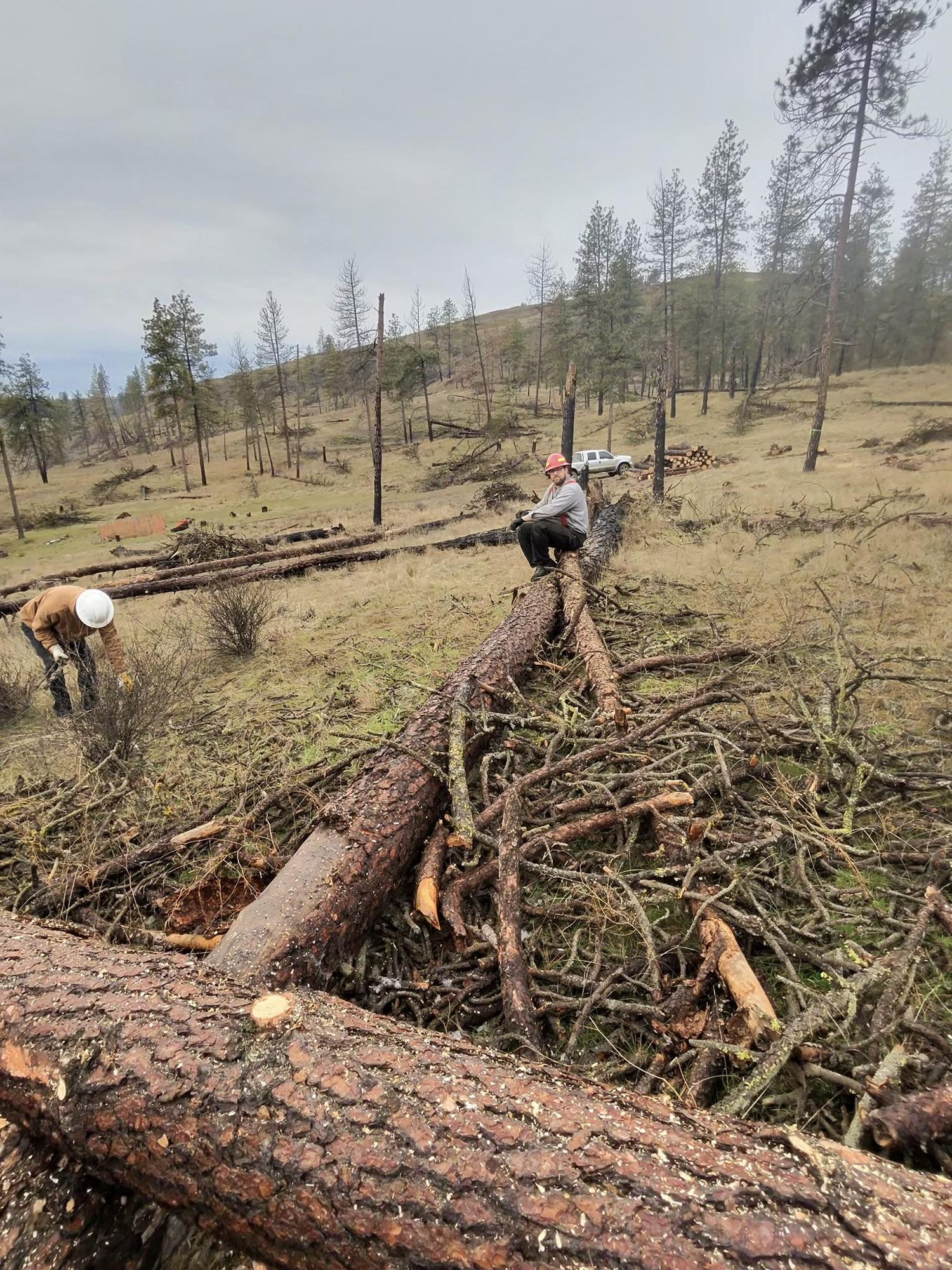
Hazard Tree Removal
Dead, dying, leaning or fire-damaged trees can fall on homes, fences, power lines and roads. Our sawyers remove them safely.
Hazard trees are a risk in any season and a serious one during and after a fire. We assess each tree, plan the fall, and fell or section it with care around structures, livestock and fencing. Our crew brings real wildland fire experience with directional felling in difficult terrain.
After felling we limb, buck and clean up. Usable wood can be left as firewood or decked for you.
- Tree assessment and fall planning
- Directional felling and sectioning
- Limbing, bucking and cleanup
- Firewood or decked logs on request
Beetle-killed, burned or storm-damaged trees near homes, fences, driveways and power lines.
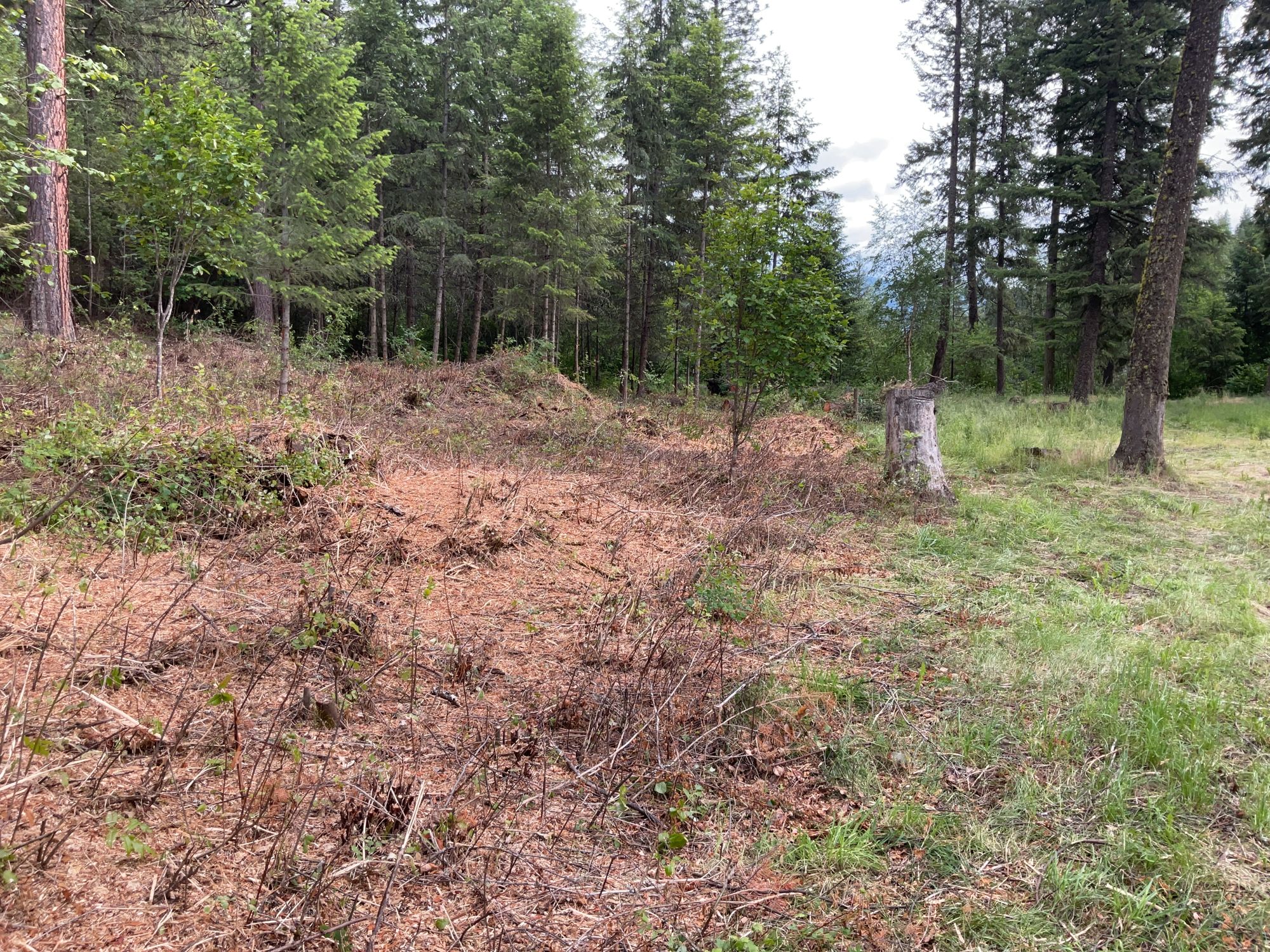
Firebreak Construction
A firebreak is a strip of cleared or reduced fuel that slows a wildfire and gives crews a safe place to work.
We build fuel breaks along property lines, driveways, roads and ridgelines, sized to your terrain and vegetation. A shaded fuel break keeps well-spaced large trees and removes the brush and small trees beneath them. Where needed, we clear a mineral-soil line to the ground.
Firebreaks work best as part of a wider plan with defensible space around structures. We map them with you during your Blueprint visit.
- Fuel break layout and planning
- Shaded fuel breaks along roads and lines
- Brush and small-tree removal
- Maintenance recommendations
Larger properties, ranches, long driveways and land bordering open forest or grassland.
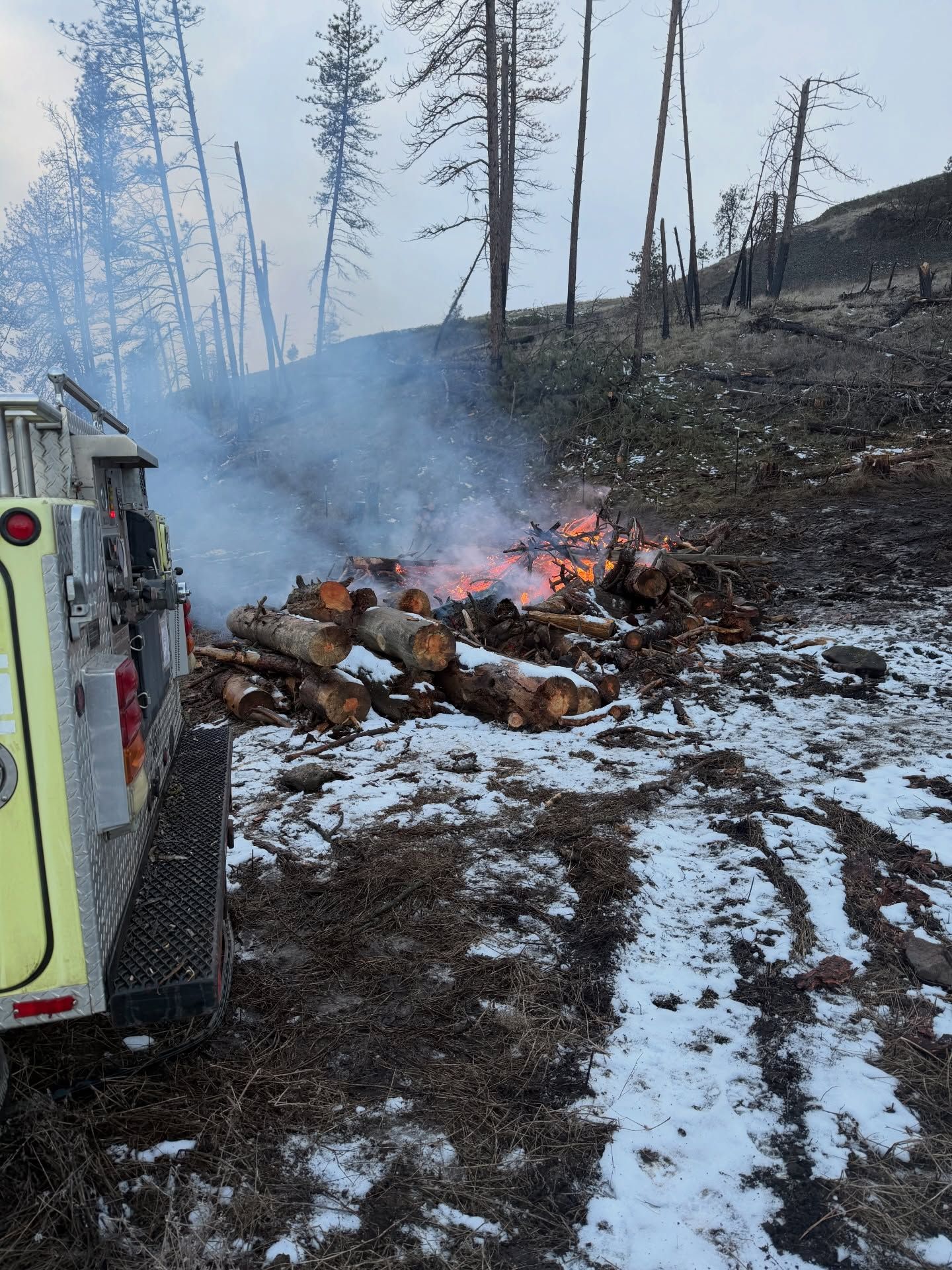
Pile Burning & Prescribed Burn Support
When slash is too heavy or remote to chip, safe pile burning is often the best way to remove it. We burn under the right conditions, with our Type 6 engine on standby.
We build compact, well-placed piles during the project and burn them when the ground is wet or snow-covered and conditions allow. Every burn follows Washington DNR and local burn rules, and we check permits and restrictions before lighting.
Our crew also supports prescribed burns with trained personnel and engine resources.
- Pile building during the project
- Permit and burn-restriction checks
- Supervised burning with engine standby
- Mop-up until piles are out
Remote slash, heavy fuels and large thinning projects where chipping is impractical.
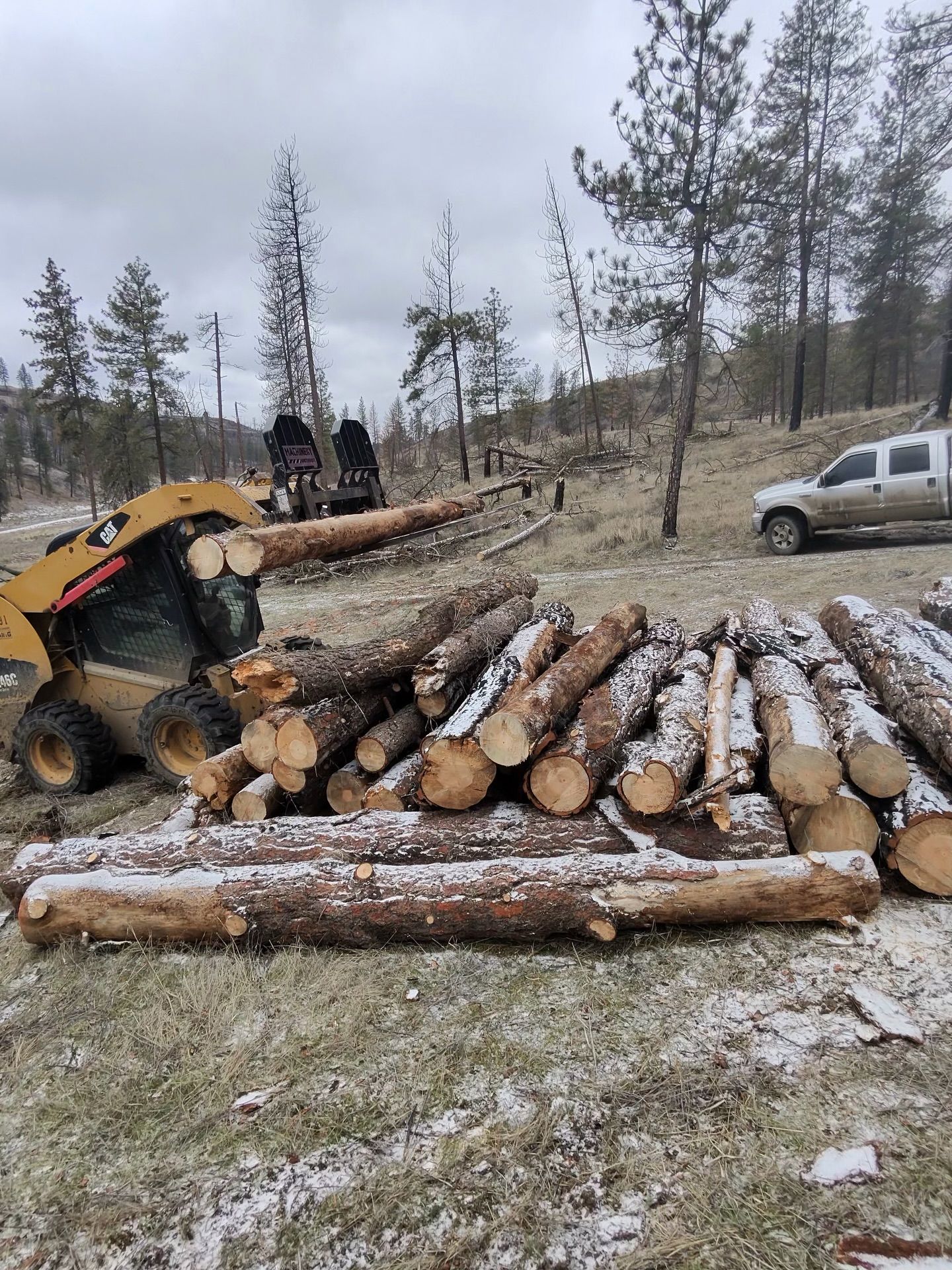
Land Clearing & Site Preparation
We clear land for driveways, building sites, fire engine access and turnarounds, with fire safety built into the plan.
Good access is part of mitigation. A fire engine needs a road wide enough to get in and room to turn around. We clear vegetation along driveways, open turnarounds and prepare building sites, keeping fire-wise spacing in mind from the start.
Logs and wood from clearing can be decked for sale or firewood, chipped or removed.
- Driveway and access widening
- Engine turnaround clearing
- Building site preparation
- Log decking and debris handling
New builds, long or narrow driveways, and properties firefighters would struggle to reach.
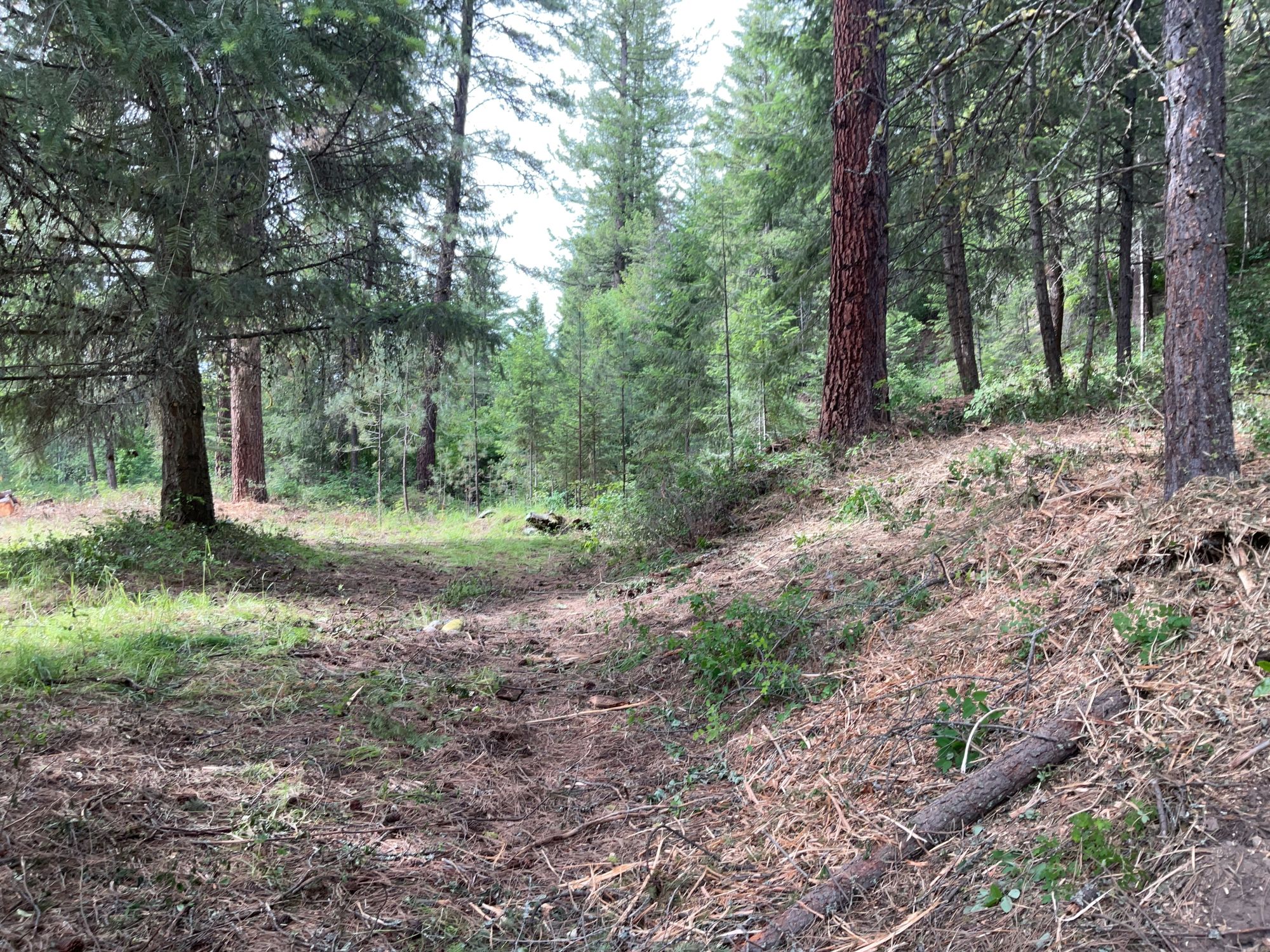
Home Hardening Fixes
Embers cause many home ignitions. Your Blueprint finds the entry points, and we take care of common fixes as part of your project.
During the Blueprint we check the roof, gutters, vents, decks, siding and anything stored against the house. Some fixes need a roofer or builder, and we tell you which. Many are quick and inexpensive, and our crew handles them alongside the vegetation work.
We also give you a simple list of fixes you can do yourself, so the house is ready as well as the land.
- Gutter and roof debris clearing
- Clearing under decks and porches
- Immediate-zone cleanup and ground cover
- Ember-resistant vent screening
Every home that gets a Blueprint, especially older homes with open vents, wood decks or gutters under trees.
Ongoing Maintenance
Defensible space is not one and done. Grass, brush and saplings grow back, and needles fall every year.
We offer return visits to keep your mitigation working. Typical maintenance includes clearing the immediate zone each year, cutting regrowth and re-thinning brush every few years.
Regular maintenance costs far less than the original project and keeps your property ready for every fire season. It also keeps your before-and-after records current for insurers.
- Annual immediate-zone cleanup
- Brush and sapling regrowth control
- Periodic re-thinning
- Updated photo records
Every property we have treated, and owners who want a dependable seasonal schedule.
A DNR-Approved Contractor for Cost Share Projects
B&B Wildland Fire is a Washington DNR-approved contractor and a prime contractor on DNR Cost Share and Hardship Program projects. Eligible landowners can have part of the cost of wildfire mitigation and forest health work reimbursed, and we help you through each step.
- Help you apply and line up your DNR forester visit
- Complete the approved treatment to program standards
- Handle DNR Hardship Program projects for eligible owners
- Document the work with before-and-after photos and invoices
DNR Prime Contractor
Cost Share & Hardship Programs
Before and After: Our Mitigation Projects
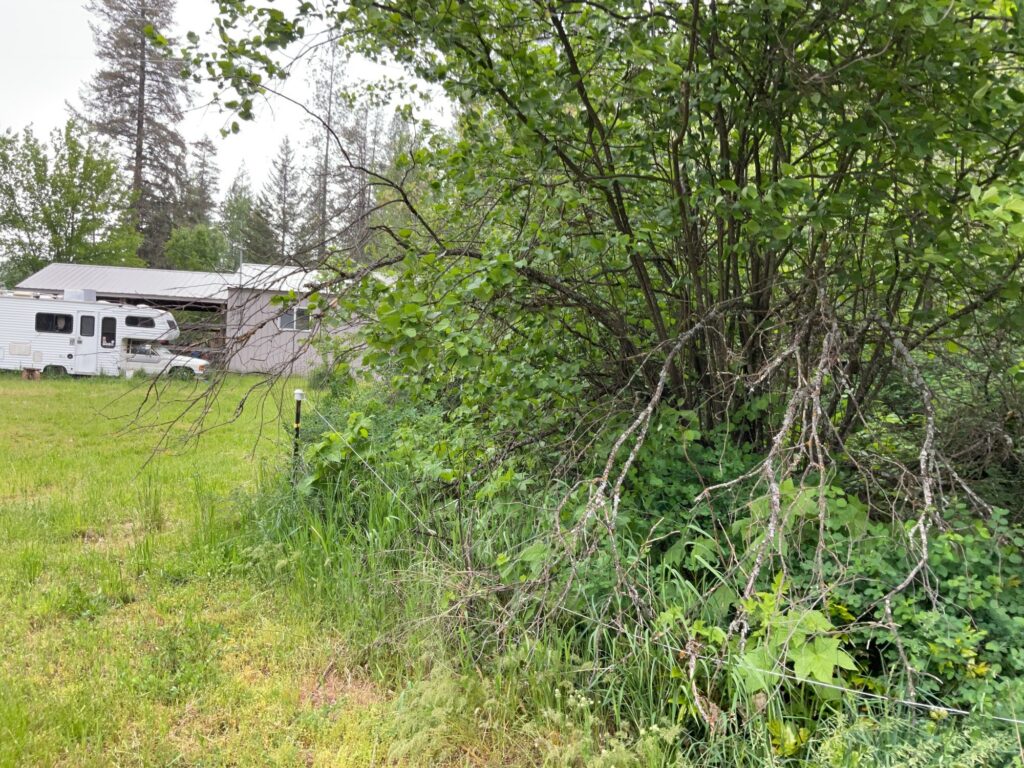
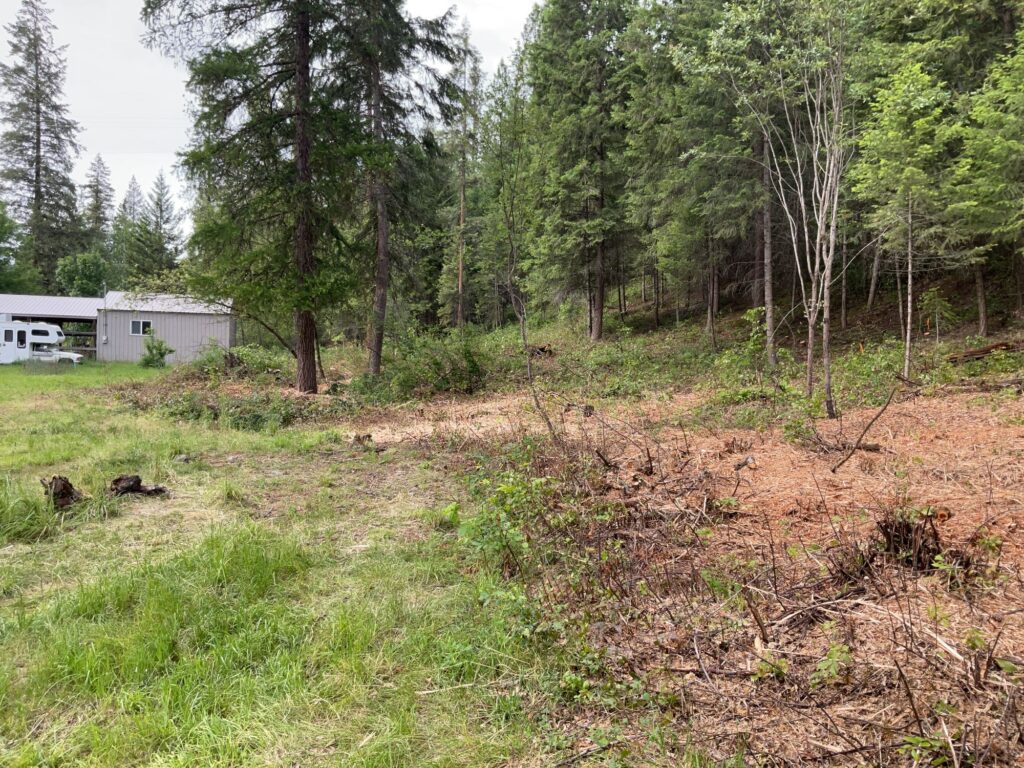
Wadley Project, Northport
Fuels reduction and defensible space for a home at the forest edge: brush and small trees cleared, stand thinned and slash treated. Photographed from the same point before and after.
“The amount of fuel to cut and chip was enormous and you guys did it in such a timely manner, I was and am still amazed! Your crew worked hard and you all should be proud!”
Braden Britt, Washington Department of Natural Resources
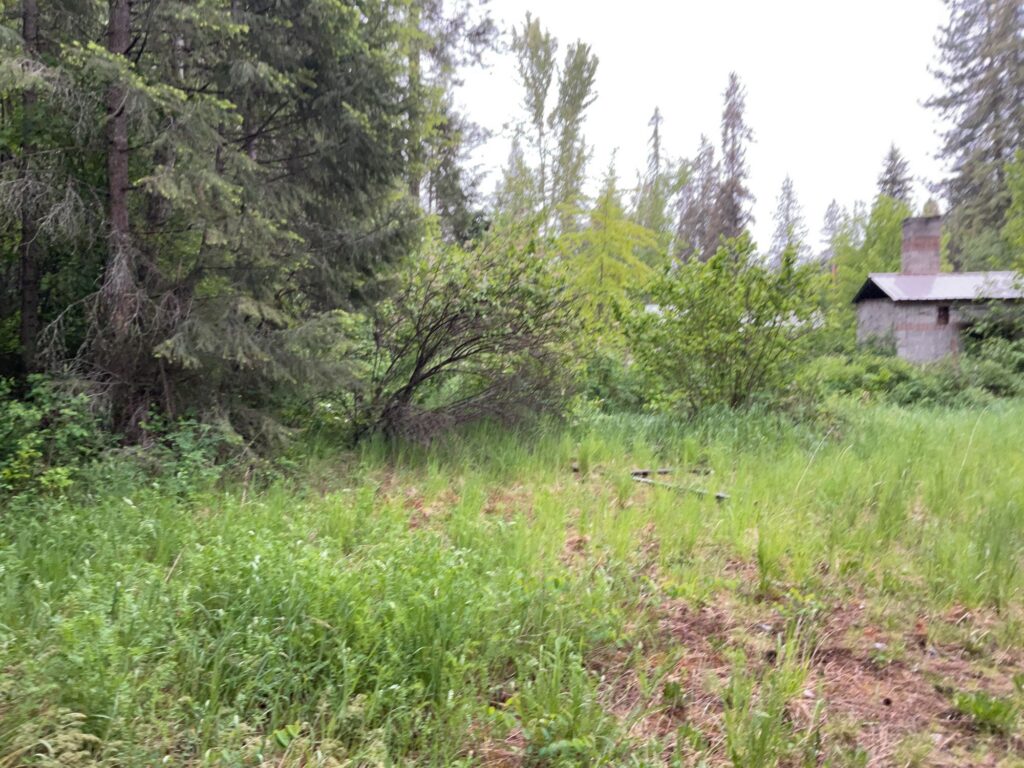
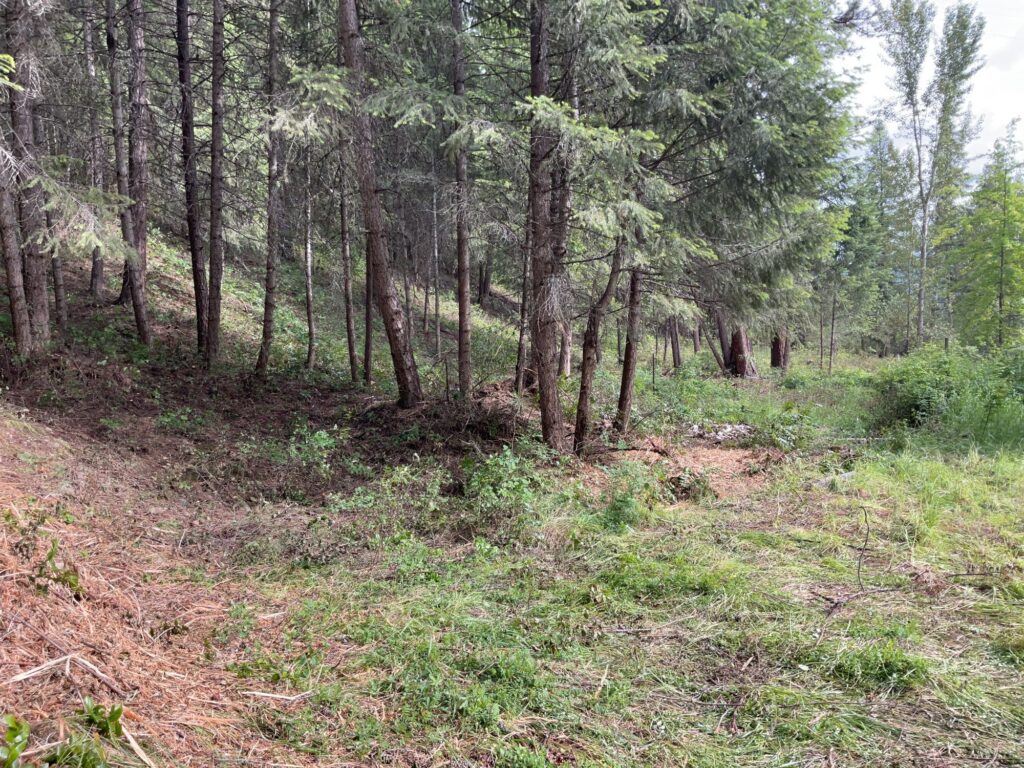
Wadley Project, Northport
Understory and overgrown shrubs cleared along the forest edge, trees spaced and limbed to break up continuous fuel.
“The amount of fuel to cut and chip was enormous and you guys did it in such a timely manner, I was and am still amazed! Your crew worked hard and you all should be proud!”
Braden Britt, Washington Department of Natural Resources
From Free Blueprint to Finished Property
Blueprint Visit
We walk the areas you want reviewed and talk through your goals, budget and timeline.
Plan & Quote
You get your Blueprint with prioritized options and an itemized quote, plus any DNR cost share fit.
Mitigation Work
Our crew completes the work with owner oversight and keeps you updated at each stage.
Walkthrough & Records
We walk the finished site with you and provide before-and-after photos for your records, insurer or DNR.
How Much Does Wildfire Mitigation Cost?
The cost of wildfire mitigation depends on your property, so we give you an itemized quote after a free Blueprint visit. These factors shape the price:
- Acreage and how much of it needs treatment
- Slope, terrain and equipment access
- Fuel density: brush, small trees, dead and down material
- Number and size of trees to fell or limb
- How slash is handled: chipping, mulching, hauling or burning
- Home hardening fixes included
- DNR cost share eligibility, which can reduce your share
Wildfire Mitigation FAQs
What is defensible space, and how far does it need to go?
Defensible space is the buffer between your home and the vegetation around it, cleared and spaced so a wildfire slows down and stays on the ground. Guidance divides it into three zones: 0–5 feet (non-combustible), 5–30 feet (spaced, lean and green) and 30–100 feet (thinned, ladder fuels removed). On slopes, the downhill zone should extend farther, because fire runs uphill.
How much does wildfire mitigation cost?
Cost depends on acreage, slope and access, fuel density, the number of trees to remove, and how slash is handled. Most homes need a different mix of work, so we price each property after a free Blueprint visit. You get an itemized quote, and we flag whether DNR cost share could cover part of it.
Can DNR cost share help pay for mitigation?
Often, yes. Washington DNR cost share programs can reimburse eligible landowners for part of the cost of fuels reduction and forest health work. B&B Wildland Fire is a DNR-approved contractor and a prime contractor on Cost Share and Hardship Program projects. We help you apply, complete the approved work and document it for reimbursement.
What is the Wildfire Mitigation Blueprint, and is it really free?
Yes. The Blueprint is our free estimate. A wildland firefighter on our team walks whatever parts of your property you want reviewed: the whole property for a full mitigation plan, or specific areas such as the house, the driveway or a timbered slope. You get a prioritized plan with options for the work we do and the fixes you can do yourself.
Will mitigation make my property look clear-cut?
No. Good mitigation is thinning and cleanup, not clearing. We keep healthy, well-spaced trees, prune them up and remove the brush, dead material and small trees that carry fire. Most owners find their property looks more open, healthier and easier to enjoy afterward.
What are ladder fuels, and why do they matter?
Ladder fuels are low branches, brush and small trees that let a ground fire climb into the tree crowns. A crown fire is far more intense and harder to stop than a surface fire. Removing ladder fuels is one of the most effective mitigation steps. We usually limb trees to 6–10 feet and clear the small growth beneath them.
How do embers ignite homes, and what should I fix first?
Wind-blown embers can land on homes more than a mile from the flames. They land in gutters, on decks and against walls, or get pulled through open vents. Start with the immediate zone: clean the roof and gutters, and clear anything burnable within 5 feet of the house. Then screen vents with ember-resistant mesh and close gaps at eaves and siding.
What's the best time of year for wildfire mitigation?
Late summer through spring is ideal. Fall and winter work avoids fire-season equipment restrictions and burn bans, and pile burning is safest when the ground is wet or snow-covered. Booking your Blueprint early gets your project done well before the next fire season.
How often does defensible space need maintenance?
Clear the immediate zone every year: needles in gutters, leaves on decks, dry grass near the house. Brush and small trees grow back, so most properties need follow-up thinning every few years. We offer return visits to keep your defensible space working.
Chipping, forestry mulching or pile burning: which is right for my property?
It depends on the amount of material, access and season. Chipping suits limbs and brush near homes and roads. Forestry mulching clears larger areas of brush and small trees in place. Pile burning handles heavy slash in remote spots when conditions are safe. Your Blueprint recommends the method that fits each part of your property.
Does wildfire mitigation help with homeowners insurance?
Some insurers consider mitigation when they write or renew a policy in high-risk areas, but policies vary. We provide before-and-after photos and a summary of the work, which you can share with your insurer. Ask your agent what documentation they accept.
How long does a mitigation project take?
Defensible space around a single home often takes a few days. Multi-acre fuels reduction and thinning can take one to several weeks, depending on terrain, access and weather. Your quote includes an estimated schedule, and we keep you updated as work progresses.
Do I need a permit for pile burning or tree removal?
Pile burning follows Washington DNR and local burn rules, and those change with fire danger. We check permit requirements and burn restrictions before every burn. Most defensible space and thinning work on private land doesn’t need a permit, but we’ll tell you if your project does.
Is mitigation worth it if my neighbors haven't done it?
Yes. Mitigation on your own property still lowers the chance your home ignites and gives firefighters a safer place to defend it. It works best when neighbors join in. Many communities organize as Firewise USA sites to treat whole neighborhoods together.
Do you handle large acreage and ranch properties?
Yes. Along with defensible space around homes, we thin forest stands and reduce hazardous fuels across larger parcels. We also build firebreaks along property lines and roads, and clean up burned or downed timber. We work around livestock, fences and water sources, and plan access with you before equipment arrives.
What areas do you serve?
We serve homeowners and landowners across Eastern Washington from our shop at 302 5th St. in Davenport, WA. Call (509) 215-1875 or book your free Blueprint online to check whether your property is in our service area.