
After the Spokane Complex Fires: Clearing Your Land and Finding Help
If the Old Trails, Autumn Lane or Fairview fire burned your home or land, this guide is for you. It covers hazard trees, debris, erosion and replanting, who can help pay for it, and where things stand today. It’s written by a local wildland fire crew that does this work.
One Place for the Land Side of Recovery
Most of the attention after a fire goes to rebuilding homes. But a burned lot still has standing dead trees, downed timber, burned brush and bare slopes, and those need a plan before the rebuild and before the next fire season.
We pulled together every program, agency and contact we could find that helps with that part: cleaning up the land, removing hazard trees and debris, paying for it, and protecting what you rebuild. Rebuilding programs are listed too, but this page stays focused on the ground around your home.
Lost a home in the 2023 Gray Road or Oregon Road fire instead? See our guide to Spokane County’s $44 million recovery grant.
Where Things Stand Today
Federal Disaster Declaration
The state asked FEMA on Sept. 28. A decision was expected around mid-November. It would open FEMA aid for households and funding for debris removal.
Public Cleanup of Private Land
No program is removing hazard trees or debris from private lots. If one starts, it will depend on the federal declaration. Until then, hire a licensed and bonded contractor like B&B and keep your receipts in case reimbursement becomes available.
SBA Disaster Loans
Low-interest loans for homes and belongings, with up to 20% more for mitigation. Apply by Dec. 21, 2026.
Free Post-Fire Site Visits
Spokane Conservation District foresters look at hazard trees, erosion and natural recovery.
NRCS Conservation Cost Share
EQIP can help pay for erosion control, planting and fuels work. Apply by Dec. 18, 2026 to be considered this year.
Insurance Claim Workshops
Free sessions from the state Insurance Commissioner on the second Monday of each month. Next one: Nov. 9 at Spokane Falls Community College.
The Spokane Complex Fires
Three fires started on August 1 and 2, 2026, north and west of Spokane. Together they destroyed more than 600 homes.
Old Trails Fire
Burned through northwest Spokane neighborhoods and part of Riverside State Park. It destroyed the most homes of the three.
Autumn Lane Fire
The largest of the three, burning across the Spokane and Stevens county line. State geologists found mostly low burn severity.
Fairview Fire
The smallest of the three, northeast of Spokane, with mostly low burn severity.
Homes destroyed and damaged are from the governor’s Sept. 28, 2026 request for a federal disaster declaration. Acreage from fire reports. The Spokane Tribe also lost 7 homes and several thousand acres on the reservation.
Your Land Over the Next Six Months
The emergency is over, but the land work runs on the seasons. Here’s what matters before winter, over the winter and next spring.
Make It Safe and Get in Line
- Fell trees that could hit your home, driveway, road or a place people use
- Photograph every burned tree and the damage before anything is cut
- Request a free post-fire visit from your conservation district
- Cover bare slopes and keep culverts and ditches clear
- Apply for SBA by Dec. 21 and NRCS EQIP by Dec. 18
- Ask for a disaster case manager to get on the unmet needs list
Plan the Cleanup
- Decide on salvage before pine stains and loses value
- Get a written scope and quote for trees, debris and slash
- Chip, haul or burn slash piles within the rules
- Join WSU’s Coached Planning course starting Jan. 6
- Order seedlings when the conservation district tree sale opens in January
Recheck and Replant
- Look for new green growth on trees you kept
- Watch for beetle boring dust on stressed trees
- Plant seedlings and reseed bare ground
- Clear and thin around the building site before you rebuild
- Set up defensible space for the new home
The House Site and the Land Are Separate Work
Burned structures follow strict asbestos and disposal rules and go to specialized contractors. The trees, brush and ground around them are a different job with different crews, rules and funding.
- —Burned houses, garages and outbuildings
- —Ash, foundations and contaminated soil
- —Asbestos survey and a Spokane Clean Air notice before demolition
- —Disposal at Graham Road Landfill, by appointment
- —Household hazardous waste (EPA already cleared this from 789 properties)
Who does it: licensed demolition and abatement contractors.
- Hazard tree felling and removal
- Downed timber, burned brush and woody debris
- Slash piles: burn, chip or haul
- Erosion control on burned slopes
- Replanting and reseeding
- Clearing for the rebuild and defensible space
Who does it: B&B Wildland Fire, and we schedule around the crews that are working on your home and home site.
Will the Government Clean Up My Lot?
Not yet, and maybe not for trees. Right now no public program removes debris or hazard trees from private property for these fires. That could change if FEMA approves the state’s request for a major disaster declaration, which would open funding for debris removal. The state has said it plans to run that work through one prime debris contractor.
Programs like this usually focus on structure debris and on trees that threaten roads, homes or public safety, not every burned tree on your land. Eligibility rules and sign-up forms haven’t been released. Spokane County staff have told residents to keep receipts for cleanup they pay for in the meantime.
Our advice: handle urgent hazards now, keep every receipt and photo, and tell your insurer and case manager what you’ve done.
Every Resource for Spokane Complex Landowners
Programs, agencies and people that can help with cleanup, hazard trees, funding, insurance, rules and support. Filter by what you need. Status is as of Oct. 30, 2026, so call before you count on anything.
Know of a program we missed, or see something out of date? Call us at (509) 215-1875 and we’ll add it.
What to Cut Now and What Can Wait
Burned trees fail without warning, especially in wind, snow and wet soil. But many of the pines and firs around Nine Mile and Indian Trail have thick bark and may live. Cutting everything at once costs more than it needs to.
Anything That Can Hit Something
Dead or badly burned trees that could fall on your home site, driveway, road, fence, well or a place people work. These come first, before winter wind and snow load.
Trees That Might Make It
Ponderosa pine, Douglas-fir and larch with green needles left and only light char can survive. Look for new growth next spring before you decide. Some will still die in two or three years, so plan a recheck.
Dead Timber Worth Selling
Burned pine can stain within the first year, and most salvage value is gone by year three. Selling logs usually needs a Forest Practices Application with DNR, so start early if the volume is worth it.
Not sure about a tree? Check it with our free tree survival checker, based on Oregon State University’s post-fire guide, or have our crew walk your land.
Chip It, Haul It, Burn It or Sell It
There are no free disposal days or fee waivers for burned trees and brush from these fires, so where the wood goes makes a real difference in cost.
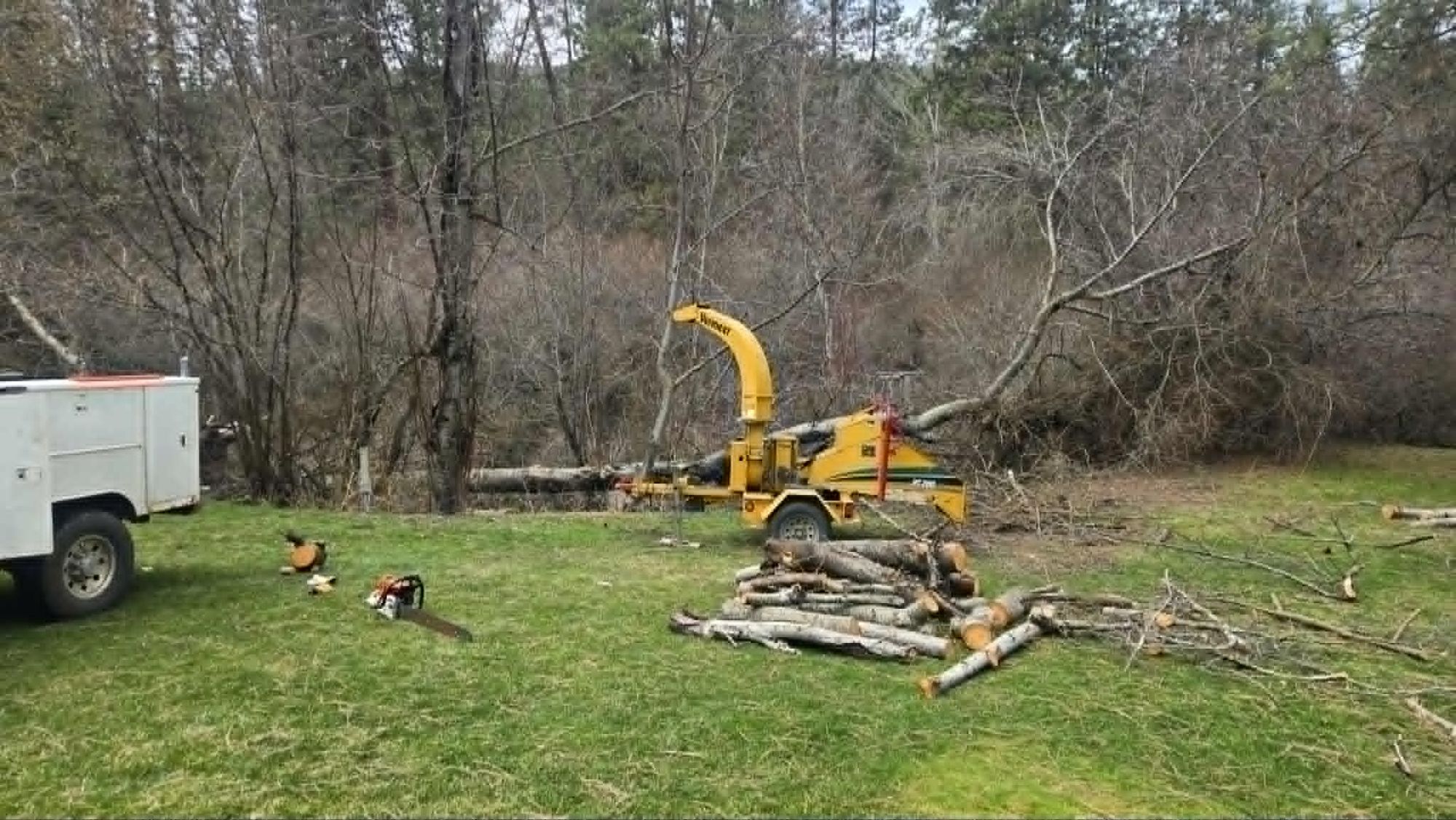
Chip It on Site
Usually the simplest option. No hauling, no size limits and no tipping fees, and the chips help cover bare soil.
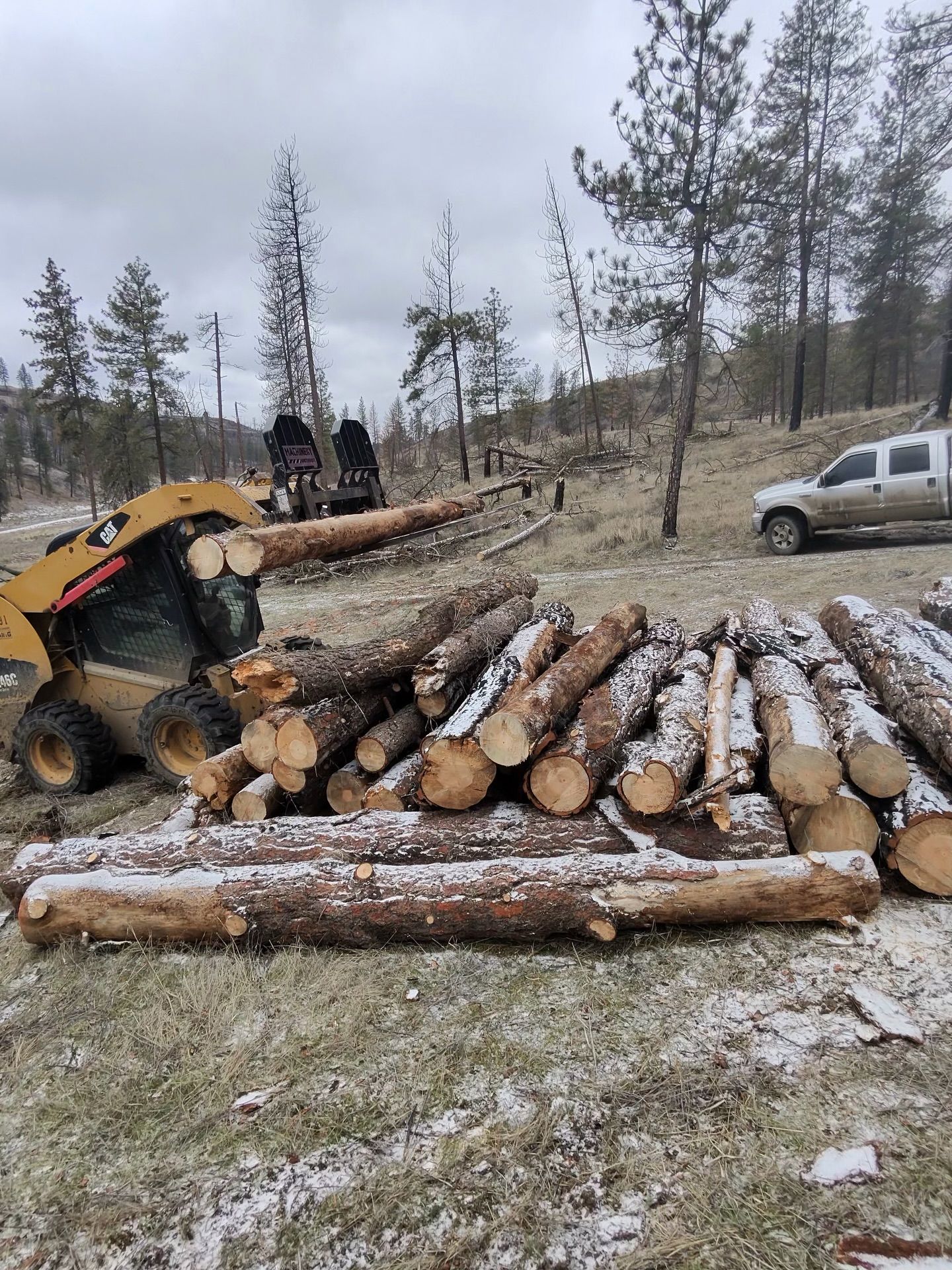
Haul It
County transfer stations take recognizable burned vegetation for a fee. The city plant only takes limbs up to 6 ft long and 3 in across.
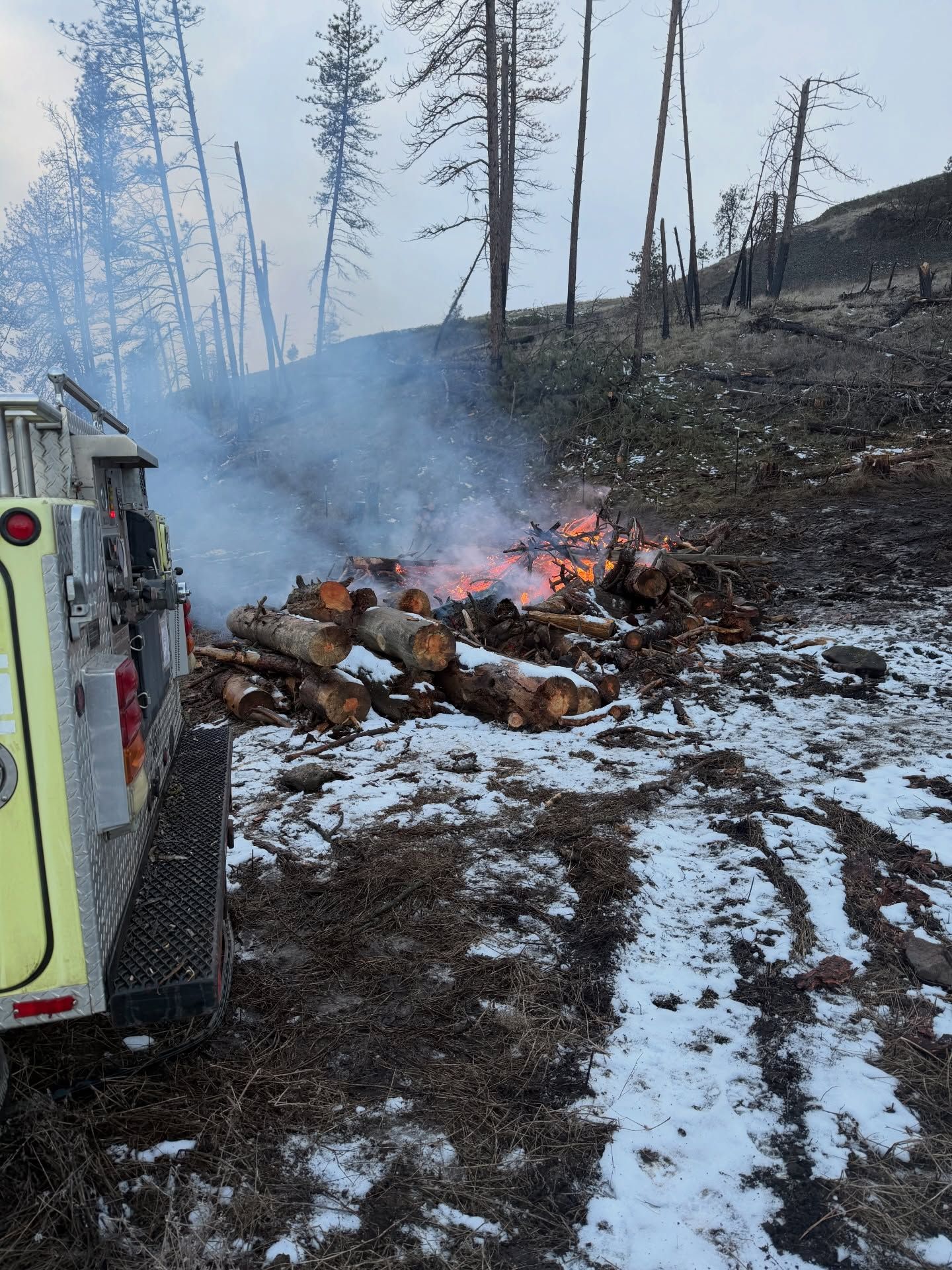
Burn It
Allowed outside cities and urban growth areas when burning is open, with small rule-burn piles. Larger piles need a DNR permit.
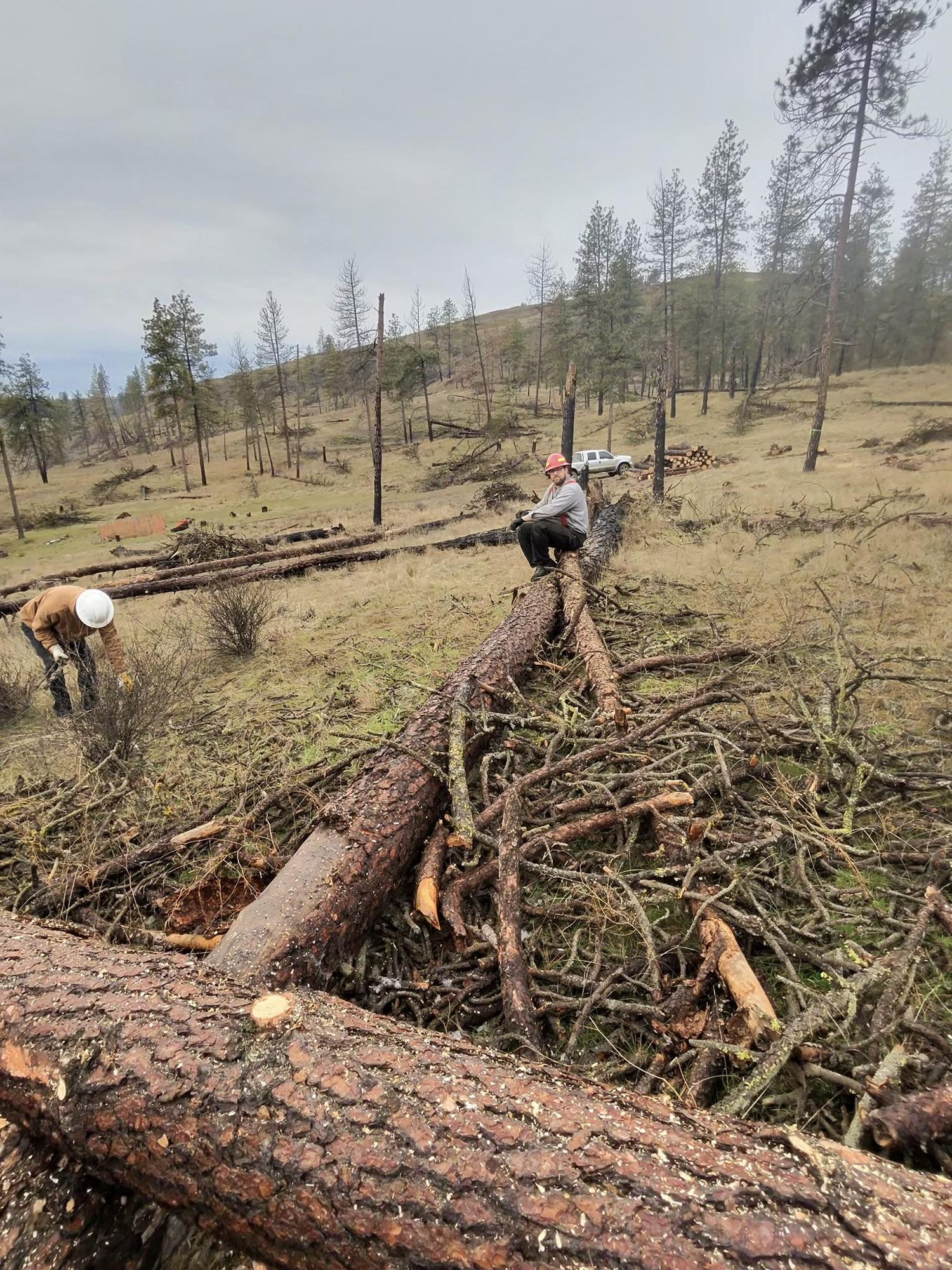
Sell It
Larger stands of dead pine and fir may be worth salvage logging if you move quickly. A forester can tell you if the volume is there.
Burning Rules in Spokane County
Fire-season burn restrictions were lifted Oct. 16, 2026, but the standing rules still apply. Check the daily burn status with Spokane Clean Air at (509) 477-4710 before you light anything.
- No burning inside city limits or urban growth areas
- No land-clearing burns
- Rule-burn piles kept to 4 ft across in Spokane County
- Larger piles need a DNR burn permit
- Burn only natural vegetation, never burned building debris
Protect the Ground Before Winter Rains
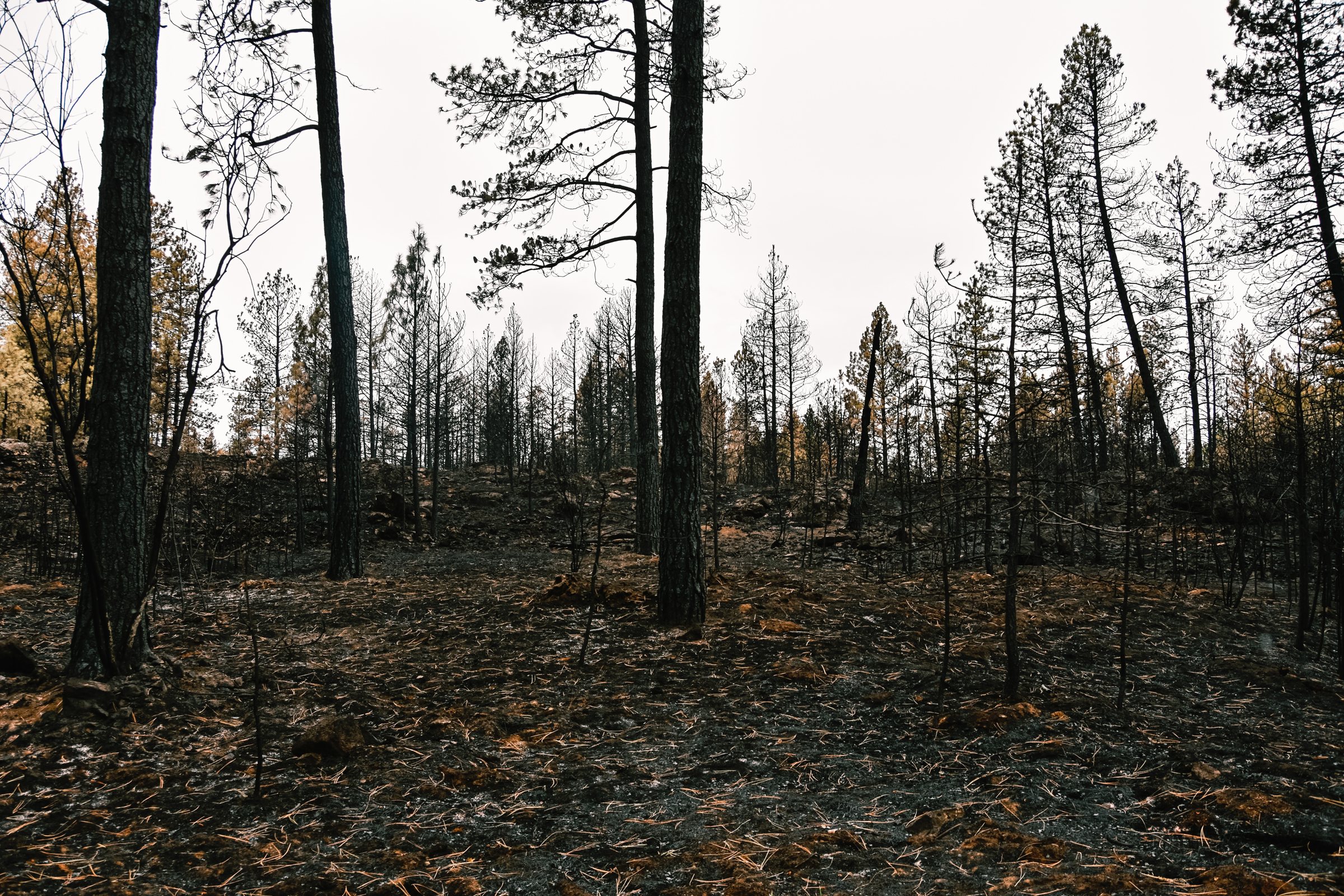
There’s some good news here. State geologists rated the debris-flow risk in the Old Trails burn area as low and found mostly low burn severity in the Autumn Lane and Fairview fires. Still, the National Weather Service issued a flash flood watch for these burn scars on Sept. 13, and bare, steep ground will shed water until plants come back.
Geologists flagged a few spots to watch: steep southwest-facing slopes along W Hiawatha Dr and W Osage Way, backyards near Wyakin Park and N Royal Ln, and an old landslide near N Royal Dr and N Hartley St.
- Spread weed-free straw on bare slopes above your home, well or driveway
- Lay wattles or downed logs across the slope to catch soil
- Keep culverts, ditches and storm drains clear of ash and debris
- Reseed with native grasses in fall or early spring
On a Well? Flush It and Test It
The Spokane Regional Health District recommends flushing your well before drinking from it and testing for bacteria and fuel-related chemicals (PAH and TPH). Private wells: (509) 324-1560, ext. 6. For a well evaluation, call the Department of Ecology at (509) 981-1958. There is no free testing program for these fires.
Six Ways People Are Paying for Land Cleanup
No single program covers it all. Most families combine insurance, a loan or cost share, and help from a case manager. Here’s what each one can and can’t do for the land.
Homeowners Insurance
Tree and landscaping coverage is often about 5% of the dwelling limit, with a per-tree cap. Debris removal coverage usually adds up to 5% more, but only after the dwelling limit is used up.
Good for: hazard trees near the home, debris
SBA Disaster Loan
Low-interest money for your home, with up to 20% more for mitigation. Ask SBA which land work it will cover. Apply by Dec. 21, 2026.
Good for: cleanup tied to the rebuild, defensible space
Conservation District and DNR
Free site visits, then cost share when funding allows for fuels reduction and forest health work. Get approval before work starts.
Good for: thinning, fuels, forest recovery
NRCS EQIP
Payments by practice for erosion control, planting and fuels work on qualifying land. Apply by Dec. 18 to be ranked this year.
Good for: erosion control, replanting, larger acreage
Case Manager and Local Funds
A disaster case manager can bring your unmet needs to Innovia’s roundtable and local funds. After the 2023 fires, that money paid for hazard tree removal.
Good for: uninsured and underinsured families
Taxes
Removing destroyed trees and replanting can count toward a casualty loss deduction, and federal deadlines moved to Feb. 1, 2027. A destroyed property form can lower property taxes.
Good for: everyone, with a tax professional
Paperwork That Keeps Your Options Open
- Dated photos of every burned tree, wide and close, before anything is cut
- Written scope and quote before work starts
- Approval from any cost-share program before work begins
- Itemized invoices that separate trees, debris, erosion and replanting
- Proof of payment and after photos from the same spots
- A log of every call with your insurer, lender and case manager
Clear It Once, and Clear It for the Next Fire
The cleanup is the cheapest moment to set up defensible space. The equipment is already on site, the building pad is open, and nothing new has been planted against the house yet. A little planning now means the new home starts out protected instead of needing a second project later.
Washington’s draft wildfire hazard map rates most of the burned area “moderate,” so the state’s wildland-urban interface building rules may not apply to your rebuild. That’s a code question, not a fire one. Insurers increasingly look at the ground around a home, and these neighborhoods just showed how fast fire moves through them.
SBA Mitigation Add-On
Borrow up to 20% more than your verified damage for work that protects the home from future fires.
Free Firewise Assessment
About an hour on site with a specialist who looks at your home ignition zone and what to fix first.
Post-Fire Mitigation Grants
The federal fire grants for these fires make FEMA mitigation money available to local governments. No 2026 round has opened yet.
A Local Crew for the Land Around Your Home
We’re wildland firefighters based in Eastern Washington. We clear what the fire left, protect the ground, and set your property up for the next fire season. We bring all the equipment and work around the crews on your house.
Hazard Tree Removal
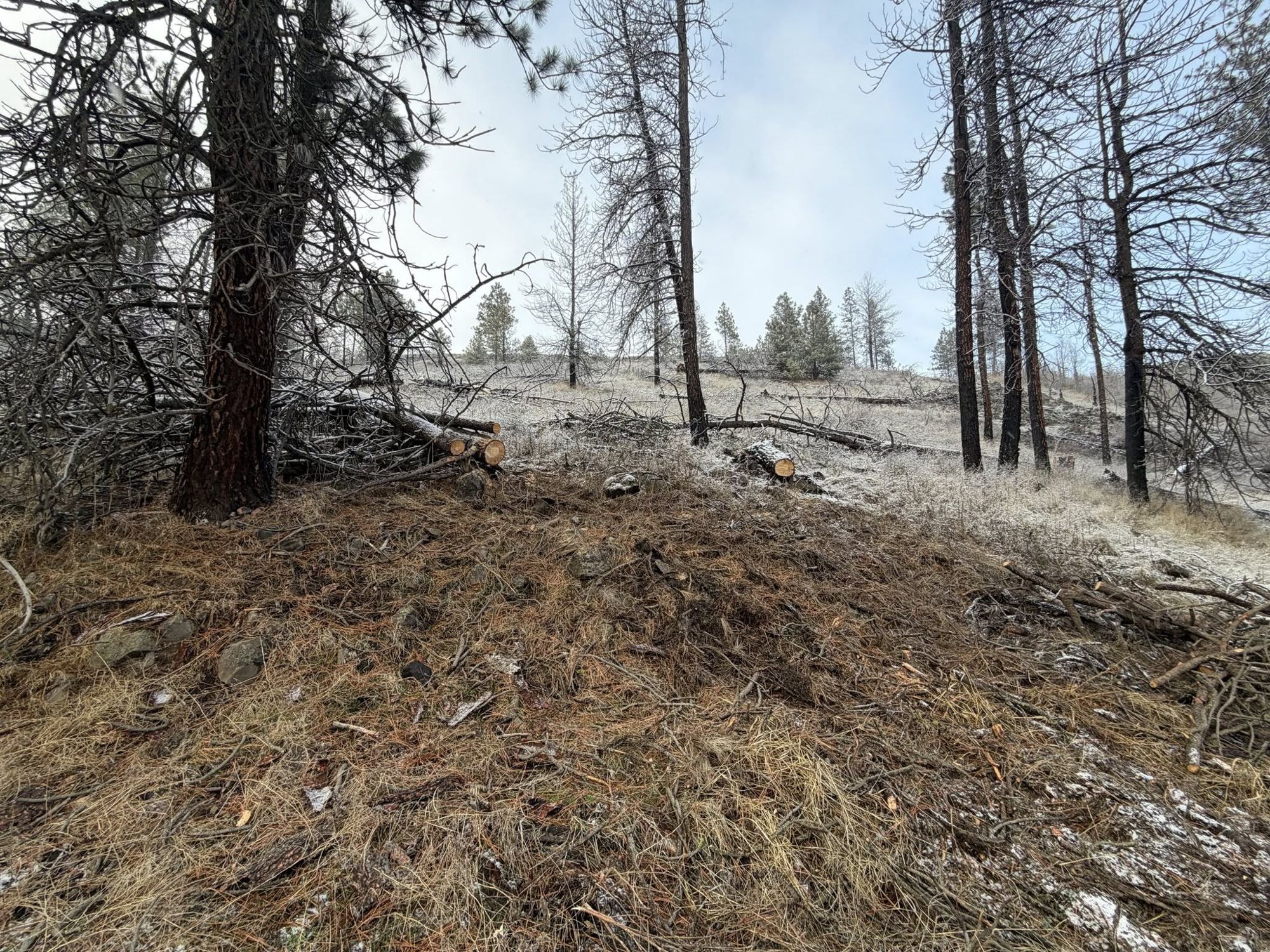
Dead and fire-weakened trees felled by sawyers who cut burned timber on fire lines, plus help deciding which trees to keep.
Debris and Downed Timber Cleanup
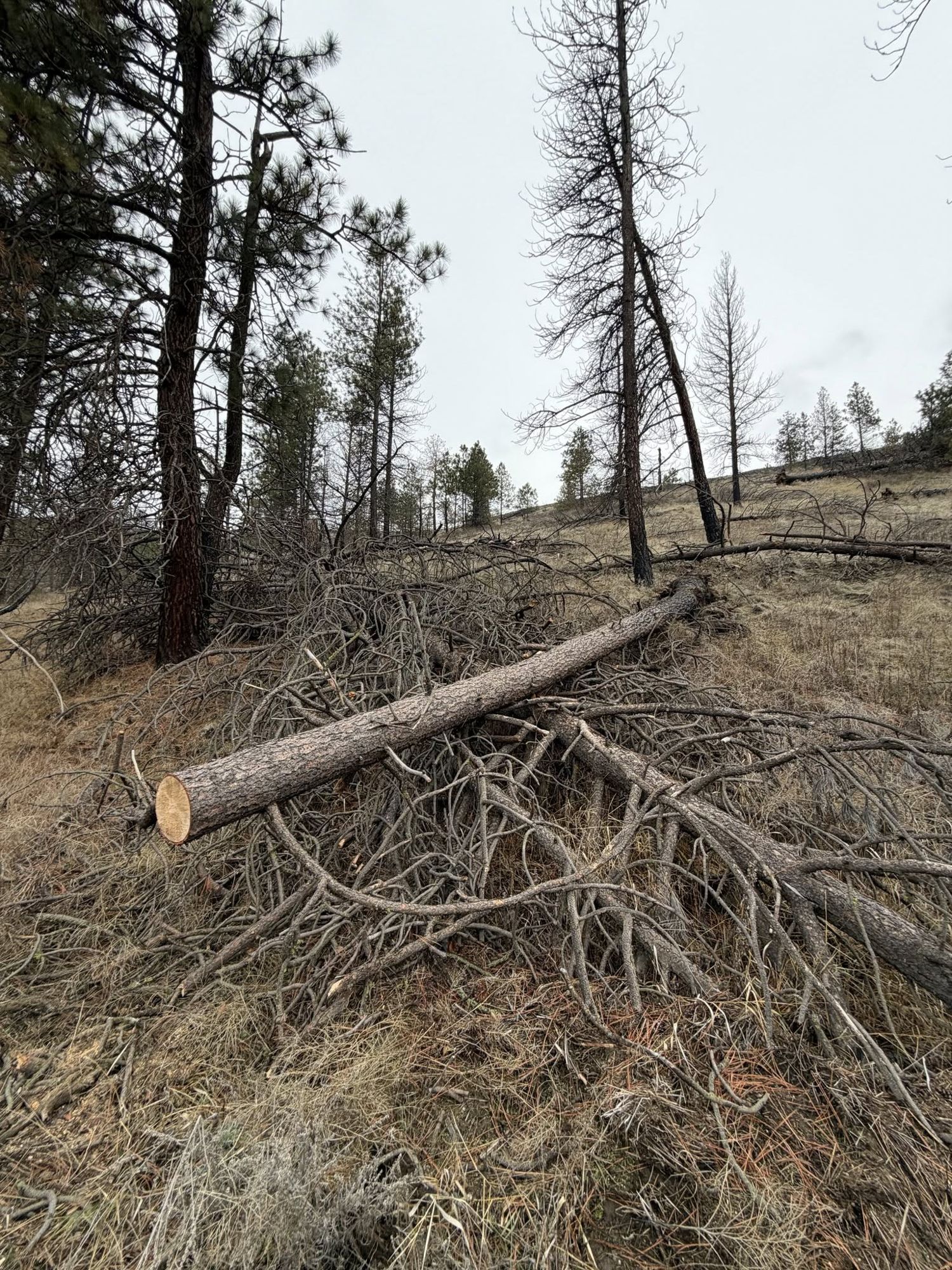
Fallen trees, burned limbs, dead brush and charred woody debris cut up and cleared so the land is safe to work.
Slash Piles: Burn, Chip or Haul
Piles burned under the rules in the right season, chipped on site or hauled away.
Land Clearing for the Rebuild
Building site, driveway and fence lines cleared, usable logs decked, and the site cleaned up after equipment.
Erosion Control and Replanting
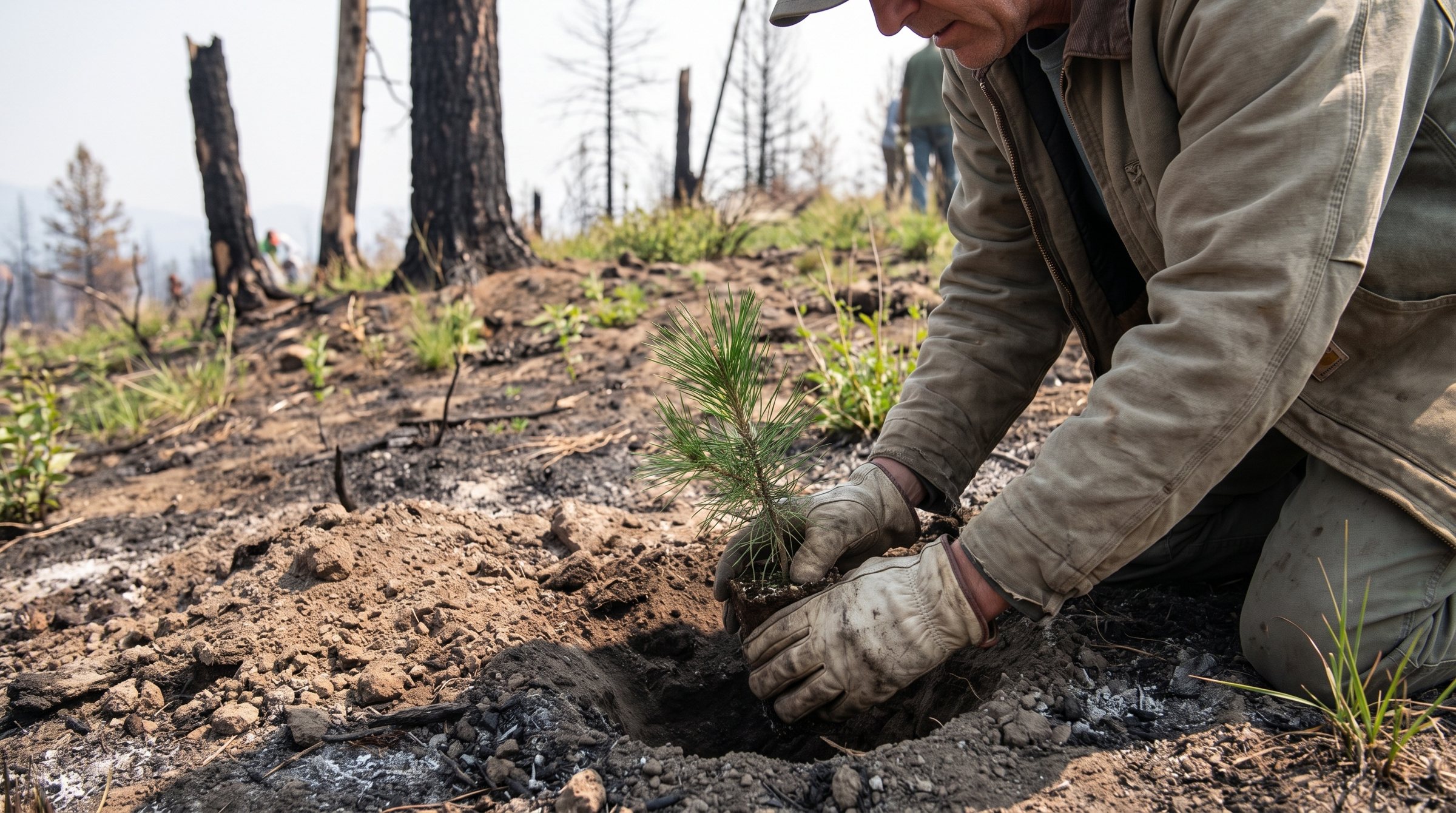
Straw, wattles and seeding on burned slopes, then seedlings suited to your site in the right season.
Defensible Space and Mitigation
Zones around the new home, thinned regrowth and fuels reduction so the next fire finds less to burn.
- Wildland firefighters, 10+ years on the line
- Washington DNR-approved contractor
- Registered in SAM.gov with an active federal VIPR contract
- Licensed and insured in Washington
How It Works
Call or Send Photos
Use the form below or call (509) 215-1875. Photos help us plan the visit.
Free Site Visit
We walk the land with you, mark hazard trees, check slopes and drainage, and photograph everything.
Written Plan and Quote
Itemized so your insurer, lender, case manager or a cost-share program can follow it. We wait for program approvals when they’re required.
The Work and Follow-Up
Our crew fells, clears, chips and protects the ground, with before and after photos. Follow-up visits are available to recheck trees you kept.
Watch Out for Storm Chasers
After a big fire, out-of-town crews knock on doors with quick quotes and big deposits. Spokane Police and the Department of Labor and Industries have both warned fire survivors about rebuilding scams. Tree work is dangerous and expensive to get wrong, so take a minute to check who you hire, including us.
Check Us Out
B&B Wildland Fire is registered with Washington L&I under contractor license BBWILWF743C3. Click the number to see our record on L&I’s Verify a Contractor site.
Before You Hire Anyone
- Get multiple written bids
- Verify the contractor is registered with L&I
- Get the scope, price and timeline in writing
- Don’t pay in full before the work is done
- Be wary of door-to-door crews and cash-only deals
- Ask whether they carry insurance for tree work
Report contractor fraud to L&I at 1-888-811-5974, and suspicious door-to-door activity to Crime Check.
Take Care of Yourself, Too
Losing a home, and the trees and land around it, is a real loss. Months later, stress, poor sleep and grief are normal, especially as the paperwork drags on. Free, confidential help is a call or text away.
Spokane Complex Fire Cleanup FAQs
Will FEMA or the county remove the burned trees on my property?
Not right now. No public program is clearing private land for these fires. If FEMA approves the state’s major disaster declaration, the state plans to run debris removal through one prime contractor, but those programs usually focus on structure debris and trees that threaten roads, homes or public safety. Rules haven’t been released. Keep receipts and photos for anything you pay for.
When will we know about the federal disaster declaration?
The state sent its request on Sept. 28, 2026. State officials estimated about seven weeks for a decision, which points to around mid-November. Check fema.gov or call 211 for the latest.
Should I wait for a government program before cleaning up?
Not for trees that could fall on your home, driveway, road or a place people use. Those are a safety problem now. For everything else, document it, ask your case manager and conservation district what they recommend, and keep receipts. Some cost-share programs only pay for work they approve before it starts.
Does homeowners insurance pay for burned trees?
Often, but the limits are small. Many policies pay around 5% of the dwelling limit for trees and landscaping, often capped at $500 to $750 a tree. Extra debris removal coverage usually kicks in only after your dwelling limit is used up. Ask your adjuster in writing and keep itemized invoices.
Can SBA loan money be used for land cleanup?
SBA home loans cover repairing or replacing your home, and you can borrow up to 20% more for mitigation that protects it from future damage. Whether a specific tree or debris job qualifies is SBA’s call, so ask when you apply. The deadline is Dec. 21, 2026.
What does fire cleanup cost?
Our typical prices are $300 to $500 to fell a tree and leave it, $800 to $1,200 to fell and remove a hazard tree, and $1,200 to $3,000 an acre for general cleanup, depending on terrain and how much is down. Every job gets a written quote after a free visit. You can try our cleanup estimator on our Fire Cleanup & Restoration page.
Do you clean up burned houses or ash?
No. Burned structures need an asbestos survey, a notice to Spokane Clean Air and a licensed demolition or abatement contractor. We handle the land: hazard trees, downed timber, brush, slash, erosion, replanting and defensible space, and we schedule around the crew on your house.
Which of my trees will survive?
Thick-barked ponderosa pine, Douglas-fir and larch often survive if a good share of the crown is still green and the base isn’t deeply charred. Thin-barked trees die from much less. Try our tree survival checker, look for new growth in spring, or have a forester or our crew take a look.
Where can I take burned branches and logs?
Spokane County’s North County and Valley transfer stations take recognizable burned vegetation for a fee, but no ash. The city’s Waste-to-Energy plant only takes limbs up to 6 ft long and 3 in across. For whole trees, chipping on site or selling logs is usually easier.
Can I burn the slash piles?
Outside city limits and urban growth areas, yes, when burning is open. Fire-season restrictions were lifted Oct. 16, 2026. Rule-burn piles must stay small, land-clearing burns aren’t allowed, and larger piles need a DNR permit. Never burn debris from burned buildings.
Is my well water safe?
Flush your well before using it and consider testing for bacteria and fuel-related chemicals. The Spokane Regional Health District has guidance at (509) 324-1560, ext. 6, and Ecology can evaluate a well at (509) 981-1958.
My land is in Stevens County. Does any of this apply?
Most of it. SBA loans, insurance help, NRCS, DNR and the federal declaration request all cover Stevens County. Your conservation district is Stevens County Conservation District at (509) 684-7579 instead of Spokane’s.
Can you work while my home is being rebuilt?
Yes. We coordinate with your builder and the crews on the structure, clear the building site and access first, and come back for defensible space once the home is up.
Is the site visit really free?
Yes. We call back within one business day, walk the land with you and give you a written plan and quote. There’s no obligation.
Let’s Look at Your Land Together
Tell us where your property is and send a few photos if you can. We’ll call you back within one business day and set up a free site visit. You’ll get a written plan and quote you can share with your insurer, lender or case manager. No pressure and no obligation.
- Call back within one business day
- Free first site visit
- Written, itemized plan and quote
- Follow-up visits available to recheck trees
Rather talk now? (509) 215-1875