
Kaiser Canyon Fire Recovery: What Nespelem-Area Landowners Need to Know
If the Kaiser Canyon Fire burned your home, timber or land around Nespelem, Owhi Flats, Cache Creek or the SR 21 and SR 155 corridors, start here. This guide covers hazard trees, debris, erosion and replanting, the rules for trust and fee land, the programs that can help pay, and where things stand today.
Kaiser Canyon Recovery, Sorted Out
Kaiser Canyon was one of the largest fires in Washington this year. It burned across tribal trust land, allotments, deeded land on the reservation and private land in Okanogan County, and the help you can get depends on which one you’re on.
There’s one important difference from other fires this year: Okanogan County is included in the state’s request for FEMA household aid. That request is still pending. Below you’ll find what to do while you wait, every program and contact we could find, and how to take care of the land around your home.
Your land burned in the Modrite Fire near Inchelium instead? See our Modrite Fire recovery guide.
Where Things Stand Today
FEMA Household Aid
Okanogan County is in the state’s Sept. 28 request for a major disaster declaration, which would open FEMA grants of up to $42,500 for individuals. No decision yet. The Colville Tribes were not named in that request.
Disaster Case Management
The Okanogan County Long Term Recovery Group helps anyone with 2026 fire losses in the county find funding and plan recovery. Call case manager Jessica Farmer at 509-846-5101.
Free Post-Fire Site Visits
The Okanogan Conservation District will visit burned land and recommend erosion control, seeding and tree work. Start with its online intake form.
Public Cleanup of Private Land
The federal emergency declaration excluded debris removal, and no program is clearing hazard trees from private lots or allotments. EPA and Ecology have been checking burned homesites for hazardous materials.
State Household Grant
The state’s $750 to $2,250 grant for destroyed or badly damaged homes closed Oct. 30, 2026. If you applied, you can appeal a decision within 30 days. Call 211.
SBA Disaster Loans
No SBA declaration covers Kaiser Canyon losses yet. Okanogan County’s only SBA listing is for the Chelan Hills Fire. A federal disaster declaration would usually open SBA loans.
The Kaiser Canyon Fire
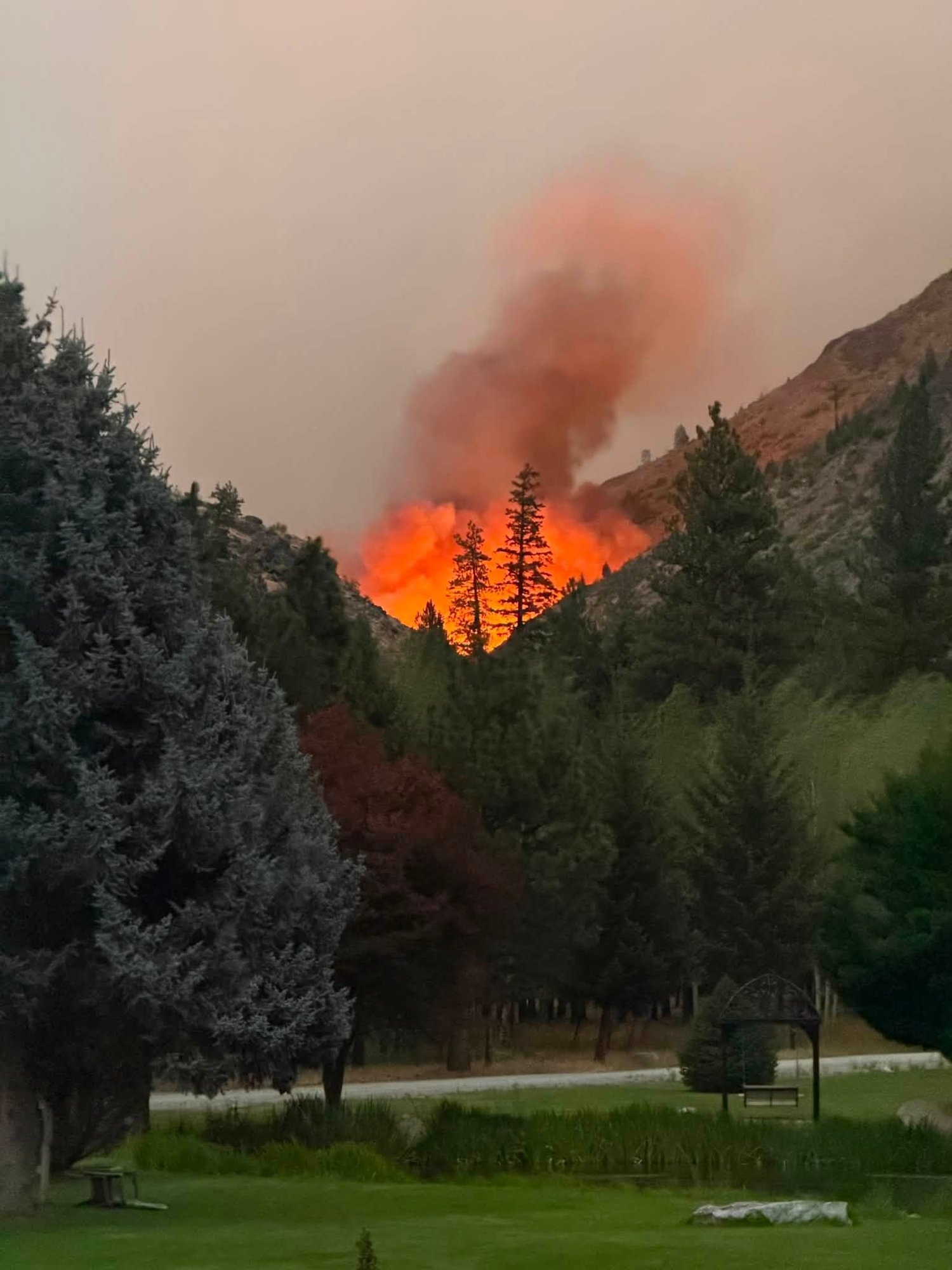
Lightning started the fire about a mile south of Nespelem early on July 16, 2026. Two days later it had grown to more than 46,000 acres, and all of Nespelem, about 1,000 people, had been evacuated. Firefighters and volunteers held the line at town, but homes, outbuildings, cultural sites and the historic Indian Shaker Church were lost.
Modrite Fire
About 57,600 acres on the reservation at the same time. Tribal relief programs cover both fires.
Sinlahekin Fire
Shares the NCW Fire Relief Fund and Okanogan County recovery programs with Kaiser Canyon.
Kartar Fire
An earlier fire of about 11,700 acres on the reservation this season.
Home counts don’t agree. Tribal leaders have reported 43 homes lost, and Sen. Patty Murray’s office reported at least 33 across the Kaiser Canyon and Modrite fires (Oct. 15, 2026). Acreage is from Sen. Murray’s office and the Colville Tribes. The fire was 90% contained at the last official update on Aug. 20, and all evacuation levels were lifted Sept. 2.
Our Team Was There. Now We’re Here to Help You Clean Up.
This was a big fire season on the reservation. Several of our people fought the Kaiser Canyon Fire on other crews, while B&B’s engines were assigned to the Modrite Fire near Inchelium at the same time.
We’re wildland firefighters first. We know how fire moves through the grass, sage and pine on these slopes, and we bring that to the cleanup: which trees will fall, which can stay, and how to set your land up for the next fire.
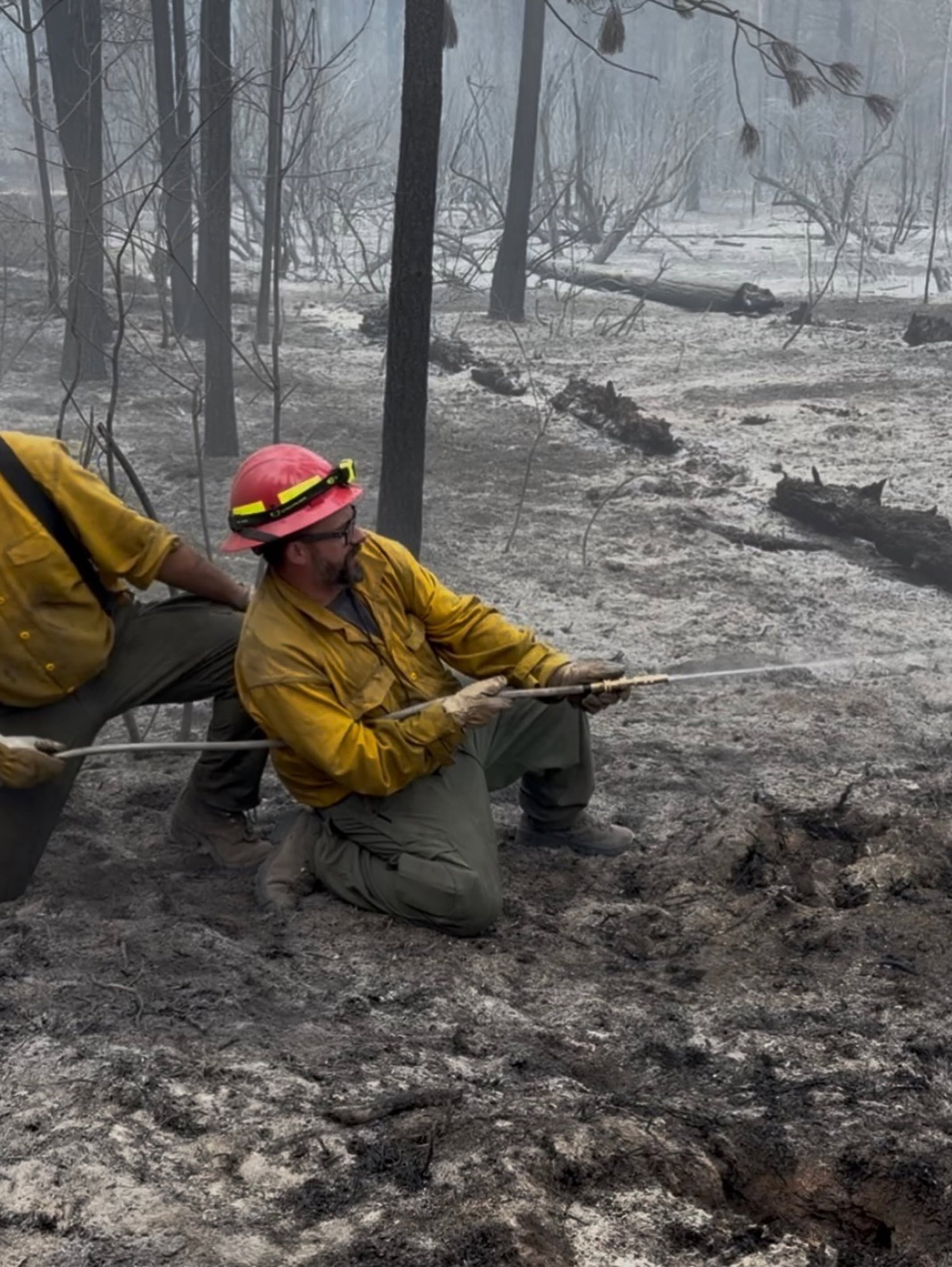
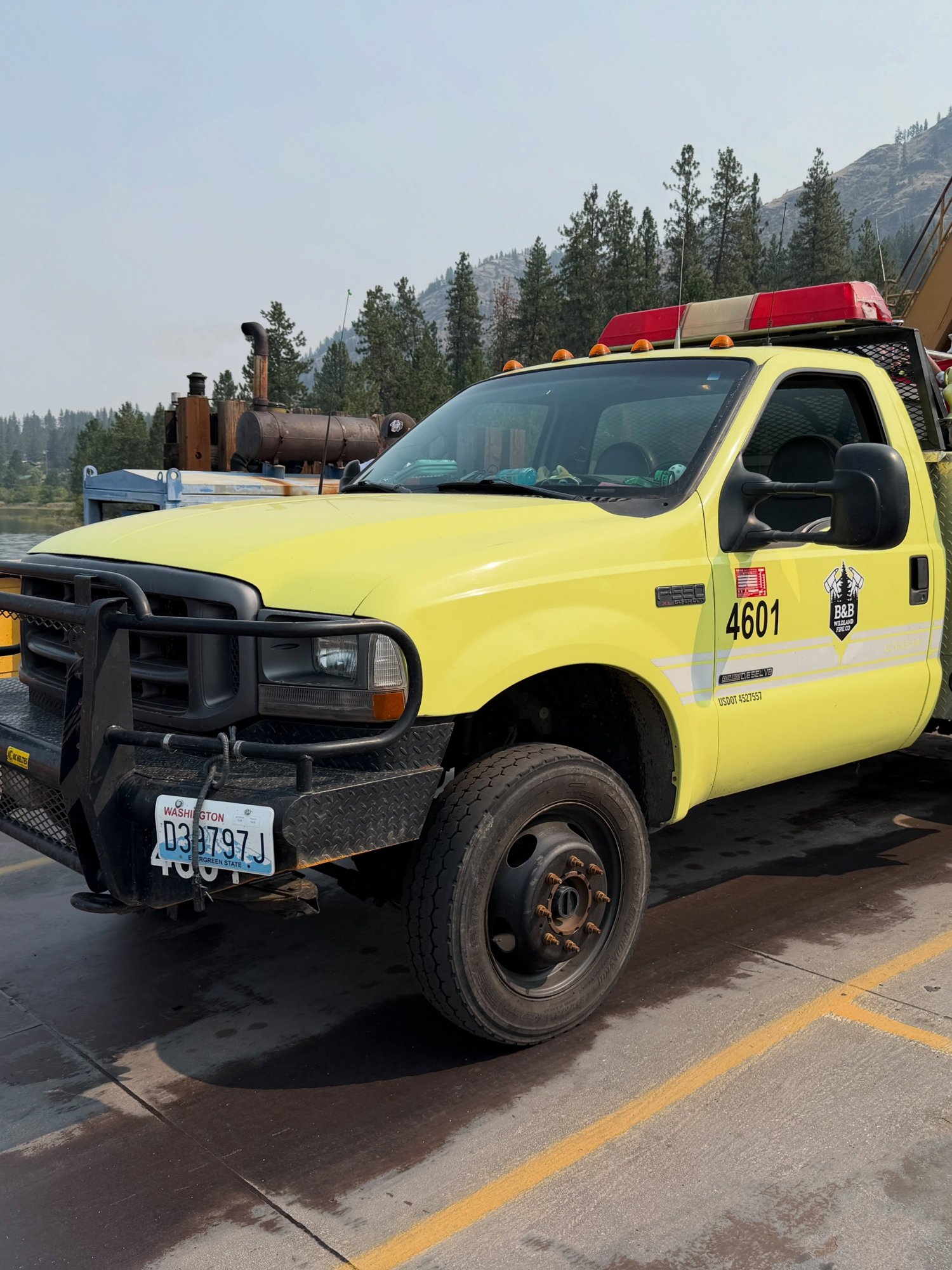
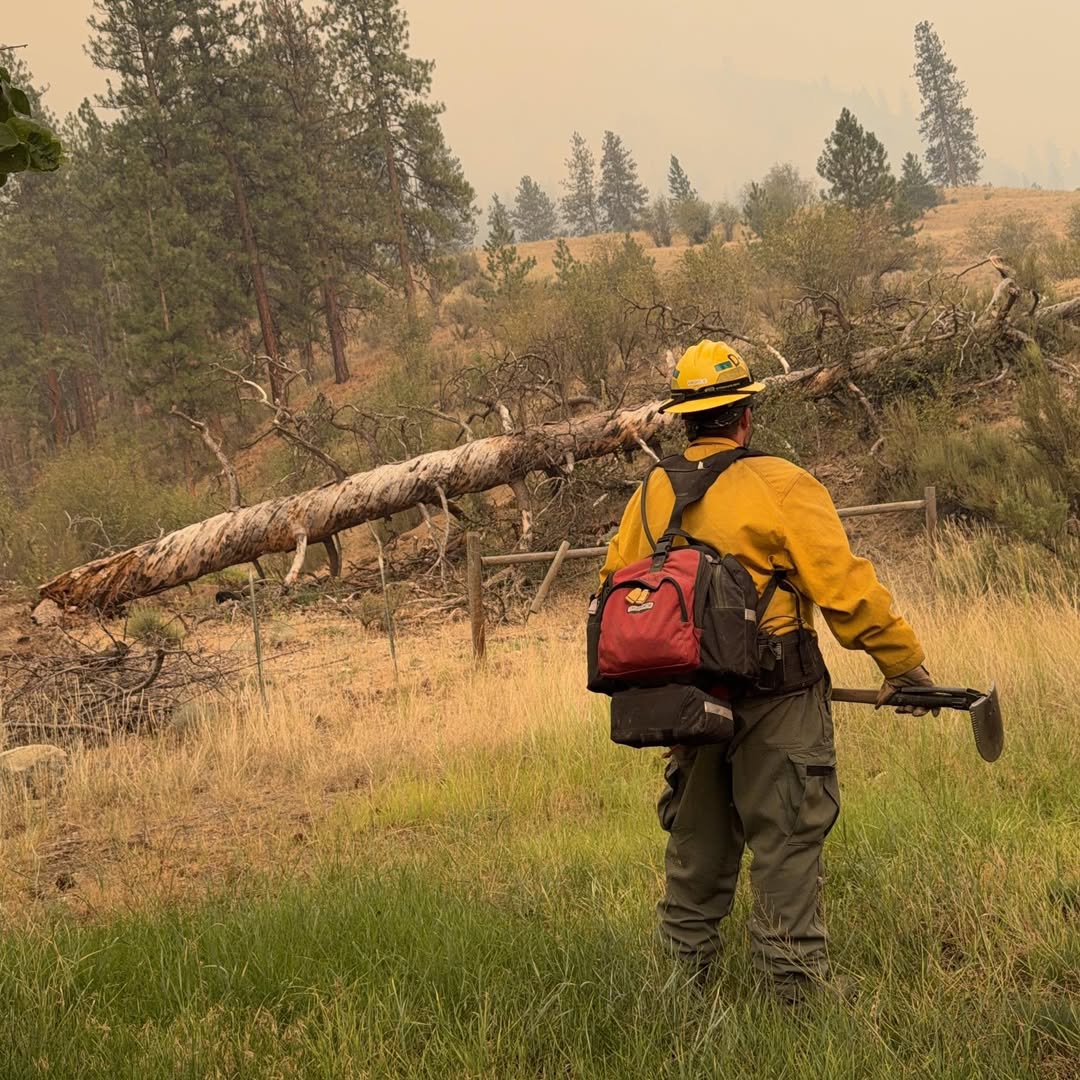
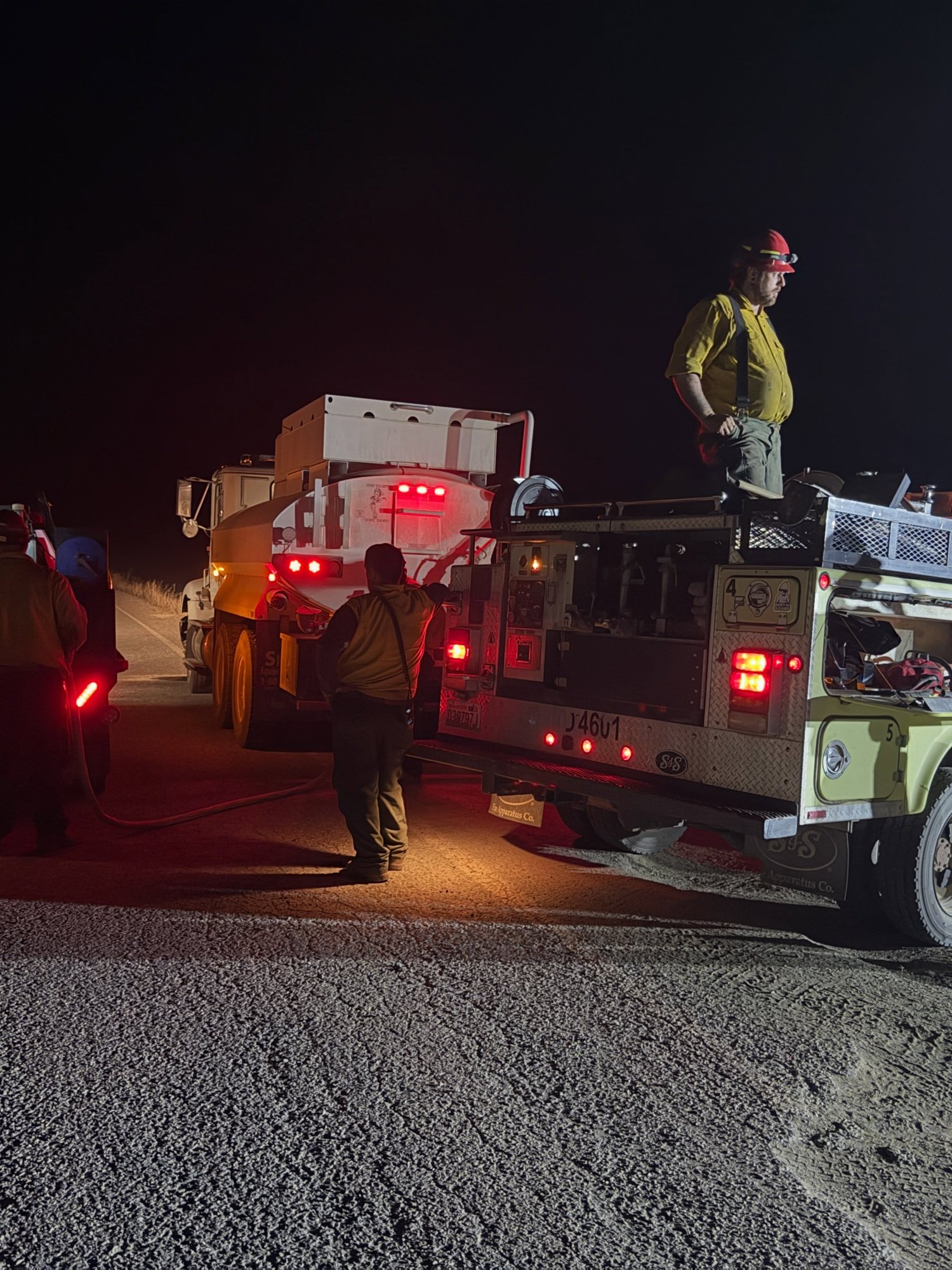
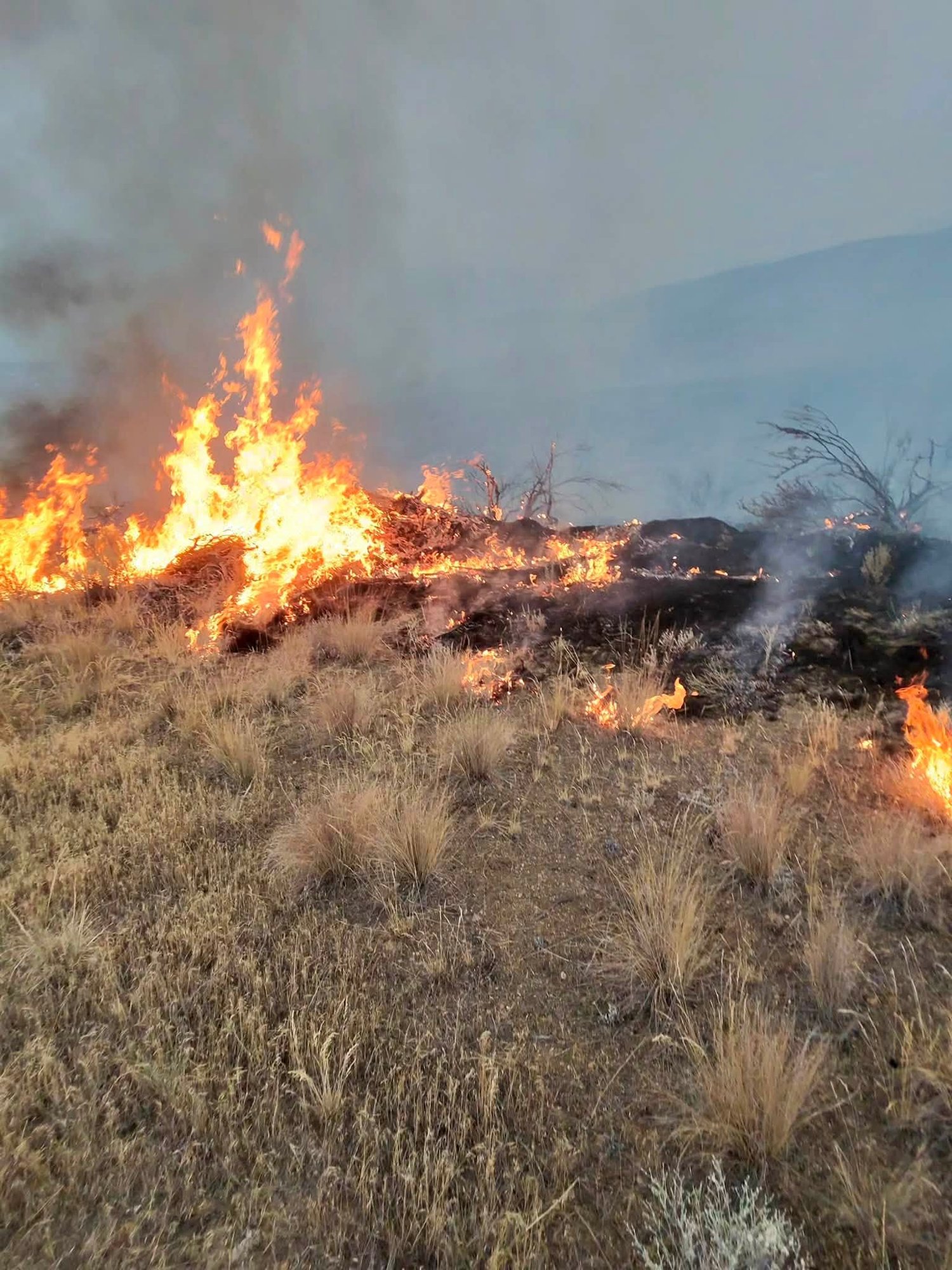
Photos from B&B crew members during the 2026 fire season in north central and northeast Washington.
This Fire Showed What Thinning Does
About 2.5 miles northwest of Nespelem, along SR 155, a ranch had finished a fuels reduction project with DNR and the Okanogan Conservation District. When Kaiser Canyon burned into it, the fire dropped out of the treetops and stayed on the ground. No structures there were lost.
That’s the case for doing mitigation now, while you’re already cleaning up. Thinned stands and cleared ground around a home give crews a place to stand the next time.
Sources: National Association of Conservation Districts and KING 5.
Whose Land Is It? The Rules Change at the Property Line
Before anyone cuts a burned tree, know what kind of land it’s standing on. Trust land, deeded land inside the reservation and land outside it each have different rules, permits and programs.
Held in Trust on the Reservation
Land the federal government holds in trust for the Tribes or for individual allottees.
- —Cutting or removing trees needs BIA and owner approval first
- —Tribal salvage planning is under way in the Kaiser Canyon burn
- —BIA post-fire programs can fund stabilization and replanting
Fee Land Inside the Boundary
Privately owned land within the reservation. Rules can come from the Tribes, the county and the state.
- —Confirm burning and timber rules with the Tribes and DNR
- —Okanogan County handles property taxes and building permits
- —County, state and nonprofit programs usually apply
Okanogan County Land
Private land outside the reservation, including ranches along SR 21 and toward Omak.
- —Selling burned timber needs a DNR Forest Practices Application
- —Okanogan Conservation District and DNR can help pay for work
- —FEMA household aid would apply here if approved
Salvage Is Already Being Planned. Check Before Anyone Cuts.
Colville Tribes Forestry has posted salvage maps for the Kaiser Canyon burn. If you hold an allotment inside the fire, ask Forestry and the BIA Colville Agency whether your timber is part of a planned sale before you sell or cut anything on your own.
Federal rules for Indian forest land (25 CFR Part 163) require a BIA-approved permit or contract, with the owners’ consent, before timber is cut or removed. Cutting without one is treated as trespass, with penalties of triple the timber’s value. When we work on trust land, we line up approvals with you first.
Colville Tribes Forestry: (509) 634-2333 · BIA Colville Agency: (509) 634-2316
Your Land Over the Next Six Months
The fire is out, but the land work runs on the seasons. Here’s what matters before winter, over the winter and next spring.
Make It Safe and Get in Line
- Find out whether your land is trust, fee or off-reservation
- Fell trees that could hit your home, driveway, road or a place people use, with approvals first on trust land
- Photograph every burned tree and the damage before anything is cut
- Fill out the Okanogan Conservation District post-fire intake form
- Call the Long Term Recovery Group for a case manager
- Report damage to Okanogan County Emergency Management
Plan the Cleanup
- Watch for a FEMA decision and apply right away if it opens
- Decide on salvage before pine stains, and check tribal salvage plans first
- Get a written scope and quote for trees, debris and slash
- Chip, haul or burn slash piles within the rules
- File federal taxes by Feb. 1, 2027 and report livestock losses to FSA by Mar. 1
Recheck and Replant
- Look for new green growth on trees you kept
- Watch for beetle boring dust on stressed trees
- Reseed bare ground and plant seedlings
- Clear and thin around the building site before you rebuild
- Set up defensible space for the new home
Get Ready Now in Case Federal Aid Opens
If the President approves Washington’s request, Okanogan County residents would be able to apply to FEMA for housing and other needs, and SBA loans would usually follow. Sign-up windows are short. Having your paperwork ready means you can apply the first week.
The Colville Tribes were not named in the state’s request. Ask the Tribes’ Emergency Operations Center at 509-634-2043 whether tribal households will be covered.
Gather These Now
- Photo ID and proof you lived in the home
- Proof of ownership or a lease
- Insurance policy and any claim letters
- Dated photos of damage, inside and out
- Receipts for repairs, cleanup and temporary housing
- Bank routing and account numbers for direct deposit
FEMA generally doesn’t pay for trees or landscaping, so plan the land work with the other programs below.
Every Resource for Kaiser Canyon Survivors and Landowners
Tribal, Okanogan County, state, federal and nonprofit programs that can help with cleanup, hazard trees, money, housing, insurance, rules and support. Filter by what you need. Status is as of Oct. 30, 2026, so call before you count on anything.
Know of a program we missed, or see something out of date? Call us at (509) 215-1875 and we’ll add it.
What to Cut Now and What Can Wait
Burned trees fail without warning, especially in wind, snow and wet soil. But a lot of the ponderosa pine and Douglas-fir around Nespelem has thick bark and may live. Cutting everything at once costs more than it needs to, and on trust land it needs approval first.
Anything That Can Hit Something
Dead or badly burned trees that could fall on your home site, driveway, road, fence, well or a place people work. These come first, before winter wind and snow load.
Trees That Might Make It
Ponderosa pine and Douglas-fir with green needles left and only light char can survive. Look for new growth next spring before you decide. Some will still die in two or three years, so plan a recheck.
Dead Timber Worth Selling
Burned pine can stain within the first year, and most salvage value is gone by year three. On trust land, sales go through the Tribes and the BIA. Elsewhere, selling logs needs a DNR Forest Practices Application.
Not sure about a tree? Check it with our free tree survival checker, based on Oregon State University’s post-fire guide, or have our crew walk your land.
Chip It, Haul It, Burn It or Sell It
We found no fee waiver for Kaiser Canyon debris at Okanogan County’s landfill, and Nespelem is a long haul from Okanogan. Where the wood goes makes a real difference in cost.
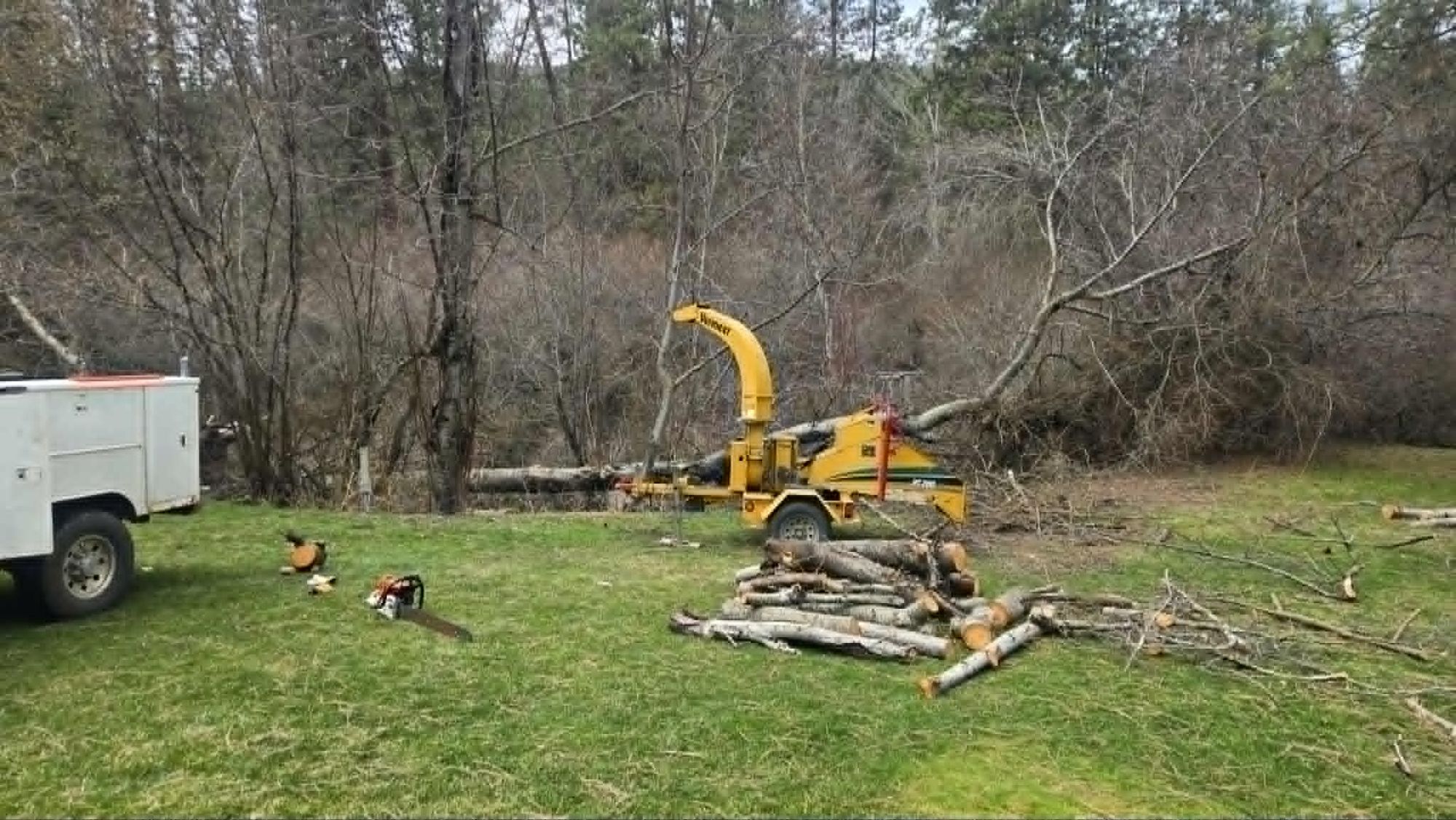
Chip It on Site
Usually the simplest option this far from the landfill. No hauling and no tipping fees, and the chips help cover bare soil.
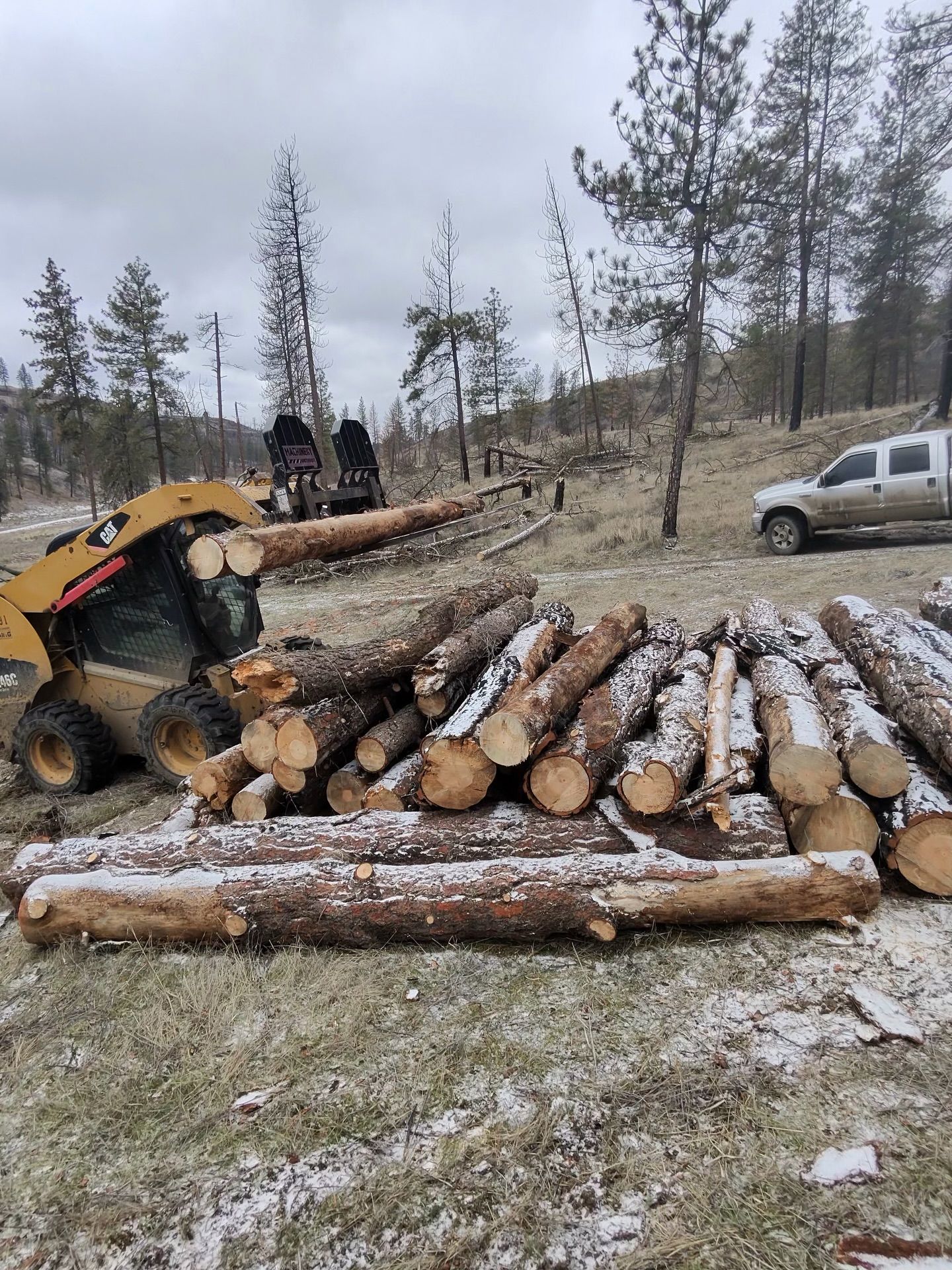
Haul It
Okanogan County’s Central Landfill is on B&O North Rd near Okanogan, open Tuesday to Saturday. Call first to confirm fees and what it takes.
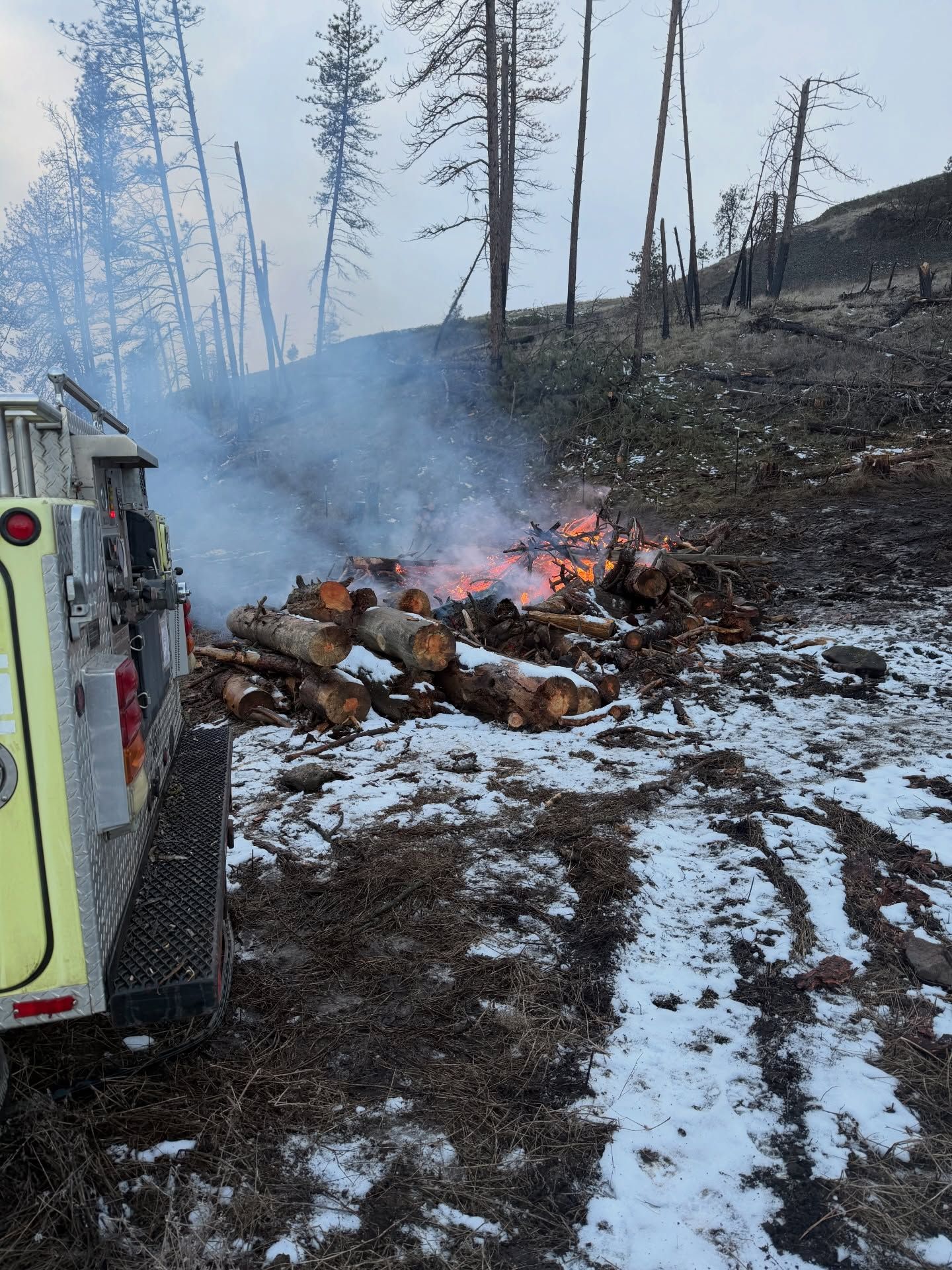
Burn It
Often the practical choice on rural land once burning is open. Who issues the permit depends on whether you’re on the reservation.
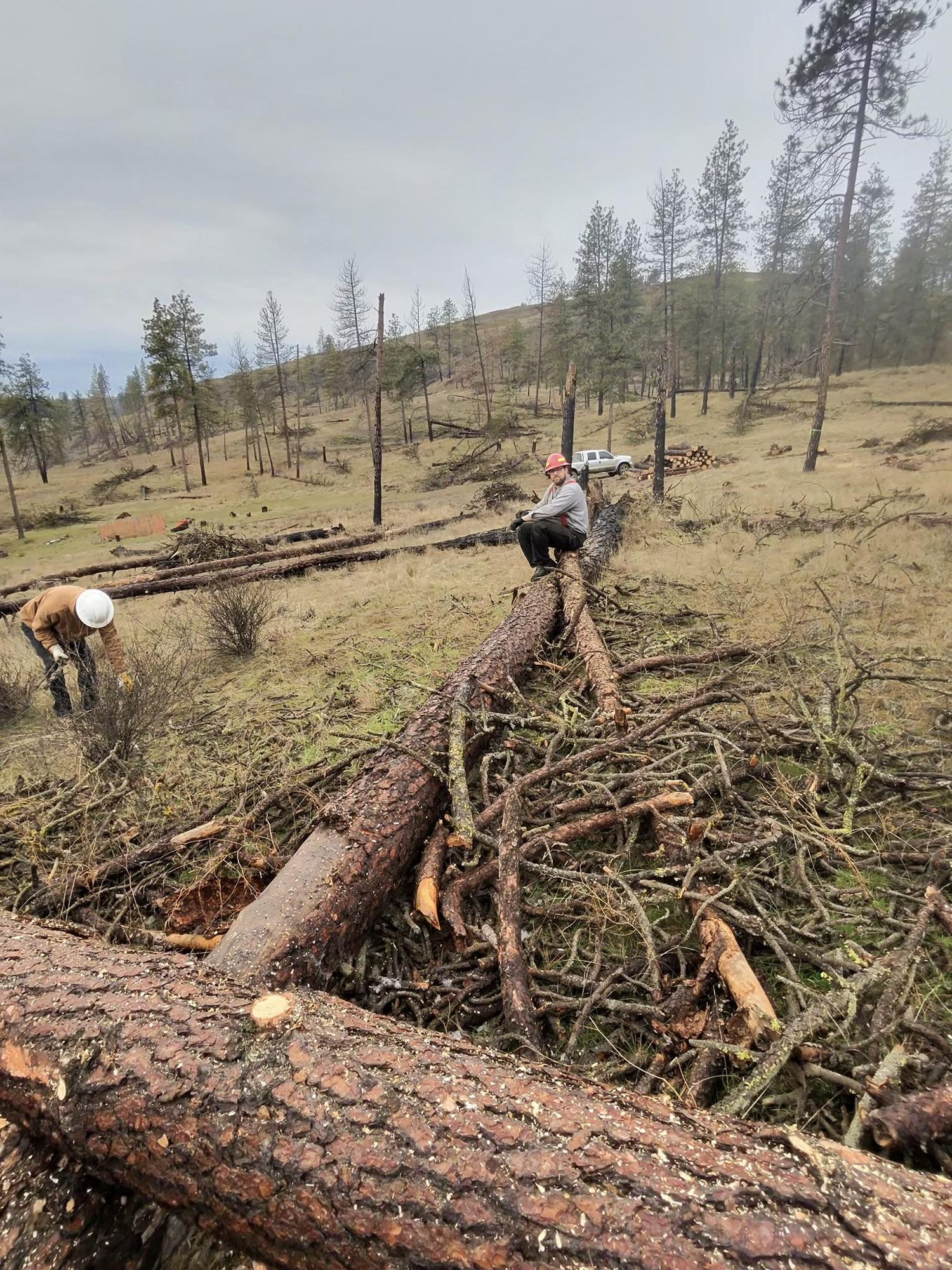
Sell It
Larger stands of dead pine and fir may be worth salvage logging if you move quickly. A forester can tell you if the volume is there.
Burning Rules Depend on Where You Are
On the reservation, check with the Colville Tribes’ Mt. Tolman Fire Center at (509) 634-3100 before you light anything. Off the reservation, check DNR’s burn restrictions or call the DNR Northeast Region at (509) 684-7474.
- Ask before you burn: the Tribes on the reservation, DNR off it
- Burn only natural vegetation, never burned building debris
- Keep piles small unless you have a permit for larger ones
- Build piles away from standing trees, slopes and power lines
- Have water and tools on hand and stay until it’s out
On a Well? Check It and Test It
The state Department of Health says to inspect the wiring, lines, pressure tank and well house, use a licensed contractor for repairs, and test the water for coliform bacteria at an accredited lab before drinking it. Boil water until it tests clean.
Protect the Ground Before Spring Runoff
Kaiser Canyon burned through the steep draws along Cache Creek, Coyote Creek and the Nespelem River drainage. Bare ground sheds water and soil until grass comes back, and the first heavy rain or snowmelt can plug culverts and fill ditches with ash and debris.
We found no published post-fire flood or debris-flow assessment for Kaiser Canyon. The Okanogan Conservation District has free guides on flood risk, erosion control and seeding after fire, and its post-fire site visits cover slopes and drainage.
- Spread weed-free straw on bare slopes above your home, well or driveway
- Lay wattles or downed logs across the slope to catch soil
- Keep culverts, ditches and road drains clear of ash and debris
- Reseed with native grasses in fall or early spring
Six Ways to Pay for Land Cleanup After Kaiser Canyon
Most families will combine several sources. Tribal leaders say about half the homes lost on the reservation were uninsured, and FEMA aid is still pending, so start with what you qualify for now and keep the paperwork tight.
Homeowners Insurance
Tree and landscaping coverage is often about 5% of the dwelling limit, with a per-tree cap. Debris removal coverage usually adds up to 5% more, but only after the dwelling limit is used up.
Good for: hazard trees near the home, debris
Case Management and Local Funds
The Long Term Recovery Group’s case manager can bring unmet needs to the NCW Fire Relief Fund and other local money. Tribal families can also turn to the Cedar Fund and the Housing Authority.
Good for: uninsured and underinsured families
Conservation District and DNR
Start with a free post-fire visit from the Okanogan Conservation District. It and DNR can help pay for approved seeding, erosion and thinning work. Get approval before work starts.
Good for: seeding, erosion control, thinning, fuels
FEMA, If It Opens
If the federal declaration is approved, FEMA grants and SBA loans would open for Okanogan County. FEMA usually won’t pay for trees, but it can free up other money for the land.
Good for: homeowners and renters in the county
USDA and Timber Sales
NRCS EQIP and FSA livestock programs help ranches and forest owners. On larger stands, salvage logs can pay for part of the cleanup if sold before the wood stains.
Good for: ranches, larger acreage, forest land
Taxes
A destroyed property claim can lower property taxes. Removing destroyed trees and replanting can count toward a federal casualty loss, and forest owners can ask about a damaged timber credit.
Good for: everyone, with a tax professional
Paperwork That Keeps Your Options Open
- Confirm your land status and any approvals before anything is cut
- Dated photos of every burned tree, wide and close, before work starts
- Written scope and quote before work starts
- Approval from any cost-share program before work begins
- Itemized invoices that separate trees, debris, erosion and replanting
- Proof of payment and after photos from the same spots
Clear It Once, and Clear It for the Next Fire
The cleanup is the cheapest moment to set up defensible space. The equipment is already on site, the building pad is open, and nothing new has been planted against the house yet. A little planning now means the new home starts out protected instead of needing a second project later.
Kaiser Canyon ran through grass, sage and pine faster than anyone could get ahead of it, and the Jackson Ranch project showed what thinned ground does. The unburned timber around many homes near Nespelem, Omak Lake and along SR 21 still needs that work.
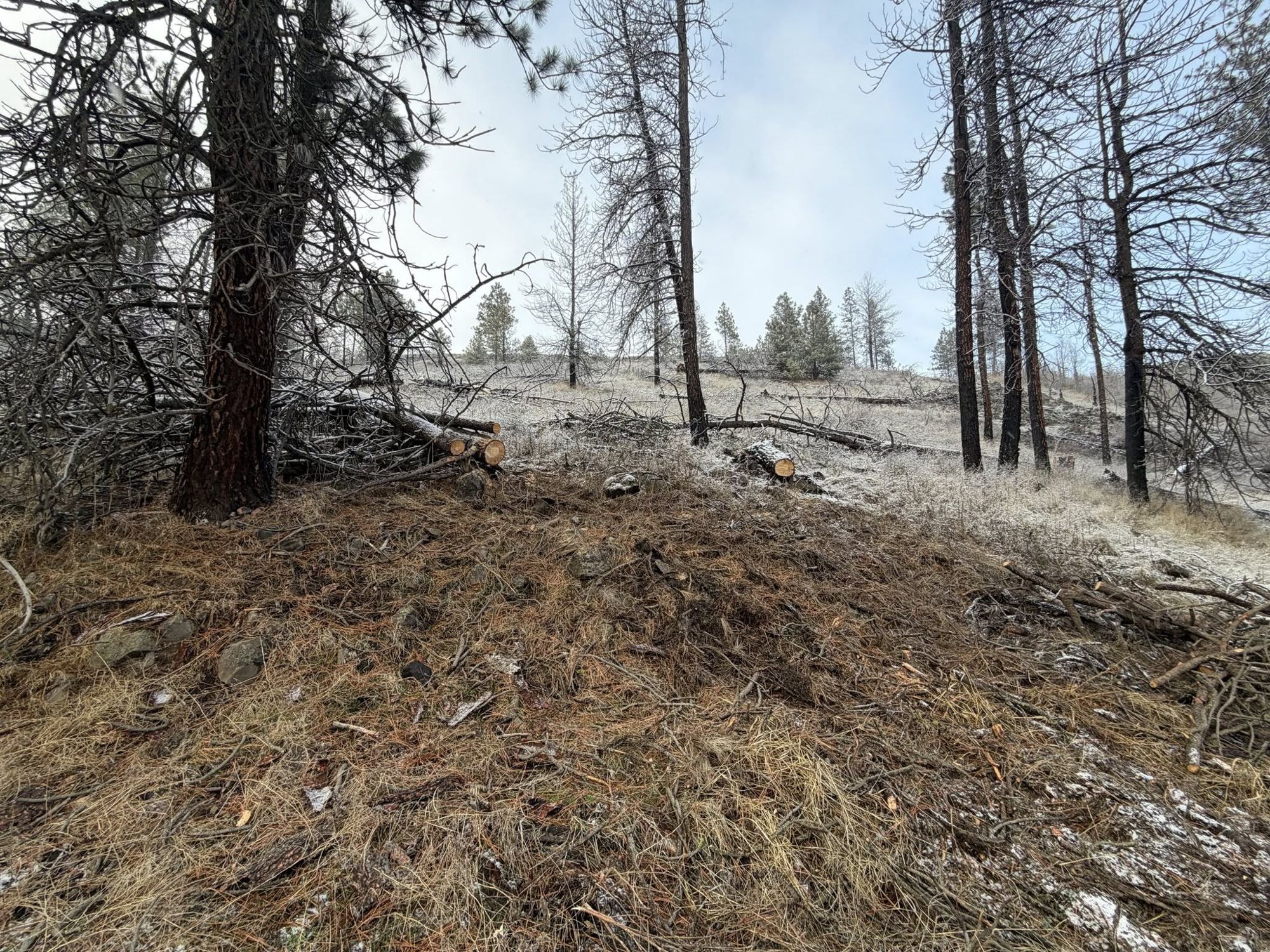
Forest Health Cost Share
Help paying for thinning and fuels reduction on forest land under 5,000 acres, after a free visit from a service forester.
Fuels Reduction Help
The district helped fund the Jackson Ranch thinning that held Kaiser Canyon on the ground. Ask about forest health and fuels cost share.
Wildfire Mitigation Blueprint
A wildland firefighter walks your property, shows you how fire would reach your home and gives you a plan you can act on.
B&B Is Here to Help You Clean Up
We’re wildland firefighters based in Eastern Washington, and we work on trust land, deeded land and private land around Nespelem and across Okanogan County. We clear what the fire left, protect the ground and set your property up for the next fire season. We bring all the equipment.
Hazard Tree Removal
Dead and fire-weakened trees felled by sawyers who cut burned timber on fire lines, plus help deciding which trees to keep.
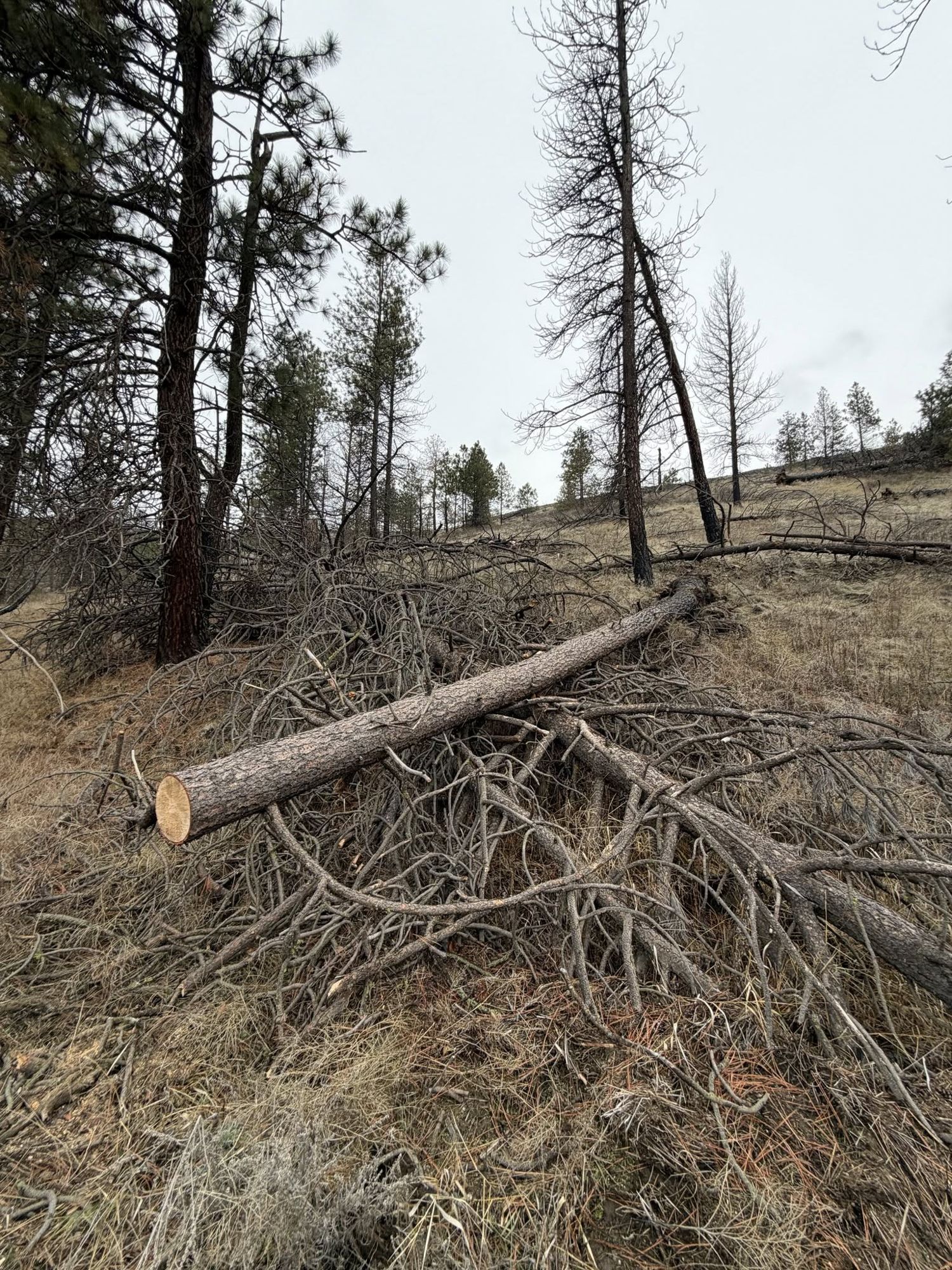
Debris and Downed Timber Cleanup
Fallen trees, burned limbs, dead brush and charred woody debris cut up and cleared so the land is safe to work.
Slash Piles: Burn, Chip or Haul
Piles burned under the rules in the right season with our own engines on site, chipped in place or hauled away.
Land Clearing for the Rebuild
Building site, driveway and fence lines cleared, usable logs decked, and the site cleaned up after equipment.
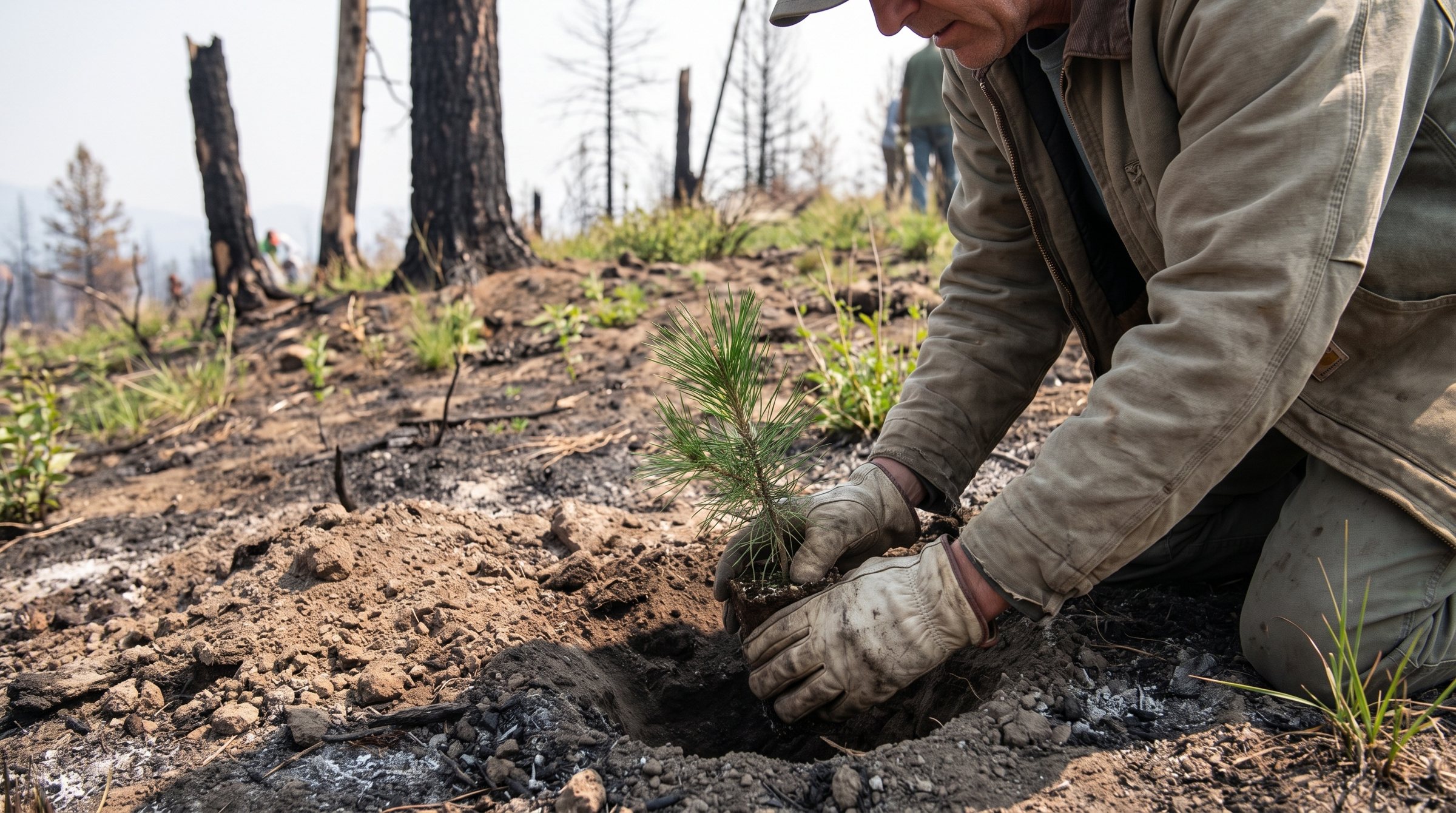
Erosion Control and Replanting
Straw, wattles and seeding on burned slopes, then seedlings suited to your site in the right season.
Defensible Space and Mitigation
Zones around the new home, thinned regrowth and fuels reduction so the next fire finds less to burn.
- Wildland firefighters, 10+ years on the line
- Crews and engines on 2026 reservation fires
- Washington DNR-approved contractor
- Active federal VIPR contract
- Licensed and insured in Washington
How It Works
Call or Send Photos
Use the form below or call (509) 215-1875. Tell us the kind of land if you know it. Photos help us plan the visit.
Free Site Visit
We walk the land with you, mark hazard trees, check slopes and drainage, and photograph everything.
Approvals and Paperwork
On trust land, we line up BIA and tribal approvals with you. Elsewhere, we check whether a DNR application or cost-share approval is needed first.
Written Plan and Quote
Itemized so your insurer, the Tribes, a cost-share program or a case manager can follow it.
The Work and Follow-Up
Our crew fells, clears, chips and protects the ground, with before and after photos. Follow-up visits are available to recheck trees you kept.
Watch Out for Storm Chasers
After a big fire, out-of-town crews show up with quick quotes and big deposits. On trust land there’s an extra risk: a crew that cuts or hauls timber without BIA approval can leave the landowner facing trespass penalties. Tree work is dangerous and expensive to get wrong, so take a minute to check who you hire, including us.
Check Us Out
B&B Wildland Fire is registered with Washington L&I under contractor license BBWILWF743C3. Click the number to see our record on L&I’s Verify a Contractor site.
Before You Hire Anyone
- Get multiple written bids
- Verify the contractor is registered with L&I
- On trust land, make sure BIA and tribal approvals are in place before any cutting
- Get the scope, price and timeline in writing
- Don’t pay in full before the work is done
- Be wary of door-to-door crews and cash-only deals
Report contractor fraud to L&I at 1-888-811-5974.
Take Care of Yourself, Too
Losing a home, a church, cultural places, first foods or land your family has known for generations is a real loss. Months later, stress, poor sleep and grief are normal, especially as the paperwork drags on. Free, confidential help is a call or text away.
Kaiser Canyon Fire Recovery FAQs
Will FEMA help Kaiser Canyon survivors?
Maybe. Okanogan County is in Washington’s Sept. 28 request for a major disaster declaration, which would open FEMA grants for housing and other needs, usually along with SBA loans. As of Oct. 30 there was no decision. The Colville Tribes were not named in the request, so tribal households should ask the Tribes’ Emergency Operations Center at 509-634-2043. FEMA generally doesn’t pay for trees or landscaping.
Who can help me sort out what I qualify for?
Call the Okanogan County Long Term Recovery Group’s case manager, Jessica Farmer, at 509-846-5101. Case managers work with anyone in the county who had 2026 fire losses and can bring unmet needs to local funds like the NCW Fire Relief Fund.
My land is trust or allotted land. Can I hire someone to cut the burned trees?
Not without approval. Federal rules for Indian forest land require a BIA-approved permit or contract, with the owners’ consent, before timber is cut or removed, and the Tribes are already planning salvage in the Kaiser Canyon burn. Call Colville Tribes Forestry at (509) 634-2333 first. We line up approvals with you before we start.
Did B&B fight the Kaiser Canyon Fire?
Several of our people fought it on other crews. B&B’s own engines were assigned to the Modrite Fire near Inchelium at the same time.
Should I wait for a program before cleaning up?
Not for trees that could fall on your home, driveway, road or a place people use, though on trust land you still need approval first. For everything else, document it, get a free post-fire visit from the Okanogan Conservation District, and keep receipts. Some cost-share programs only pay for work they approve before it starts.
Which of my trees will survive?
Thick-barked ponderosa pine and Douglas-fir often survive if a good share of the crown is still green and the base isn’t deeply charred. Thin-barked trees die from much less. Try our tree survival checker, look for new growth in spring, or have a forester or our crew take a look.
Can I sell my burned timber?
Possibly, if there’s enough volume and you move quickly, because burned pine loses value as it stains. On trust land, sales go through the Tribes and the BIA. On other land, you’ll need a Forest Practices Application from DNR’s Northeast Region.
Where can I take burned branches and logs?
Okanogan County’s Central Landfill on B&O North Rd near Okanogan, open Tuesday to Saturday. Call 509-422-2602 to confirm fees and what it takes. For most rural properties, chipping on site or pile burning costs less than hauling.
Can I burn the slash piles?
Usually, once burning is open, but who issues the permit depends on where you are. On the reservation, check with the Tribes’ Mt. Tolman Fire Center at (509) 634-3100. Off the reservation, check with DNR. Never burn debris from burned buildings.
Can I lower my property taxes?
Yes. File a destroyed property claim with the Okanogan County Assessor at 509-422-7190 to lower the assessed value. Forest owners can also ask the Department of Revenue about a tax credit for damaged timber.
What does fire cleanup cost?
Our typical prices are $300 to $500 to fell a tree and leave it, $800 to $1,200 to fell and remove a hazard tree, and $1,200 to $3,000 an acre for general cleanup, depending on terrain, access and how much is down. Every job gets a written quote after a free visit.
Do you clean up burned houses or ash?
No. Burned structures need hazardous materials checks, an asbestos survey and a licensed demolition or abatement contractor. We handle the land: hazard trees, downed timber, brush, slash, erosion, replanting and defensible space, and we schedule around the crew on your house.
Is the site visit really free?
Yes. We call back within one business day, walk the land with you and give you a written plan and quote. There’s no obligation.
Let’s Look at Your Land Together
Tell us where your property is and send a few photos if you can. We’ll call you back within one business day and set up a free site visit. You’ll get a written plan and quote you can share with your insurer, the Tribes, a cost-share program or a case manager. No pressure and no obligation.
- Call back within one business day
- Free first site visit
- Approvals lined up before work on trust land
- Written, itemized plan and quote
Rather talk now? (509) 215-1875